
Article by Davide Lassandro
Translation by Alice Ivaldi Lessona
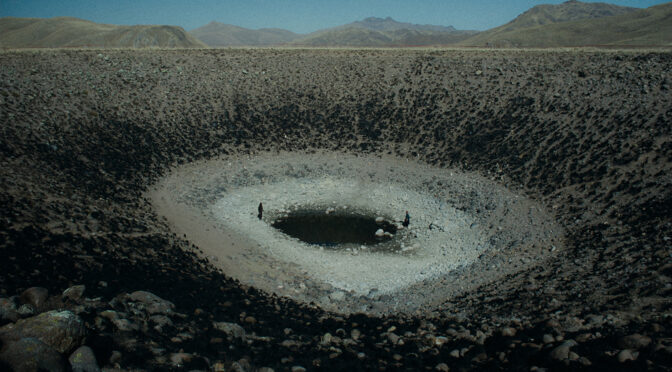
Revolutions, of any kind, have always existed and have incessantly shaped the course of history. But what is their purpose? What are they fought for? And against whom? These are the questions that define Daniel Vidal Toche’s first feature film, La anatomía de los caballos, presented at the 43rd Torino Film Festival. The Peruvian director creates an unusual and personal cinematic work, depicting the relationship between a land and its people filtered through the complex and contradictory theme of revolution.
In the 18th century, while fleeing from a group of Spanish soldiers, the revolutionary Ángel Pumacahua (Juan Quispe Mollenido) makes his way back to his village in Puno and suddenly finds himself catapulted into the Peruvian Andes of the 21st century. A meteorite has opened a space-time gap between the two eras. In this new present, he meets Eustaquia (Edith Ramos Guerra), a woman searching for her twin sister, who disappeared after a dispute with a mining company that polluted the local water. Their encounter will lead the two protagonists to reflect on the cyclical nature of time and the meaning of revolutions.
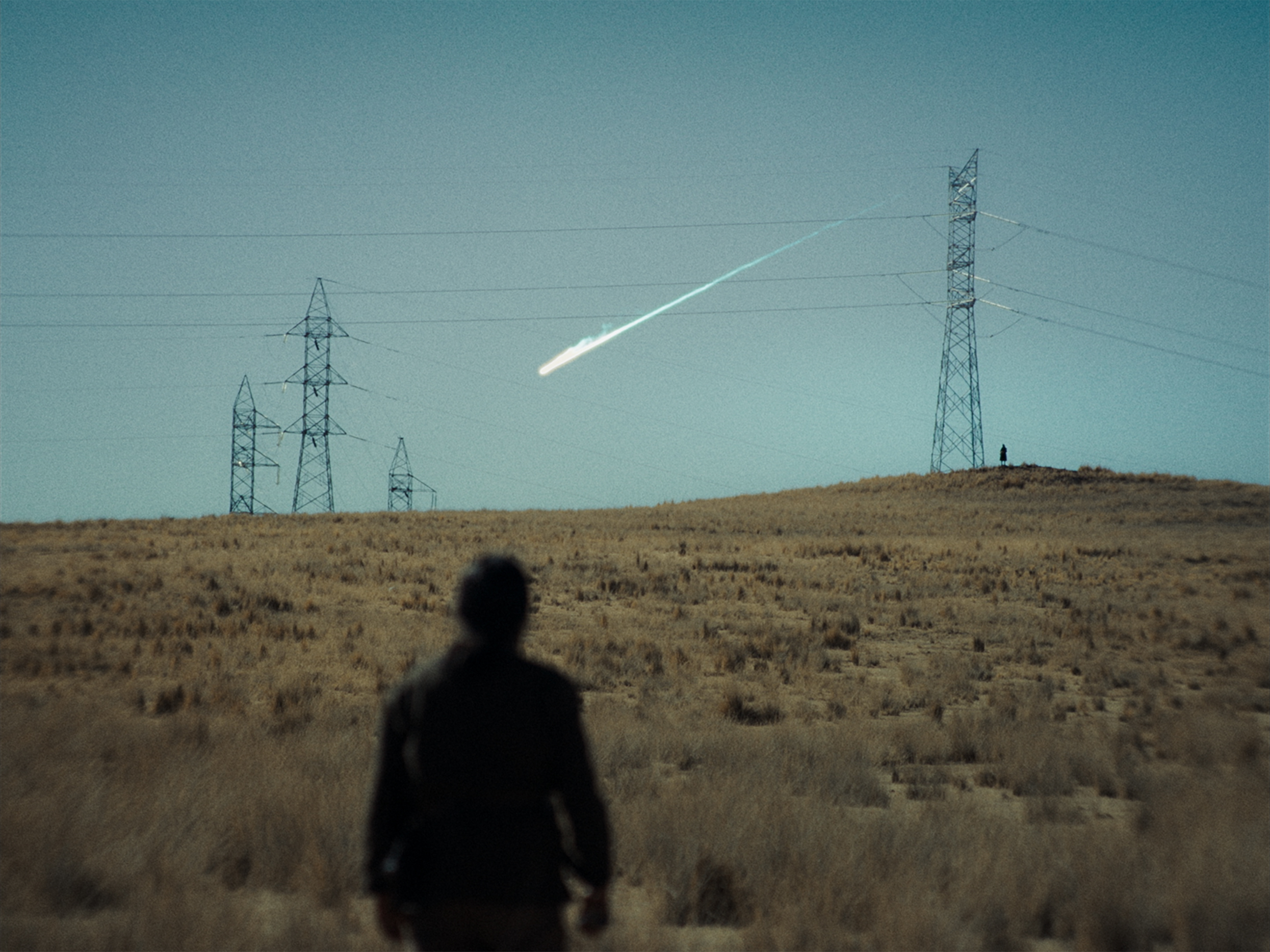
The unusual choice of the 1.66:1 aspect ratio, a fitting middle ground between 4:3 and 16:9, helps creating a particular symbiosis between sky and earth, between mankind and nature, forcing the characters into a physically claustrophobic space while metaphorically exposing them to a confrontation with the environment, the land and its traditions. The vast Andean landscapes are framed by the use of wide-angle lenses and a horizon line consistently anchored at the centre of the frame. The principles and the ideals of revolution are embodied in the figure of the missing woman, by appearing repeatedly in Ángel’s dreams, she serves as the narrative pretext that leads the two protagonists to reflect on the theme throughout the film. In contrast to Eustaquia’s perspective, now disillusioned by vain attempts of past and future revolutions – still desirable – which now seem only to fuel further death and violence, Ángel’s vision becomes an anchor of salvation, a source of hope for a future of genuine renewal and evolution, like an open door created by the mere desire to will it into being, even though what lies beyond remains unknown.
Therefore, the reverse ending is emblematic: the tracking shot preceding the camera placed at the rear of a train symbolizes the impossibility of resolving a condition that has echoed for centuries, while time continues to flow inexorably.