
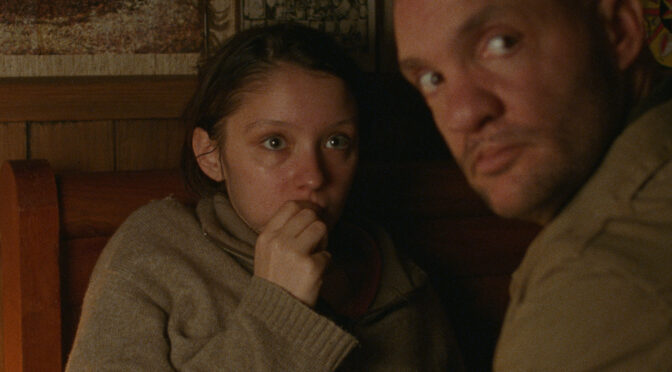
Article by Beatrice Bertino
Translation by Virginia Milazzo
Julia Kowalski presents her second feature film, Que ma volonté soit faite, in Turin, which had already been selected for the Quinzaine des Cinéastes (Directors’ Fortnight) in Cannes. The director tells a dark-toned tale, completely immersed in the French rural areas, where a family of Polish immigrants – just like her parents – runs a cattle farm. An obscure sequence of events unfolds between cowsheds and farmland, firmly bound to faith and sin, redemption and damnation.
The film starts with a flashback, which immediately informs us of the tragic past of Nawojka (Maria Wróbel), who had to witness her mother being burned alive at the stake. However, the protagonist’s narrating voice reveals that the devil who corrupted her mother’s body will soon take over hers too. Misty atmospheres and cool tones are warmed up by some frames where in fact blood and fire prevail. Many years later, Naw has become a God-fearing young adult, submissive and servile towards the men around her and those in her household: her father Henryk and her two grouchy brothers Bogdan and Tomek. Each member of the family is searching for a place of salvation: for the brothers, it’s their job; for Naw and Henryk, it’s their faith.
But every single thing in the village is sick, becoming a metaphor for the world as we know it: a mysterious virus is wiping out the livestock, leaving the lifeless cows in a thick whitish Matthew Barney-style puddle, a substance that seems to spark a wicked attraction in Nawojka. Although being twenty years old and sexually inexperienced, her gaze saturates the atmosphere with adolescent hormones and catholic guilt, especially when the camera’s subjective shots linger over Sandra’s legs, a libertine young woman who will soon become the face of sin in the eyes of the villagers, played by Roxane Mesquida. Nawojka searches for atonement and experiences intense and painful moments of trance, her face deformed and her body writhing in pain as if she was possessed, rewarding the audience with a taste of Maria Wróbel’s outstanding acting skills.
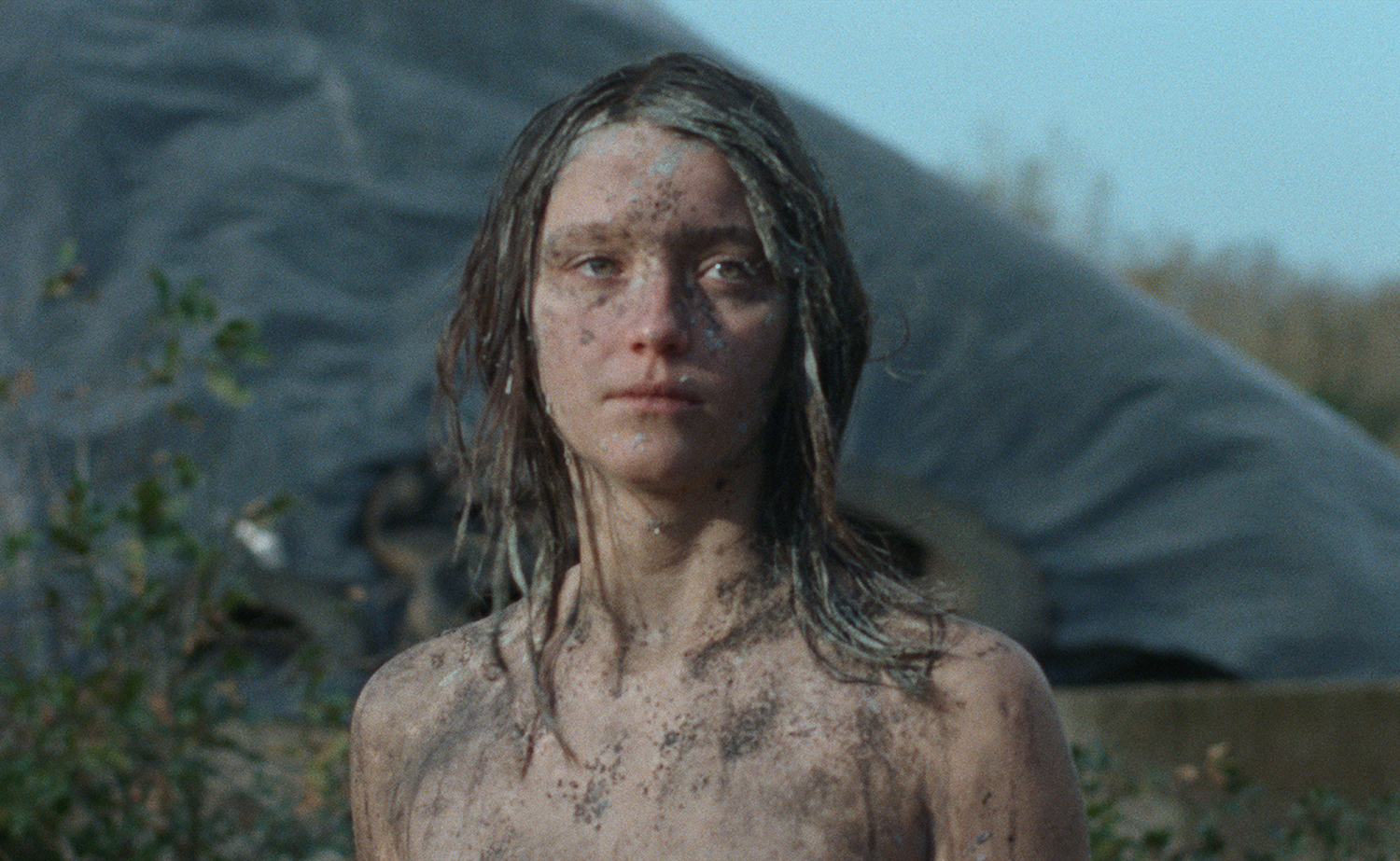
During Tomek’s wedding, traditional Polish choirs accompany the celebrations, guiding us towards the peak of the tragedy. In a series of symbolic images, death is staged without many spectacular excesses, representing a phase of purification. The villagers are caught in a chokehold that forces them to be torn between the sinful Earth and divine redemption, but God does not reach those lands, and the only solutions are to run away or to die.
The film turns into a deep reflection on the relationship between women and the communities they belong to, giving the audience the possibility to face the unknown, a possibility to explore with curiosity and faithfulness to cinema.