
Article by Elena Sartore
Translation by Giacomo Patterlini
What if one day the sun won’t rise again? This absurd hypothesis becomes reality in Levers, the second feature film by Canadian director Rhayne Vermette.
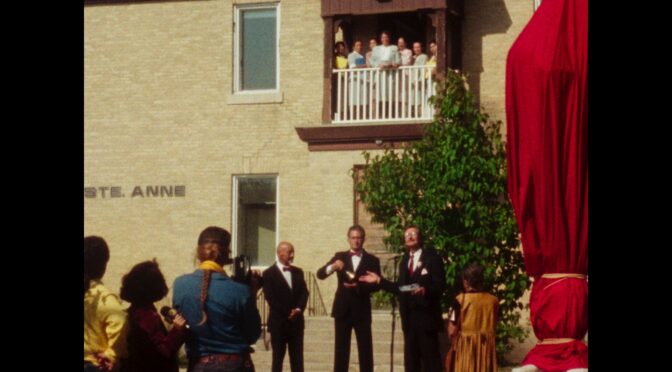
The triggering event is a cannon shot fired to inaugurate a new statue in a small town in Manitoba: from there darkness descends – a day-long eclipse. This explosion thus marks the beginning of a new order of things. The reason is unclear to both us viewers and the characters who inhabit the film like rarefied presences – bodies that seem to be agglomerations of light rather than matter. The characters’ – and also the director’s – indigenous heritage reminds us that there are other views of life, possibly more capable of preserving the connection with Earth. Since the absurdity of the situation exceeds the tragedy, the characters have no choice but to persist in their habits and try to guess what would eventually happen. When all certainty collapses, perhaps, there is no longer any religion or science that can hold sway.
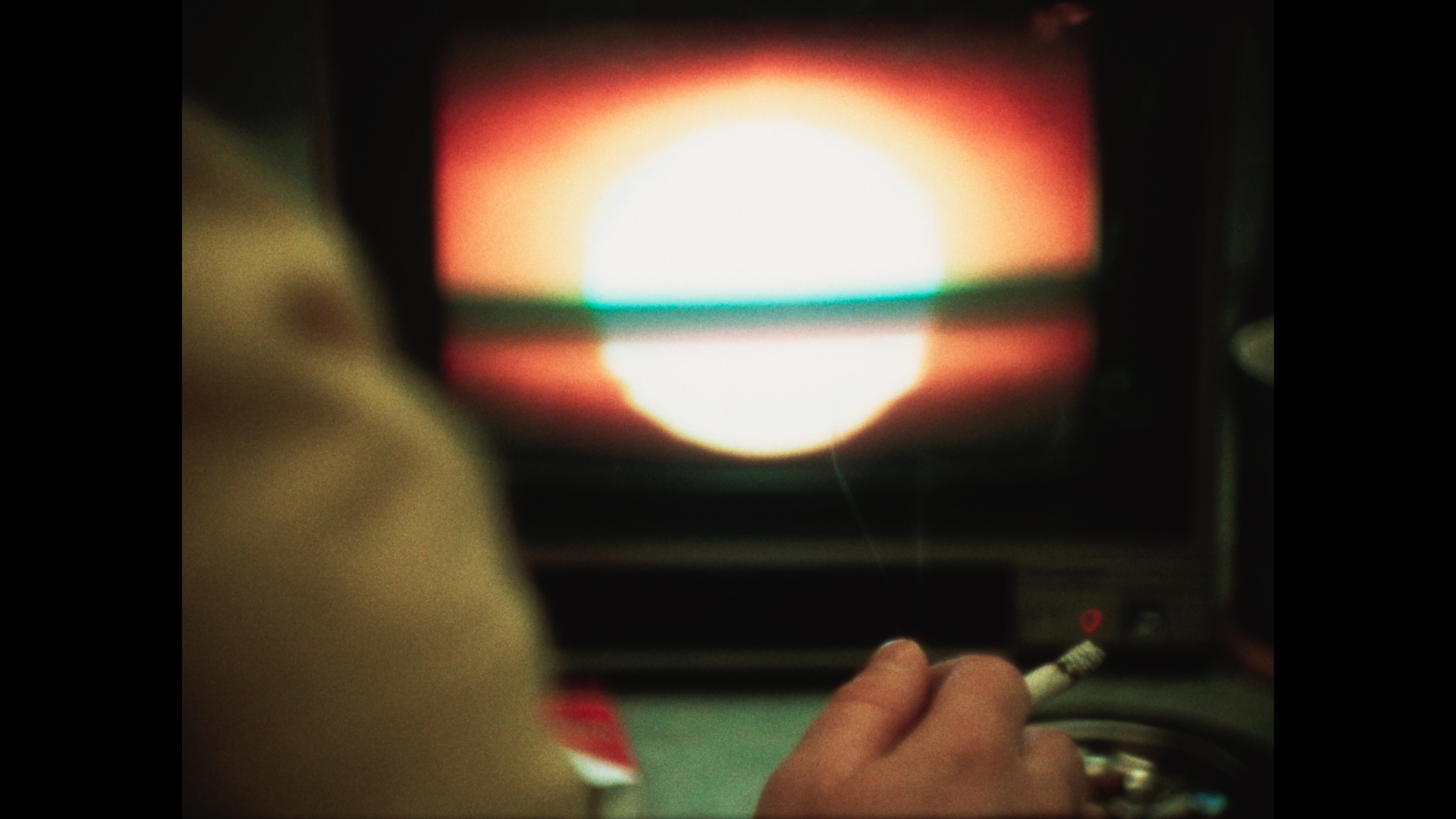
Shot on film with an old Bolex Paillard camera, Levers stands out for its dark, grainy, saturated images and its experimental approach, which becomes a means of showing things in their most authentic form. Paradoxically, the audience might have the impression of “seeing like a blind person”, that is to say, seeing things for their quality and not for their appearance: darkness neutralizes contours and opens the way to essence. The sounding also plays a fundamental role: it “speaks” much more than the human voice and seems to spring directly from Earth. The editing thus becomes an esoteric game to be explored, taking us back to the origins of cinema and the first experiments of the avant-garde.
Levers is more than a film to be seen, it is a film to be heard, or better, to be perceived.
Article published on “La Repubblica”, November 2025