
Article by Greta Maria Sorani
Translation by Giacomo Patterlini
“A systematic destruction of a population, a lineage, a race or a religious community”. This is the definition of the word “genocide”, a term that today is more relevant than ever and which, since 7 October 2023, seems to have become a taboo. The documentary The Encampments, directed by Kei Pritsker and Michael T. Workman, shows the ultimate consequences of this expressive repression within American universities.
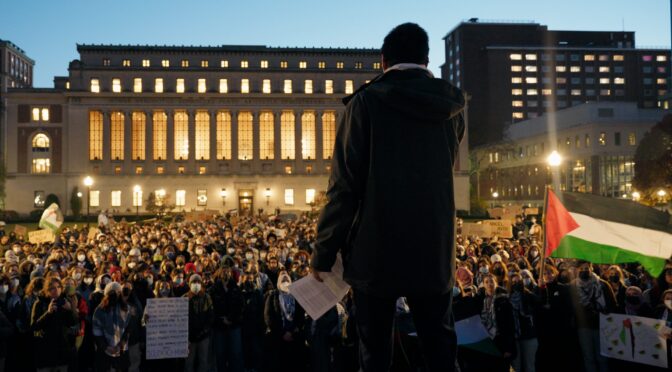
The film hits the viewer like a punch in the stomach. It recounts the student protest movement that began at Columbia University in the spring of 2024 and then spread throughout the United States and the world, not as a news story, but as a visible manifestation of an irreversible generational and political gap. The encampment, a simple symbolic gesture done by roughly fifty students, becomes a trigger capable of transforming prestigious campuses into places of public confrontation, laying bare the relationship between American universities and the Israeli war economy.
The directors do not seek neutrality: they observe reality with the awareness of those who come from activism and political documentary filmmaking, and make this perspective a fundamental key to understanding. The power of the story lies in the intimacy of the testimonies. The voices of Mahmoud Khalil, Sueda Polat, Grant Miner and Naye Idriss compose a complex mosaic of identities in which Palestinian, Jewish and Middle Eastern origins intertwine without simplification. There is no revolutionary rhetoric or aestheticisation of protest: the film focuses on fear, fatigue, night raids, arrests and the tension that pervades every day in the camps, to the point where the viewer perceives the real weight of choices that involve enormous personal risks. The presence of journalist Bisan Owda from Gaza adds a further layer of listening, reminding us that the tents pitched on the university lawns have a direct resonance with the ongoing war.
The Encampments is also a story about the crisis of institutions in the United States. Universities, places of critical education, react with bans, suspensions, and massive police operations. The entry of law enforcement onto campus after fifty years of prohibition is shown as a historic turning point, revealing the fears and complicity of those who, in order to defend their economic interests, choose to silence students rather than confront their questions. The film insists on this very question: what does it mean to rebel today when the academic institution stands as an apparatus of control rather than a centre of cultural elaboration?
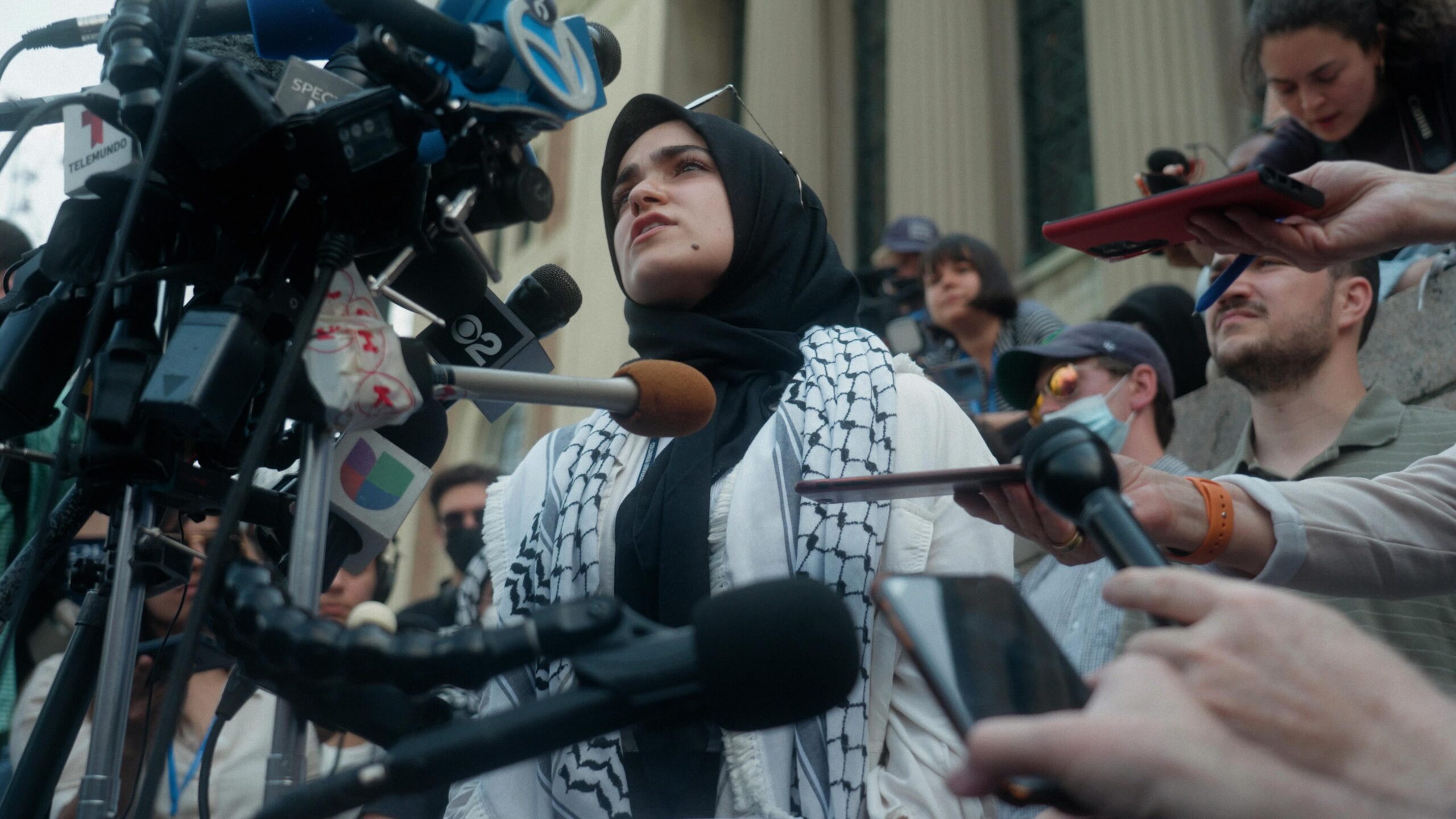
The editing alternates between recent archive material, field footage and direct interviews, building a rhythm that follows the escalation of the movement. The slogans chanted loudly, “Disclose, divest, we will not stop”, resonate as an emotional counterpoint to the coldness of the documents revealing the investments of American universities, highlighting the structural conflict between education and profit. What emerges is a paradox that the directors clearly highlight: it is the brightest students, educated by those same institutions, who challenge their ethical foundations. The film does not create heroes, nor does it seek a consolatory conclusion. It documents an ongoing process, a generation that no longer accepts the moral paralysis of the West and finds in collective action a way to reclaim public space.