
Article by: Martina Oliva
Translation by: Carolina de Joannon and Paola Pesenti
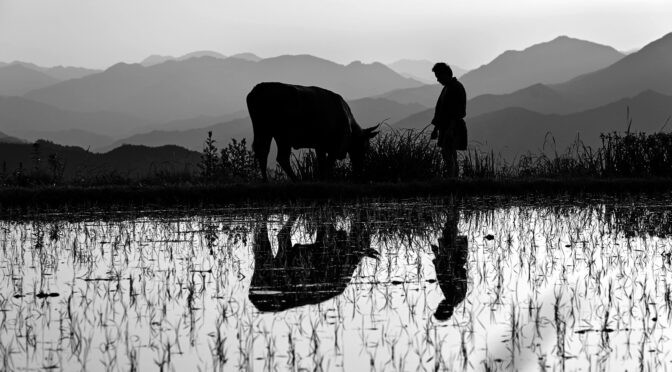
Filmed in 65mm, Black Ox by Tetsuichiro Tsuta is inspired by the Zen tradition’s Ten Ox-Herding (or Ten Bulls) images. From the first one (“In Search of the Bull”) to the last (“Return to Society”), the film stages the different steps of the spiritual path toward Buddhist enlightenment.
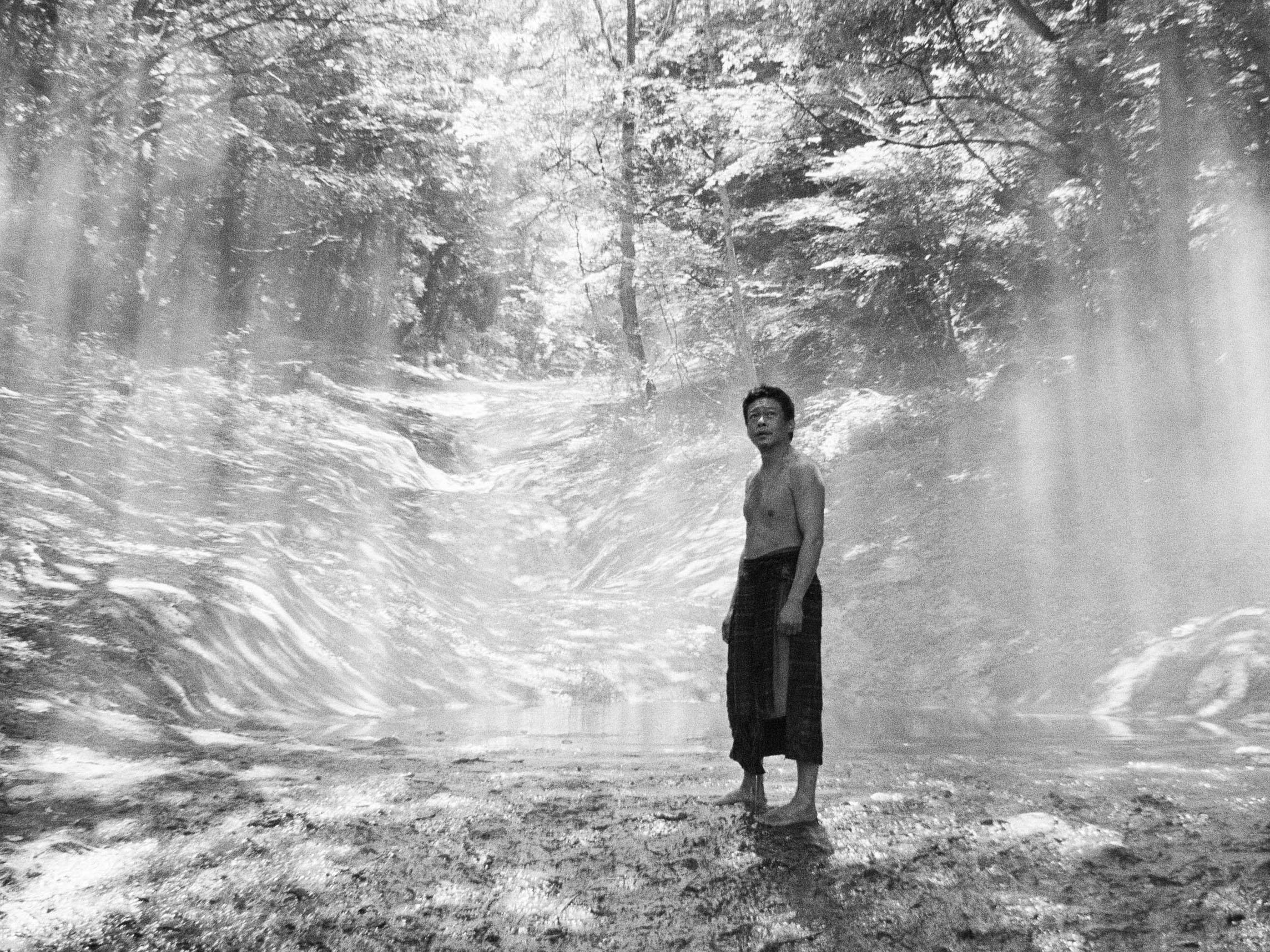
We are in 19th-century Japan: as if looking at a photographic tale, the viewer’s eye is led to contemplate a nature that dominates the minuscule figure of a man. In a reality where every whisper and quiver allows space and time to exist, the man sits waiting on a rock. As patience and contact with the earth immerse him in a deep meditative state, the camera moves closer to his steam-framed face, revealing to the viewer the silence of his mind. It is the encounter with a big black bull that will mark the beginning of a primitive bond. The animal will fill the space surrounding the man. If, at first, nature was imposing itself on the screen, peaceful coexistence and care toward others and oneself now prevail. In the warmth of the barn, a sound interference is born: their breaths interact together, overlap, increase their strength and they foment each other. Due to the death of the bull, the human breath becomes animal-like and visceral. This underlines the innate bond between man, animal and nature and their mutual influence. As the last milestone, there is the obliteration of oneself. The man is covered in a layer of frost and, tired by now, he becomes one with the snow. The screen becomes white for a few seconds, then it becomes black, and for the first time we see colors. The fire lives in the ashes; and the fields, where the bulls graze undisturbed, shine like copper, while vibrating in the wind.
Article published in “La Repubblica Torino” online on November 30th 2025.