
Article by Dina Aghaei
Translation by Viola Suria
With Mo Papa, her second fiction feature film after Mo Mamma (2023), Estonian director Eeva Mägi returns to explore the most fragile part of human relationships, this time choosing the bond between father and son. The film speaks with intensity and clarity: the story of a man who longs for an ordinary life and strives to act rightly, yet remains trapped by his past and unresolved traumas. Haunted by a city that condemned him and a stolen childhood, he is slowly driven toward self-destruction.
Accused of murdering his brother, Eugen (Jarmo Reha) is released after years in prison and attempts to find his place in society. The only people left in his life are two friends from the orphanage and the father who abandoned him long ago, with whom he decides to rebuild a relationship. At first, reconciliation seems possible, but the father abandons Eugen once again in the time of need.
Mägi’s sensitivity to reality, shaped by her background as a documentarian, is clearly recognizable, while every detail of the framing appears carefully composed. Rather than relying on dialogue, the director favors images and gestures that carry the film’s emotional progression. In this sense, emblematic are Eugen’s first encounters with his orphanage friends, which begin not with words but with hugs, laughter, and the imitation of birdsong.
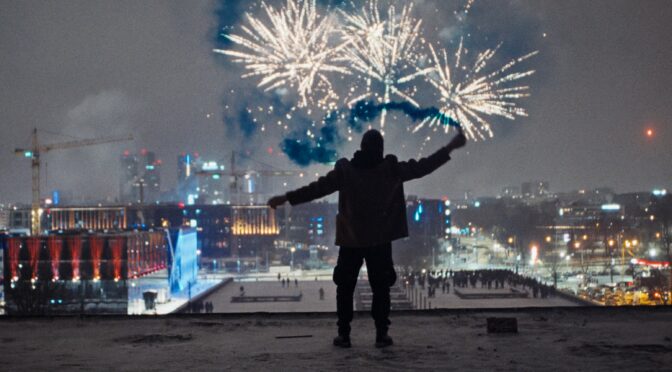
Mo Papa closes with the protagonist approaching a large Ferris wheel, an amusement park ride that until then has lingered in the background. The image resonates as a symbol of a missed childhood still demanding to be lived. In that moment, fleeing from the city that seems intent on devouring him, Eugen looks down on the urban space from above and, for an instant, appears finally free.
Article published on “la Repubblica” on November 25th, 2025.