
Article by Andrea Dosio
Translation by Patrick Zaffalon
A director asks AI to generate multiple stories about Dracula, looking for one that tells his myth in a new, original way. Will he achieve his goal?
The film features all these stories as digressions that repeatedly interrupt the main storyline –a vampire hunt– shattering any possible narrative continuity. The result is a bold and chaotic collage in pure Radu Jude style. Jude himself is well known for works that aim at criticizing society’s hypocritical “values”. The intertitles, evoking the aesthetics of silent cinema, lead the spectator through all this confusion, yet the underlying logic is clear: Jude is once again questioning Romania and its cultural heritage, from sexual repression to capitalism and commodification. He reaffirms himself as one of those authors who can fully translate their ideas and readings into their own distinctive poetry. Here more than ever.
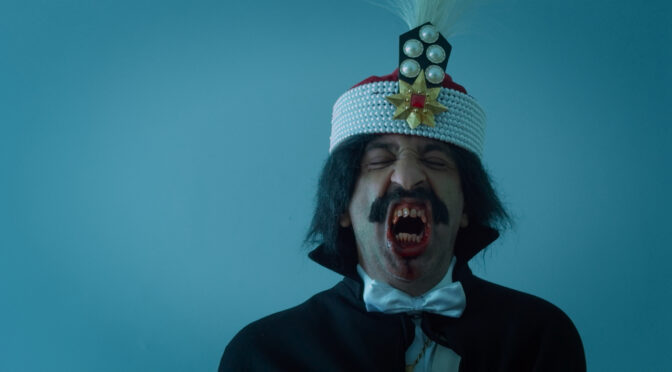
Dracula explores in a prismatic way the vampire theme, drawing on one of the main myths of Romanian culture. From the irreverent use of Murnau’s Nosferatu as a TV advertisement to the portrayal of the vampire as a personification of a capitalism that “sucks proletarian blood”. There are also plenty of historical references throughout, such as “Vlad the Impaler” –the figure behind Dracula’s iconography– who went down in history as a ruler who killed the poor to create a society of the rich. The ending itself is related to such individuals, with a digression set in today’s world, where a little girl invokes the return of Dracula during a school play as her nation has fallen into decay and she now needs someone to restore order. This mirrors the image of a dictator that takes the lead during a period of widespread crisis, showing the lingering influence of Hitler and Ceaușescu’s regimes on present-day Romania.
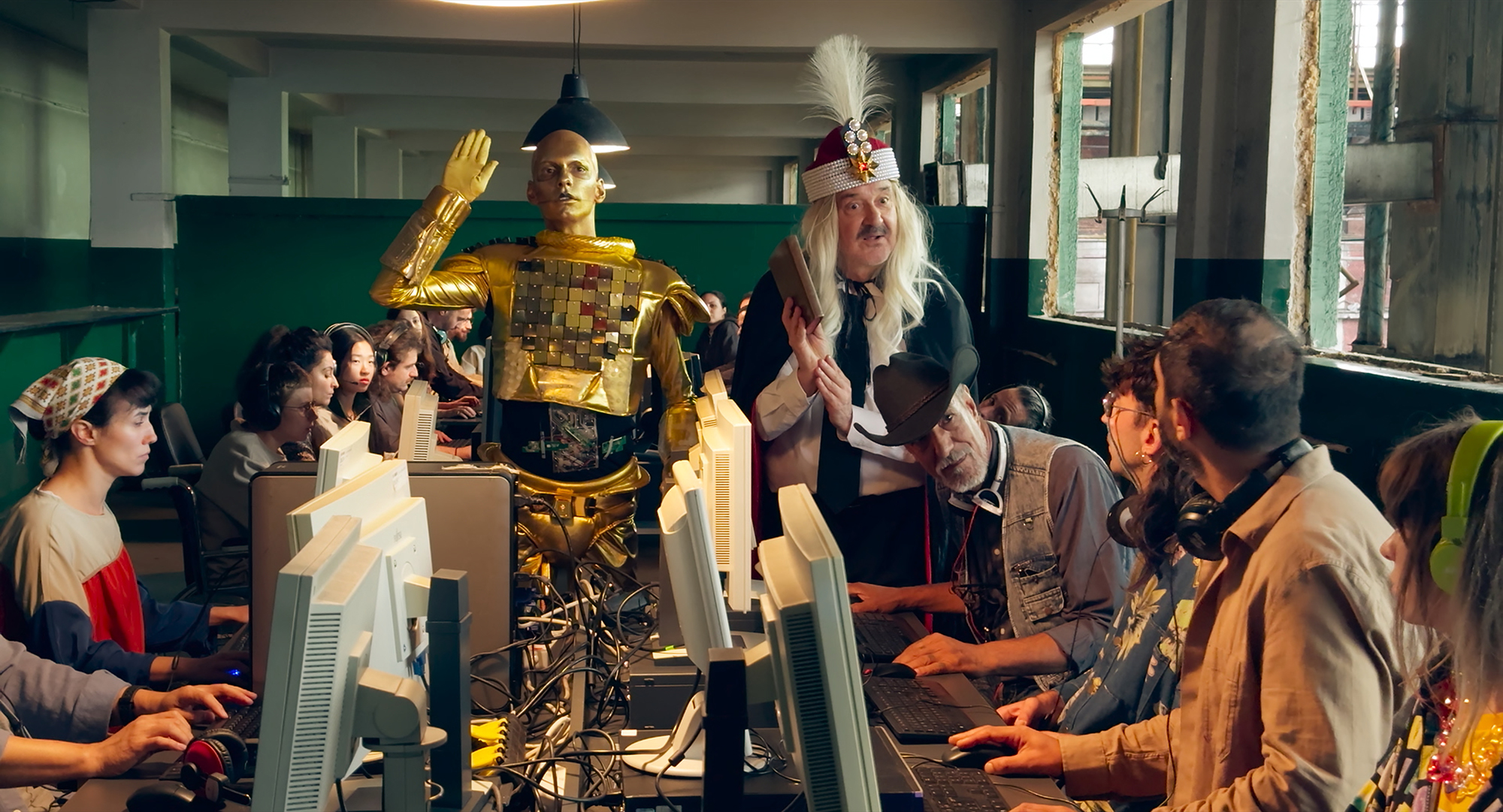
The use of AI in the film is provocative. Real and AI-ge nerated images alternate and eventually merge. Where the former loses definition under zooms that make pixels visible, the latter steps in to compensate for the limitations. This makes it possible for any given idea to be represented: you just need to give a prompt to the electrical device. Whether to accept the use of AI to create such pieces –the digressions– that once assembled compose the film, is the provocative choice given to the audience. Dracula can make it difficult for the spectators to follow the storyline if they don’t try to find the unifying principle of such fragmentation. Yet, the most stimulating aspect of this film is how Jude managed to mock such a myth using multiple means of artistic expression and a plethora of references. As Jude himself addressed the audience looking straight into the camera lens: “If spectators don’t like it, they are free to do better if they can”.