
Article by Marta Mastrocinque
Translated by Maria Iacovone
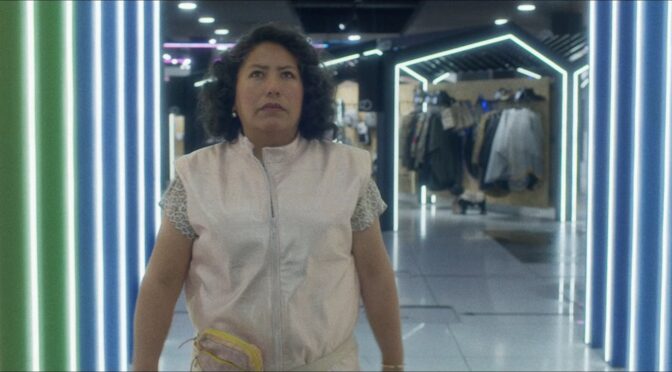
Todas las fuerzas, directed by Luciana Piantanida, proposes an analysis of the Latin American migrants’ situation in Buenos Aires through a controlled use of fantasy. Set in district Once, the movie combines social observation and more visionary narrative constructions, without fully adhering to the rules of a single genre.
The movie opens with an aerial shot of Plaza Once which introduces the apartment where Teresa (Silvina Sabater), an elderly woman with memory issues, lives assisted by Marlene (Celia Santos), a Bolivian worker who carries out nursing duties and lives in the same house. Beyond the intrinsic aesthetic value,the sequence reveals the symbolic role of the palomas, recurring elements of the film. The story develops from Marlene’s night outings: while Teresa is asleep, she wanders in search of a missing friend. Her inquiry leads her to navigate through textile workshops, bars and warehouses, often marginal places but central to the working lives of the migrant communities. It’s in these locations that the movie introduces supernatural elements: Marlene and other women –Bolivian, Peruvian, Paraguayan– have special skills, from telekinesis to the ability of communicating with animals. Such powers are not described in a systematic way, rather they work as a metaphor for the invisible resources that support their lives. The movie imagines a sort of parallel community, hidden in the city, made up of everyday people who have essential roles in the urban landscape.
Piantanida uses fantasy to question the subordination dynamics and the invisibility of women workers who operate in areas that are often ignored by the public narrative. With its 70 minutes, the movie follows an elliptical layout: the transition between social drama, noir and fantasy inspirations creates an outcome which is intentionally irregular. Some ideas are effective, others are just hinted at, but the film finds coherence in the nocturnal photography by Gustavo Schiaffino and in a mise-en-scène that gives value to underrepresented urban spaces. Celia Santos’ performance sustains the narrative with a measured approach, while the overall structure confirms Piantanida’s will to explore hybrid forms of storytelling.
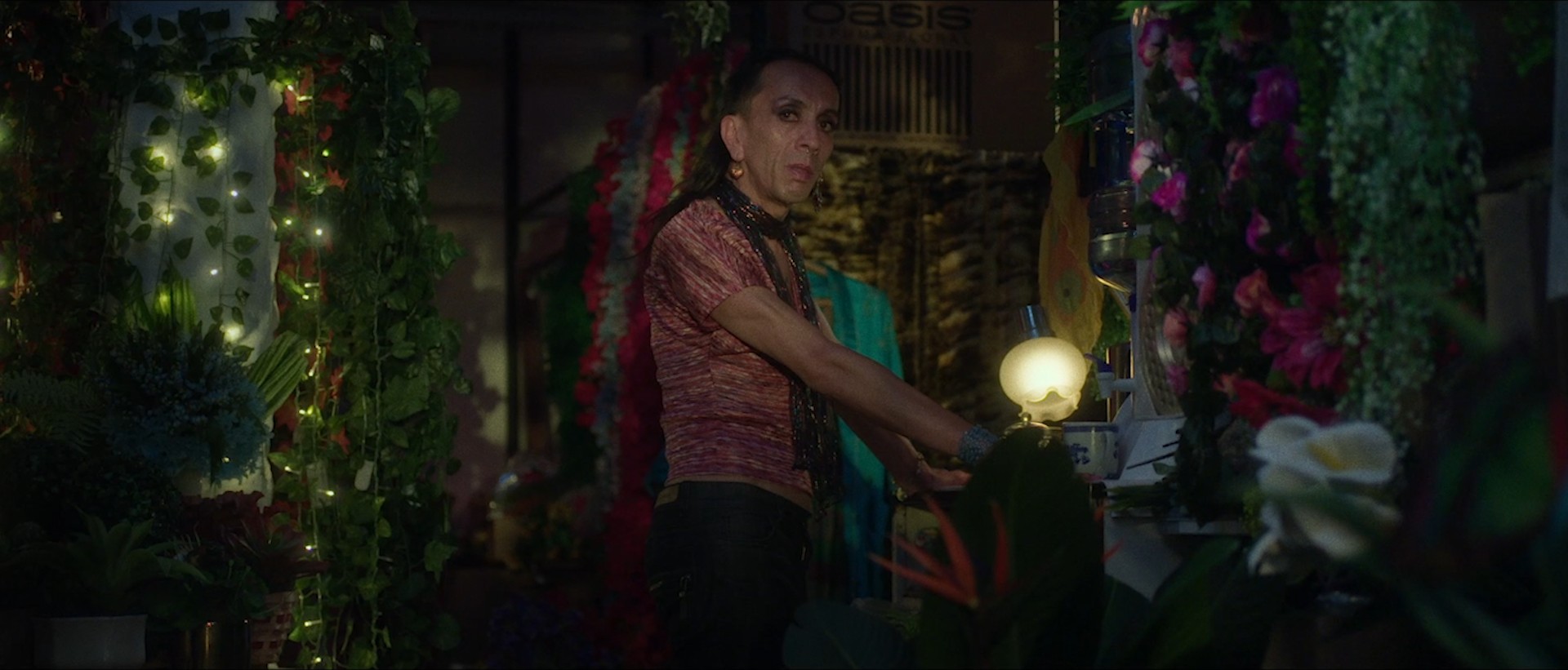
Awarded at the BAFICI (Buenos Aires’ International Festival of Independent Film), Todas las fuerzas provides an unsentimental representation of the migration phenomenon, using fantasy as a tool to highlight what the everyday life of district Once usually leaves in the dark.