
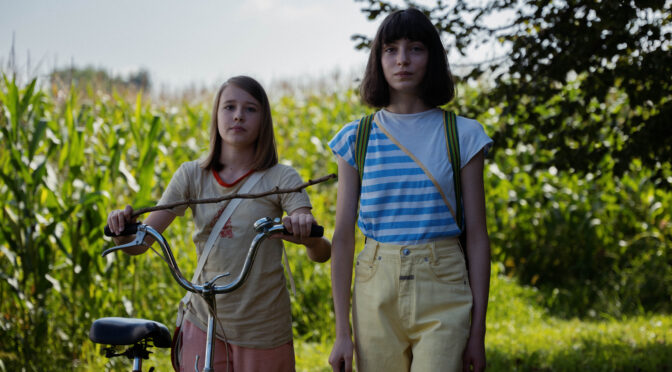
Article by Francesca Strangis
Translation by Patrick Zaffalon
Death is looming over a small Slovenian village, incarnating in the mysterious figure of a man covered in flowers and colorful ribbons. It will fall to a young girl to deal with him. Unable to understand the inevitability of fate, she joins a choir in the attempt to keep her grandmother alive, believing that a song heard coming from afar once saved her grandmother when she was at death’s door.
Whether it marks the end of childhood, of a marriage or of one’s grandmother’s life, death is the predominant element in Ester Ivakič’s first feature film Ida Who Sang So Badly Even the Dead Rose Up and Joined Her in Song. Here, Ivakič blends magical atmospheres, daily life situations, ancient myths, and the social context of 70’s Slovenia in a magical realism that evokes the transition from childhood to adolescence, a phase between the last bursts of imagination and the looming burden of reality.
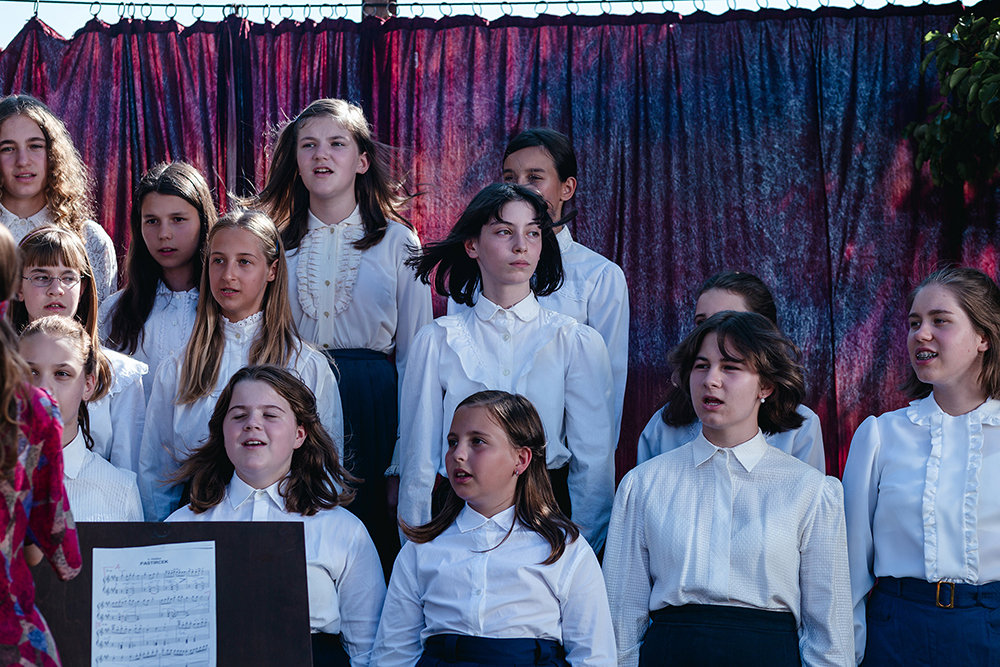
Ida wanders alone in remote places, captured in long shots that swallow her slim figure. She is often separated from the adult realm – including her parents, who are going through a marital breakdown – by physical barriers such as windows, curtains, and closed doors. These force the girl (hence the viewer) through a filtered and fragmented vision of reality. Even school not only fails to cure her loneliness but also creates new wounds, deepening the already existing ones due to cruel teachers whose caricatured traits are functional to the representation of the story from the childish perspective of the protagonist.
The movie is inspired by a collection of short stories, which gives birth to the numerous non organically entangled subplots that end up diverting from the actual emotional anchor of the whole story (the girl’s relationship with her grandmother). It works as an intimate and oneiric tale about accepting death and finding one’s own voice. A voice that – even being off key – has the right to sing.
Article published on “La Repubblica Torino Online”, November 2025