
Article by Martina Oliva
Translation by Chiara Ventura
After Juliette Binoche took part in the performance In-I In (2008), a piece both danced and acted in which she performed alongside the British dancer and choreographer Akram Khan, she filmed the documentary In-I In Motion (2025).
The film shows the creative process of the 2008 performance, a sort of role exchange between the two artists’ own forms of expression, deeply exploring their true selves and each other’s forms of art: acting for Khan and dancing for Binoche.
The camera moves cautiously, following the steps as they are performed on stage, trying to explore their intimate and visceral nature that recalls the gesture from which they originated. The body becomes a big heart that beats at an unsustainable pace, a heart that attunes and devotes itself to the absolute rhythm and vital intensity of the movement.
In an alternation between living gesture and telling it, dance and theatre represent life while reason and thoughtful study rework them intellectually and chart the path to the future.
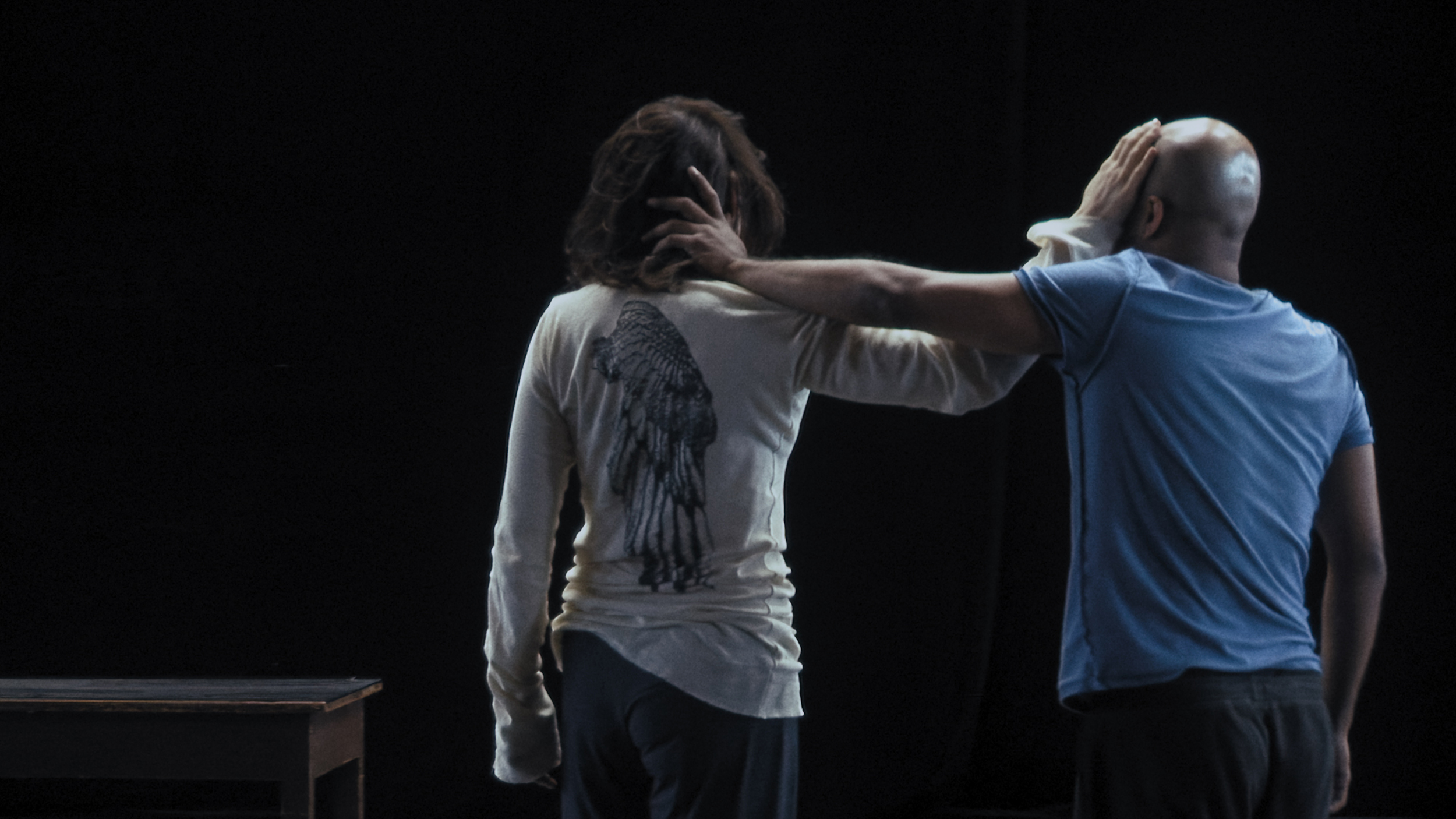
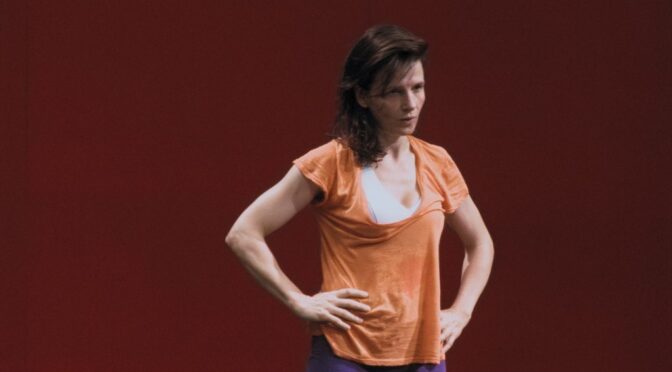
What is born out of it is a minimal and wonderful choreography with the two contrasting physiques and their need for “blatant love” standing out against the monochromatic backgrounds. With this representation, the fear of losing oneself on the one hand and the search for confidence, even in just one kiss, on the other are highlighted by the squeaky sound of shoes dancing on the floor. The turning point of the performance happens when the background changes color: from grey to red, while still maintaining those attractive and supporting roles, extremely important for Binoche.
The two protagonists do not live their relationship as an exercise nor as a test to get to know each other. They speak the same language, letting one complete the sentences begun by the other and vice versa. Therefore, we witness the final symbiosis with bated breath, in which even sex becomes outspoken and naïve, while the space of the story becomes the space of life. Now the background turns blue, opaque and dull, then it turns into a brighter red again. The two lovers seem to wear that same background, where their shadows are figuratively choked, forcing their bodies to surrender to gravity. Where does love go? What remains of it? A trail of sweat spread on a smooth, permeable wall.
With In-I In Motion we witness a courageous test that highlights the commitment required to explore one’s own limits while following a discussion about teaching the same art one feeds on.