
Article by Davide Lassandro
Translation by Valeria Marconi
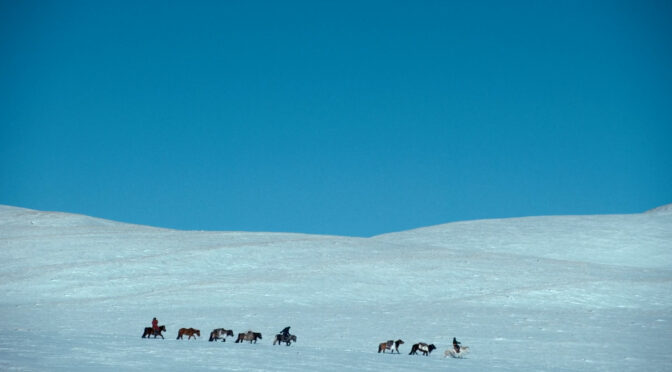
In Mongolia, there is a centuries-old tradition, passed down from father to son, which consists of taking care of horses through transhumance to help them survive the harsh and freezing winters of that region. Six years ago, this tradition was suddenly interrupted due to winter weather, which has grown increasingly harsh over the years. Now, the elders need to revive this ancient tradition by entrusting the arduous task to two young friends.
It may seem easy, but it actually requires specific technical and psychophysical preparation that not everybody can achieve, as shown by director Kasimir Burgess in the very first sequences of his latest documentary, Iron Winter, presented at the 43rd Torino Film Festival. The two young men, Batbold and Tsagana, must shepherd a herd of a thousand horses on a five-month journey starting from the Tsakhir Valley, facing vast mountain grasslands and increasingly violent snowstorms.
Striking from the very beginning, the photography is clean and visually realistic, enhancing the panoramic shots and the aerial footage captured by drone. The director focuses gently on the details of the herdsmen’s daily life, from caring of their equipment to butcher sheep and prepare meals, to setting up the ger (the traditional circular and transportable dwelling of Mongolian nomads). Since the two friends need to endure periods of waiting and inactivity, they spend their time competing in challenges, such as Greco-Roman-style wrestling or picking up objects from the ground (lassos, ropes and sticks) while galloping on horseback – in order to get ready for their people’s traditional New Year’s Eve games.
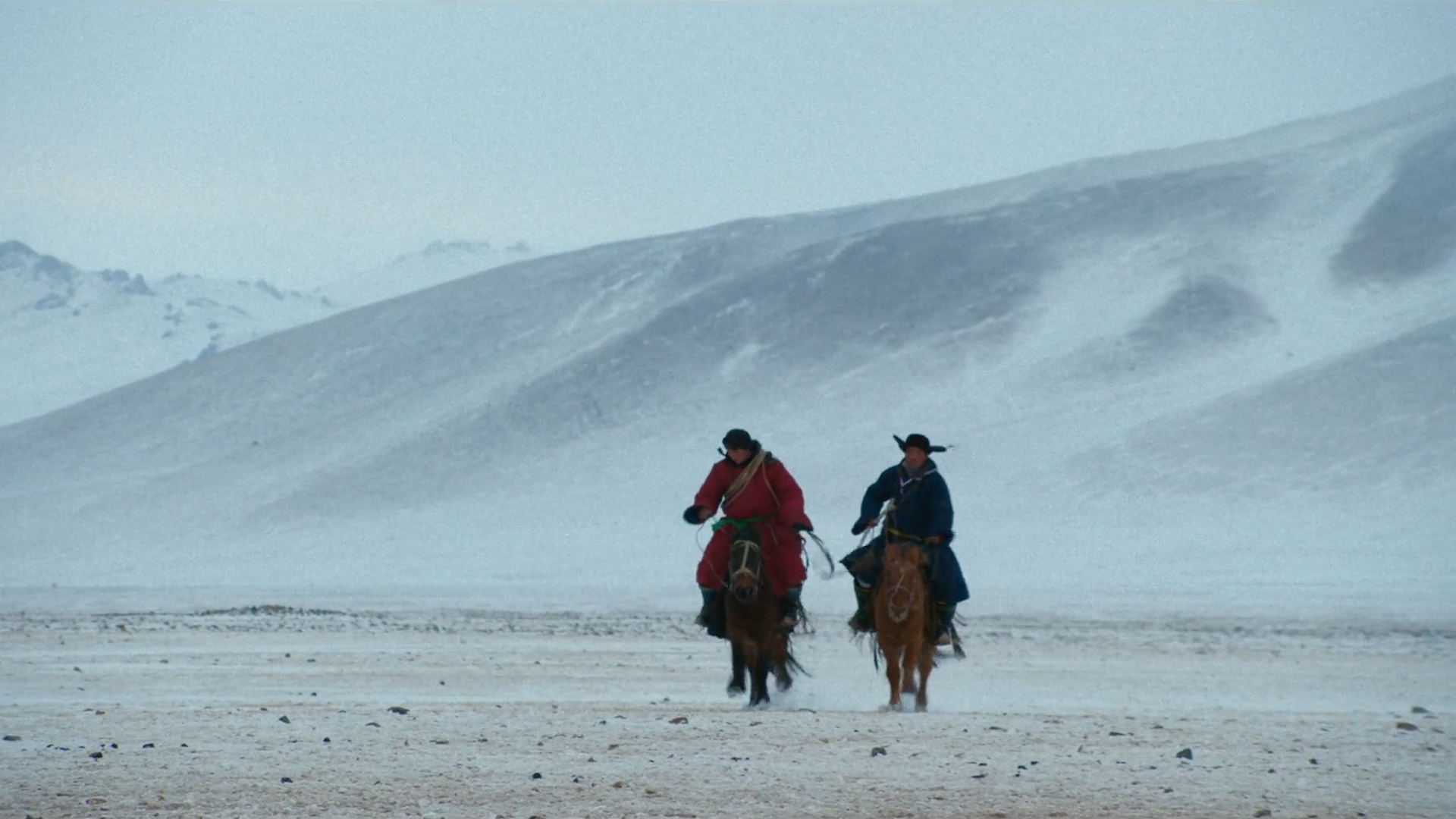
Although the film belongs to the documentary category, it is characterized by “spectacularity”, as if behind every dialogue and situation there was a script to follow, similar to the way in which Robert J. Flaherty made Nanook of the North (1922) in order to adapt the wild and brutal life of those people for the cinema screen, so that a Western and more globalized audience could appreciate it more, since such viewers are used to sympathize and identify with a story through the filters and adaptations made by screenwriters and film directors.
In the middle of the film, Tsagana says to Batbold: «A man’s happiness lies in the wilderness». It is only at the end, when Batbold moves to the city looking for a job, that his friend’s statement really makes sense: an intimate and profound dichotomy between the industrialized world of the metropolis, which traps its inhabitants in invisible cages and hectic routines, and a life dedicated to a sense of moral responsibility that goes far beyond the pictorial description of a mere existence in close contact with animals and surrounded by a boundless and wild nature.