
Article by Elena Sartore
Translation by Virginia Milazzo
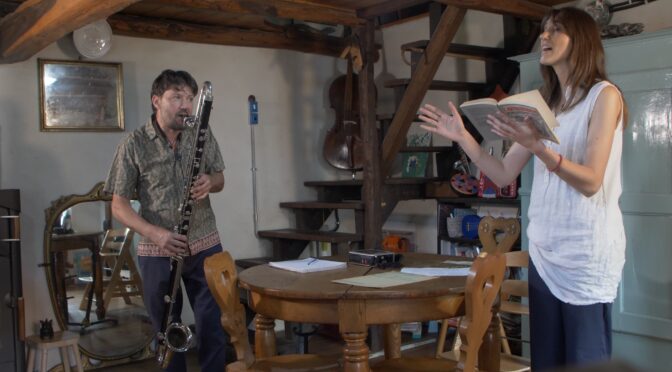
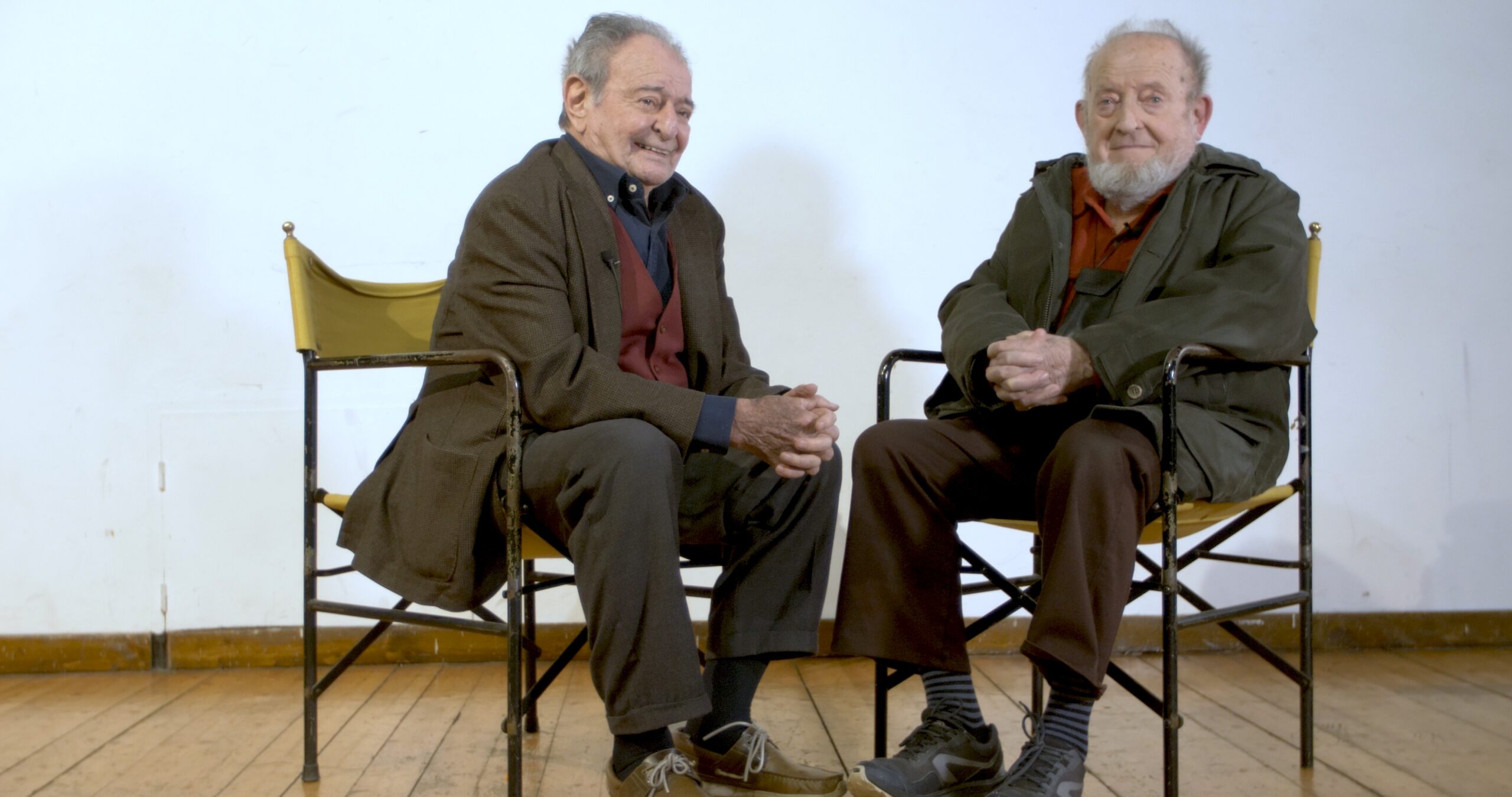
An old man is sitting in his studio, reading a periodical: news from the Middle East. He comments on them, visibly in distress, then surrenders himself to something merrier: music. He’s Emilio Jona, 98 years old, a member of the Italian folk band “Cantacronache”, to whom Stefano Di Polito dedicated his documentary Nel blu dipinti di rosso, presented to the 43rd edition of the Torino Film Festival.
This collective of musicians, scholars and poets – active in Turin between the 50s and the 60s – has soon been forgotten due to their non-commercial calling and a strong opposition to mass communication. The director worked in close contact with Jona who, together with another pivotal figure of the collective, Fausto Amodei, guided us through a rediscovery of the Cantacronache in this documentary rich with old memories. Though we don’t have any record of old clips, their testimony and audio recordings are enough to evoke the humane and maverick spirit that guided the group since their early days, encouraged by Sergio Liberovici and Michele Straniero, later joined by Amodei, Jona, Giorgio De Maria and Margot.
“Escaping from escape” was their motto. They used songwriting to narrate everyday life from a realistic and never idealized point of view: sometimes it was tender and other times it was raw. Their songs would also talk about news items which were deliberately ignored by press and public information. Their lyrics, straight to the point and full of irony, are accompanied by simple guitar chords, which had nothing to do with those Afro-Cuban sounds that influenced Italian music during the 50s. In those years, Sanremo’s pop music monopolized the music scene and the Cantacronache went against national-popular culture with their Canzone dei fiori e del silenzio: “Ci dicono tacete perché il silenzio è d’oro/Su miseria e lavoro/ Tacete della vita se ha giorni grigi e duri/Tacete degli amori se sono tristi e oscuri/Tacete anche dei fiori” (They tell us to keep quiet because silence is golden/About misery and work/Keep quiet about life if days are grey and hard/Keep quiet about love if it’s sad and dark/Keep quiet about flowers too). They refused to stay “Nel Blu Dipinto di Blu” (“In the Blue-Painted Blue Sky”), since they were, as a newspaper headline once called them, “nel blu dipinti di rosso” (“In the Red-Painted Blue Sky”, clearly referring to their political stance).
Even some famous writers gravitated towards the group, such as Gianni Rodari, Franco Fortini, Umberto Eco and Italo Calvino. The latter wrote three songs for them, namely Dove vola l’avvoltoio (which would later inspire De Andrè’s La guerra di Piero), Canzone triste and Oltre il ponte. Other than their songs, the Cantacronache also had many other interests, among which the recovery and rework of folk songs: from rice weeders to laborers, they wanted to rediscover the culture of common people. Emilio Jona is still working on it, collaborating with a research center dedicated to ethnic music and orality (CREO).
«We did so many beautiful things and one of them is not having made a single dime at all! – Jona tells playfully at the screening – Although we sang about really sad matters, we had a strong will to live, we were young and happy». And as his hundredth birthday slowly approaches, Emilio is still as he was back then: young and happy.