
Article by Francesca Strangis
Translated by Giorgia Cattaneo
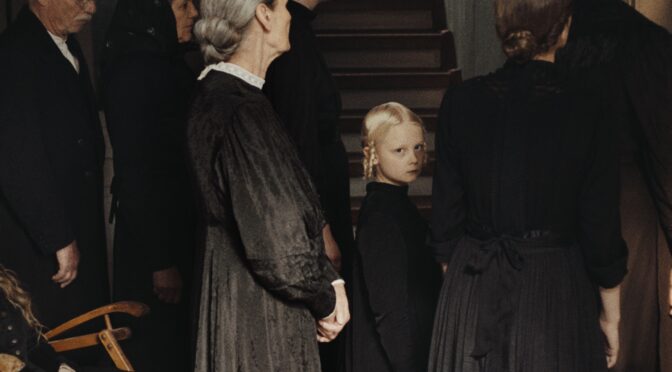
On a farm in northern Germany, four generations across four different eras — the 1910s, the 1940s, the 1980s and the 2000s — take turns inhabiting the same space over the course of a century. They appear separated by time, yet they are linked by the same thoughts, fears and desires. What happens in the past resonates in the present, and unresolved traumas return with force in the generations that follow.
Sound of Falling, the second feature by Mascha Schilinski, is a disturbing portrait of four women who become spectators of other lives while moving through the rooms of this house-as-world. They share similar experiences: women searching for the true meaning of things; women who daydream about their own deaths as something reassuring; women deeply aware of the male gaze that sexualizes them to the bone; women who laugh at the wrong moment, who wonder what it feels like to walk with only one leg, or choose death rather than become victims of something even worse.
The camera follows them down the corridors and through the surrounding landscape. At times it adopts the subjective viewpoint of someone spying through a keyhole — turning the characters into camera operators themselves, better at observing others than bearing witness to their own lives. At other moments, the camera feels like a strange presence, almost like a ghost of the house, silently watching and feeding on everything it sees.
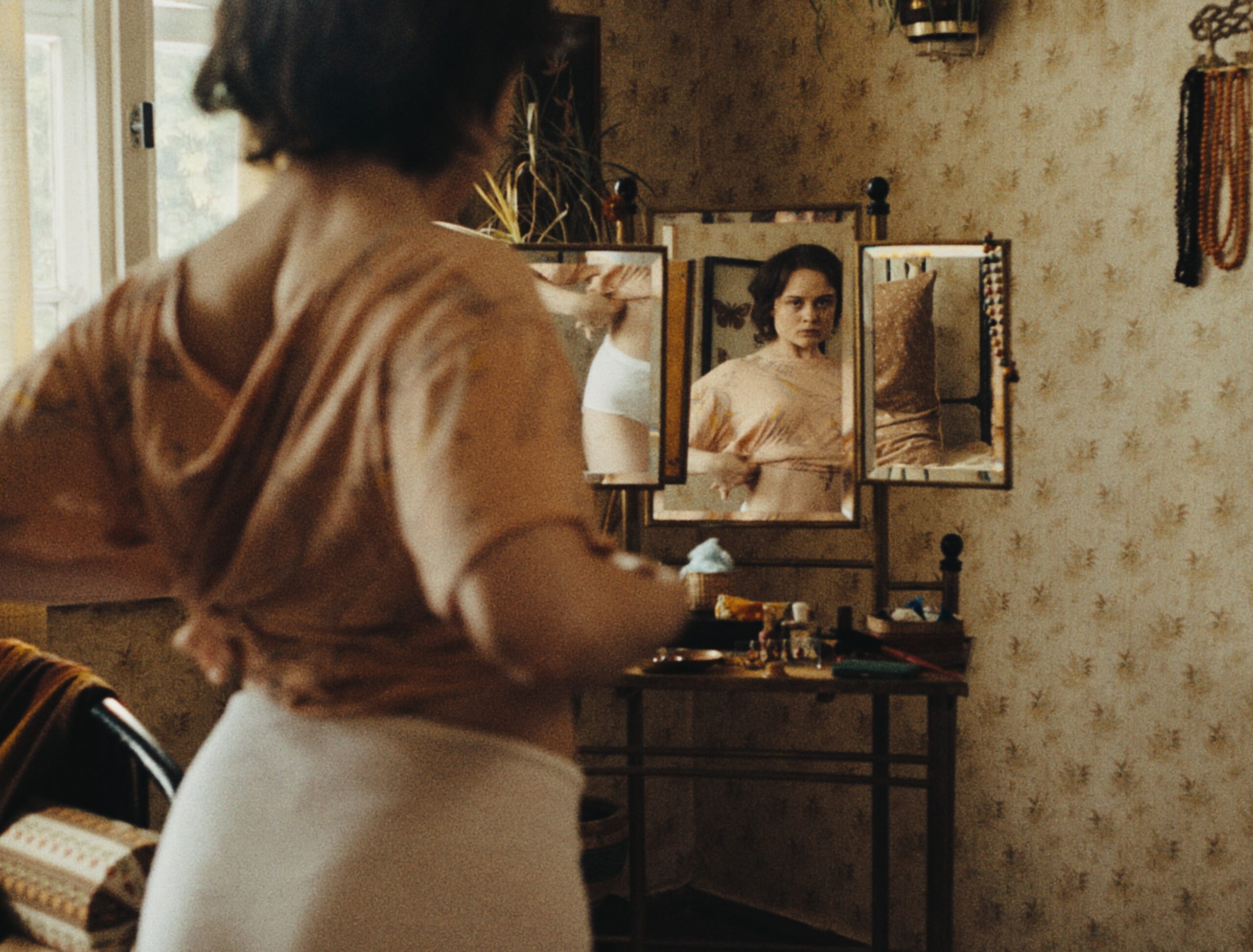
As young Alma — one of the film’s protagonists — reflects, a word repeated often enough ends up loseing its meaning. The film applies this idea to time: its constant temporal shifts erode the very notion of chronology, creating a space-time continuum where everything seems to happen at once. It’s a dimension that strongly echoes the cinema of Tarkovsky.
Across the decades, the female body remains subjected to physical, psychological, and sexual violence. This violence feels engraved in their genetic code, and its only alternative seems to be the dissolution of the body through death. The lives of these women remain elusive, impossible to capture even through the camera that appears frequently, yet can only show ghosts, immaterial figures ready to take flight. In the same way, cinema offers us nothing but shadows, simulacra of reality that we can never fully grasp, yet that shapes our identity at a subconscious level.