

Article by Niccolò Bedino
Translation by Salvatore Chiellino
Immortality can become a silent curse, leaving the choice of when to flip the switch as the only true act of freedom. In María Martínez Bayona’s The End of It, which premiered in the Out of Competition section at the 44th TFF, death is no longer a biological inevitability. Instead, in a near future where aging has been eradicated, it has become a reversible decision. The protagonist, Claire (Rebecca Hall) – a once-provocative artist approaching 250 years – announces her desire to die and turns her farewell into one last, extreme performance. Her choice soon sparks doubts and suspicion in her partner (Gael García Bernal) and in those around her.
The film starts from an ambitious premise. However, it then opts for a “festival sci-fi” aesthetic that repurposes a world visually identical to our own. Here, immortality and synthetic bodies are described rather than shown, reducing artificiality to a mere technological detail superimposed on humans. This proves to be a clear limitation in the film’s world-building, especially once a vague creed surrounding rejuvenation comes into play. Lacking a proper backstory, this element feels like little more than a convenient pretext to turn Claire’s act into a spectacle, elevating her into a messianic figure, an artificial body sacrificing itself to remind humanity what it means to have limits.
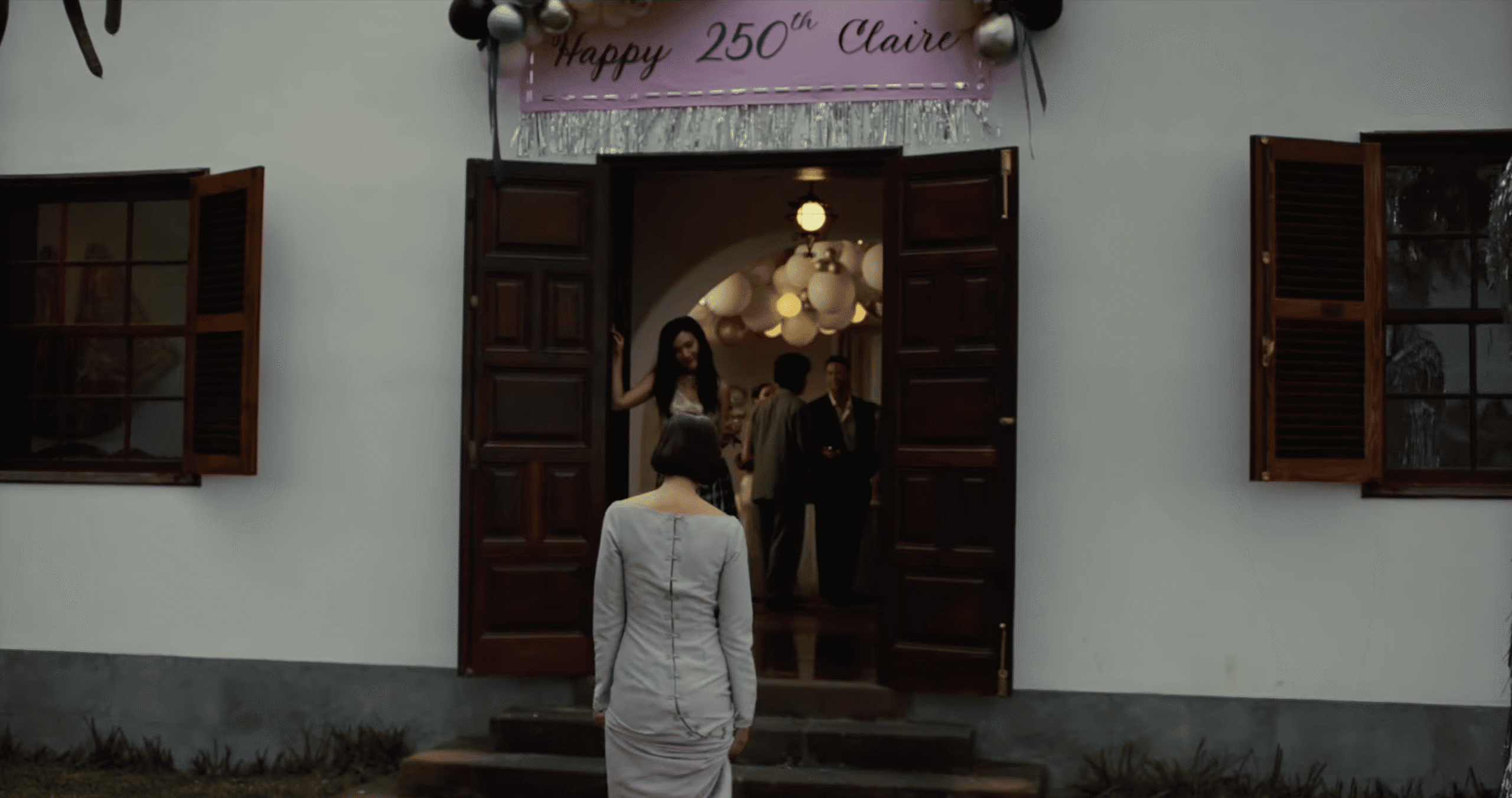
Even so, Bayona’s direction reveals remarkable intuition, especially in her handling of tone and soundtrack. The opening sequence, set to Umberto Tozzi’s Gloria, immediately establishes an ironic undercurrent that later erupts in the lyric “we are young and free” – words laden with bitter ambiguity when sung the day before one’s death. The rest of the score, built on minimalist, almost monotonous sounds, sustains the tension with a starkness reminiscent of contemporary “elevated horror.”
It is in its visual imagery that the film falters, since it ends up leaning on existing models rather than truly reworking them. It borrows from the restrained absurdity of Dogtooth (Lanthimos, 2009), the corporeal spiral of The Substance (Fargeat, 2024), and the anatomical obsessions of Crimes of the Future (Cronenberg, 2022), alongside all-too-obvious nods to Black Mirror and Altered Carbon. As a result, the movie loses some of its bite and originality. Still, the story’s most vital paradox remains intact: a sudden surge of almost Wolverine– or Highlander-like energy that reignites the will to live at the very moment when death is accepted.