

Article by Ludovico Franco
Translation by Patrick Zaffalon
In 1982, a mysterious disease strikes the inhabitants of a remote Chilean village. The “plague”, as they call it, seems to stem from one of human beings’ primal impulses: the scopic drive. This killer gaze is not that of some petrifying Gorgon, nor that of the mechanical eye of a cinematographer who’s filming, trying to capture death. The deadly mirada (“gaze” in Spanish) is that of a Medusa whose snakes are replaced with eccentric jewelry and colorful sequins.
The epicenter of the outbreak is Mamá Boa’s cabin and her family, a non-place at the edge of the world and reality where a group of trans women lives and stages variety shows. The setting is similar to a New York house but with the verve of an Almodovarian community. Such a plague legend serves as the magical and symbolical veil that softens reality’s dread – AIDS – trying to give a meaning to death.
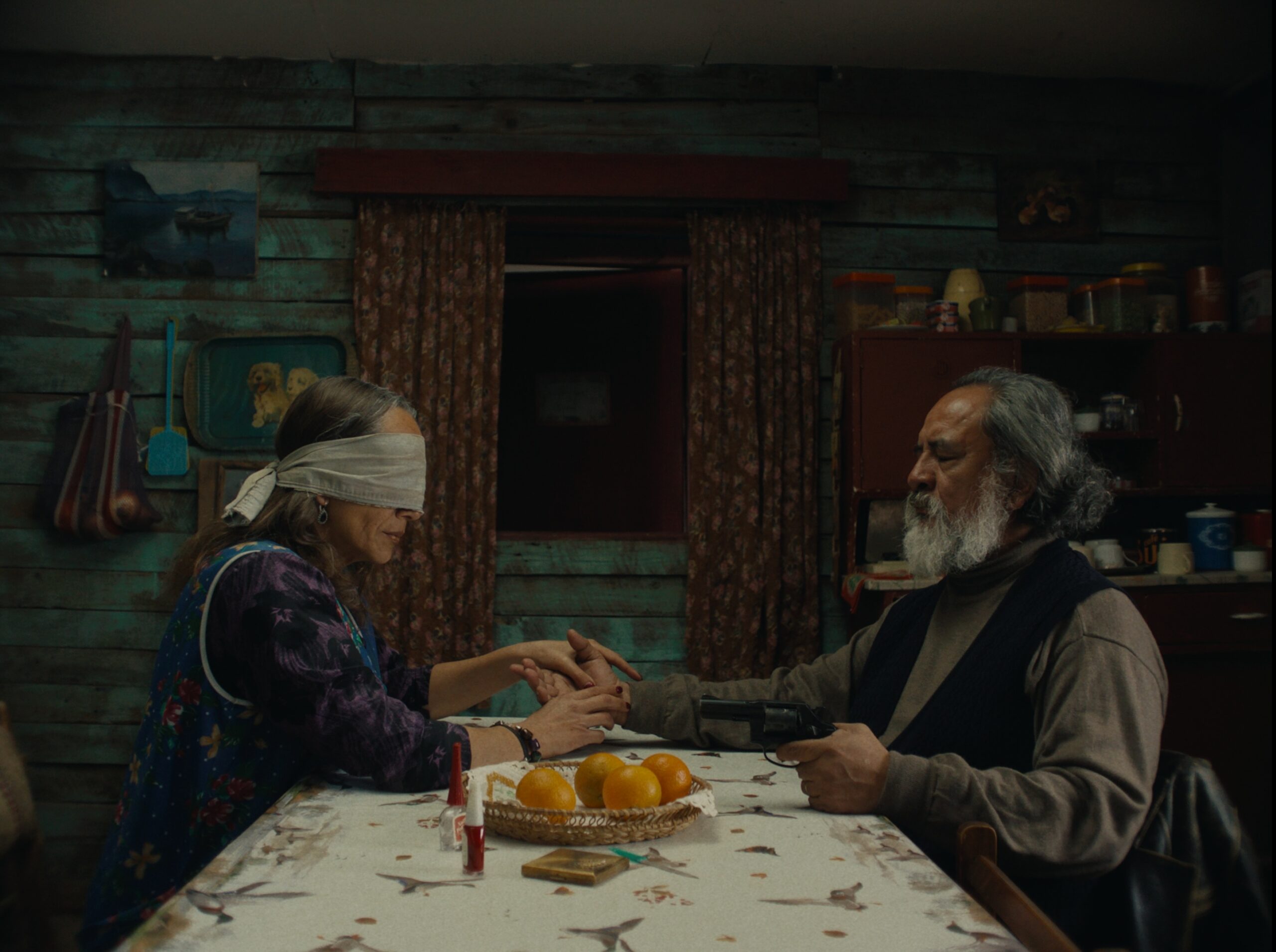
Yet killing and blinding the other is not enough, nor is it blindfolding the surviving “cross-dressers” – as they call themselves – as every trans body is ontologically political, just as the gaze is. The central focus of the whole film is the urgent need to put back at the center a queer perspective. Awarded in Cannes in the Un Certain Regard section (where else?), the film depicts men in the village who cover their eyes when the “maricones” walk by, trying to protect their sight: they are nothing but hateful Oedipus-like spectators, blinded by fear. But soon the disease spreads within them as well, and in that exact moment, trans cinema becomes possible, opposing the hybrid to binary polarization as an aesthetic need.
From this perspective, even the canons of Western cinema – a historically masculine genre – are reshaped. Conflict is not settled through a duel (which is here only imagined), but it vanishes in the positive reconciliation of the oppressed. Trans rage does not burst into the bloody violence of hate. Instead, it leads the miners to recognize themselves as oppressed bodies, fostering an awareness that can thus influence all the other gazes of the world.