
Article by Vittorio Barbieri
Translation by Giulia Zanotto
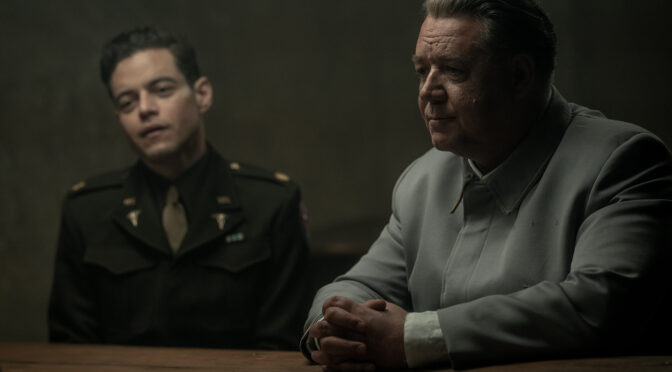
In November 1945, an ambitious psychiatrist (Rami Malek) is in charge of drawing up the psychological profiles of the Nazi leaders who are detained by the Allies, among whom the disturbing Hermann Göring (Russell Crowe) is included. While trying to understand the prisoners’ motives and defense strategies, Judge Robert Jackson (Michael Shannon) fights to establish an international court that will guarantee impartial justice even for the perpetrators of World War II.
James Vanderbilt brings a Hollywoodesque Nuremberg to the screen, with grandiose sets and color correction used to desaturate the tones. The plot eludes faithful reconstruction: in fact, the actual focus is on recounting the relentless duel between the arrogance of a criminal and History’s judgement. The decline of the hierarchs is embodied by Russell Crowe who, with his majestic physique, portrays Göring as a vain and arrogant man, who is unable to face defeat and the horrors of the Reich. Douglas Kelley, who challenges his arrogance, is properly played by Malek; however, his characterization strongly relies on hagiographic tones. The supporting cast has not been given enough relevance: Michael Shannon’s excellent performance is not given adequate space, nor is the rest of the German high command, which is relegated to the background.
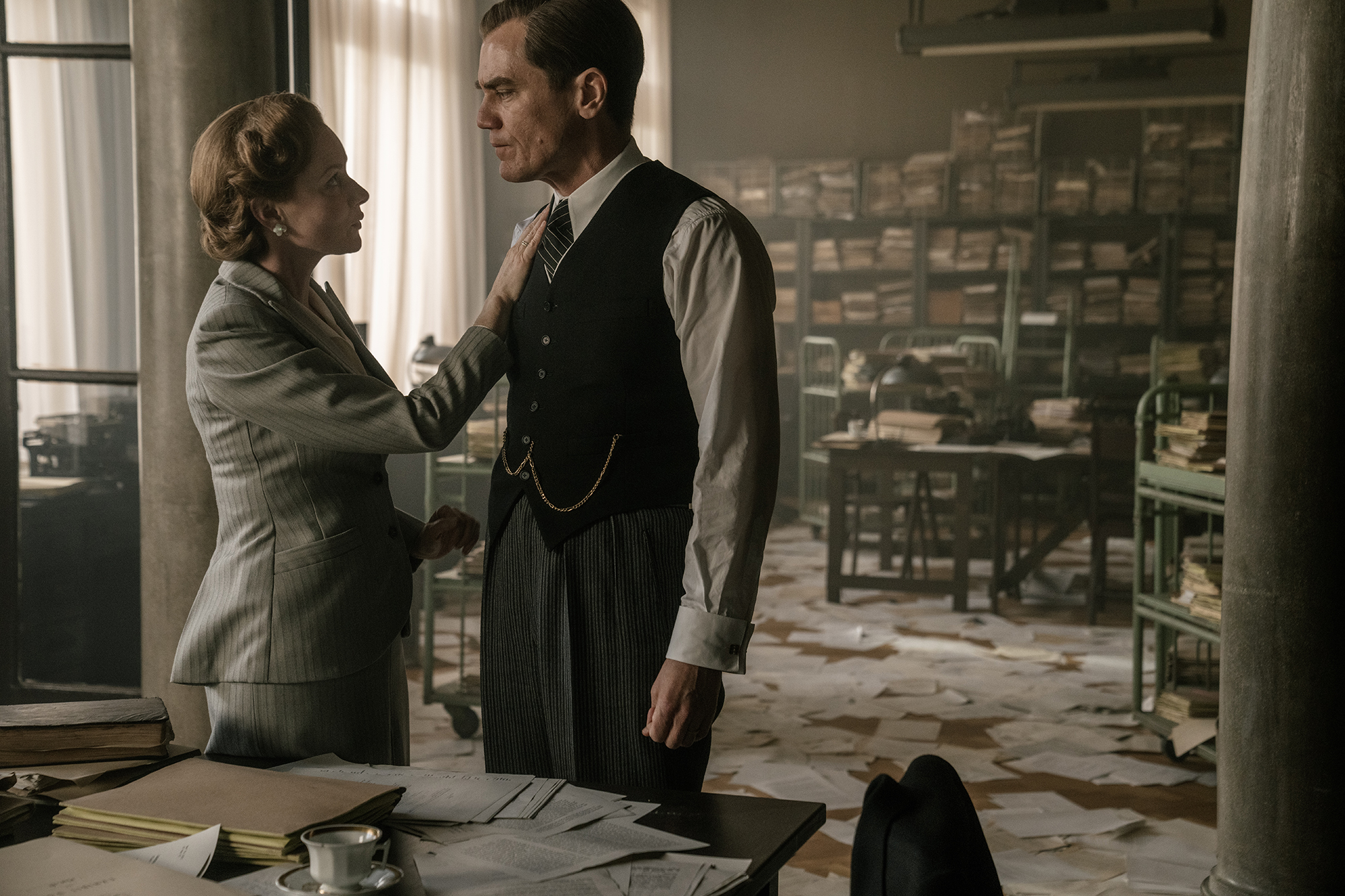
Even if the movie tried to recall the “David versus Goliath” model, Nuremberg fails to maintain the deeper ethical implications of this concept. The Nazis are portrayed as cowardly men who are ready to absolve themselves, and are reduced to credible embodiments of the “banality of evil”. However, the film places them in an overly linear and schematic conflict that flattens ambiguities. The laudable intention to keep the memory of that trial alive is what stands out, even if the search for dramatic effect prevails over the depth of the reconstruction.
The article was published in “la Repubblica” on November 30th, 2025.