
Article by Andrea Dosio
Translation by Salvatore Chiellino
When we witness a tragic event as outside observers, it is common to focus on the immediate pain felt by those involved. Rarely do we stop to consider what comes afterward, or the question it raises: how do we learn to live (or live again) in the wake of a tragedy?
Irene Bartolomé’s Dream of Another Summer explores the aftermath of a catastrophe. In the summer of 2020, a fertilizer fire triggered a massive explosion at the port of Beirut, sending shockwaves through the city like an earthquake. Alice, the director’s alter ego seen almost exclusively from behind or in silhouette, returns to Beirut a year later to understand how the city has changed.
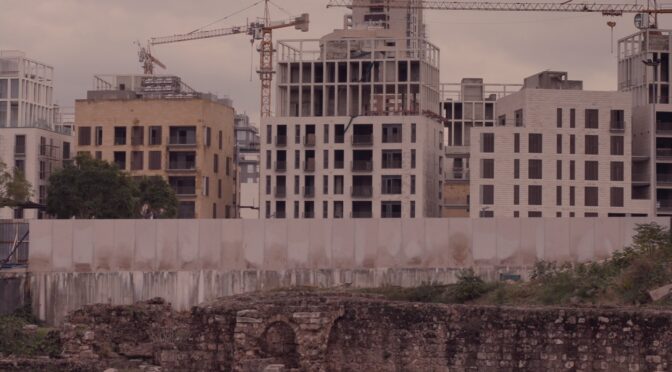
Rather than delving into the sociopolitical fallout, such as the economic crisis that has strained both institutions and citizens, Bartolomé’s documentary approach focuses on observing fragments of reality, in which she finds the roots of unresolved trauma. The film consists largely of static shots immersed in an urban soundscape. Dilapidated buildings stand in contrast to modern ones, while residents are filmed from a distance as they go about their desolate routines, with their words barely audible. The camera remains unobtrusive, observing the scenes from a respectful distance rather than intruding on them. Seeking geometric patterns among everyday objects and perhaps wary of altering reality, it adopts a style reminiscent of certain Far Eastern cinema, from Ozu to Back Home, Tsai Ming-liang’s penultimate film.
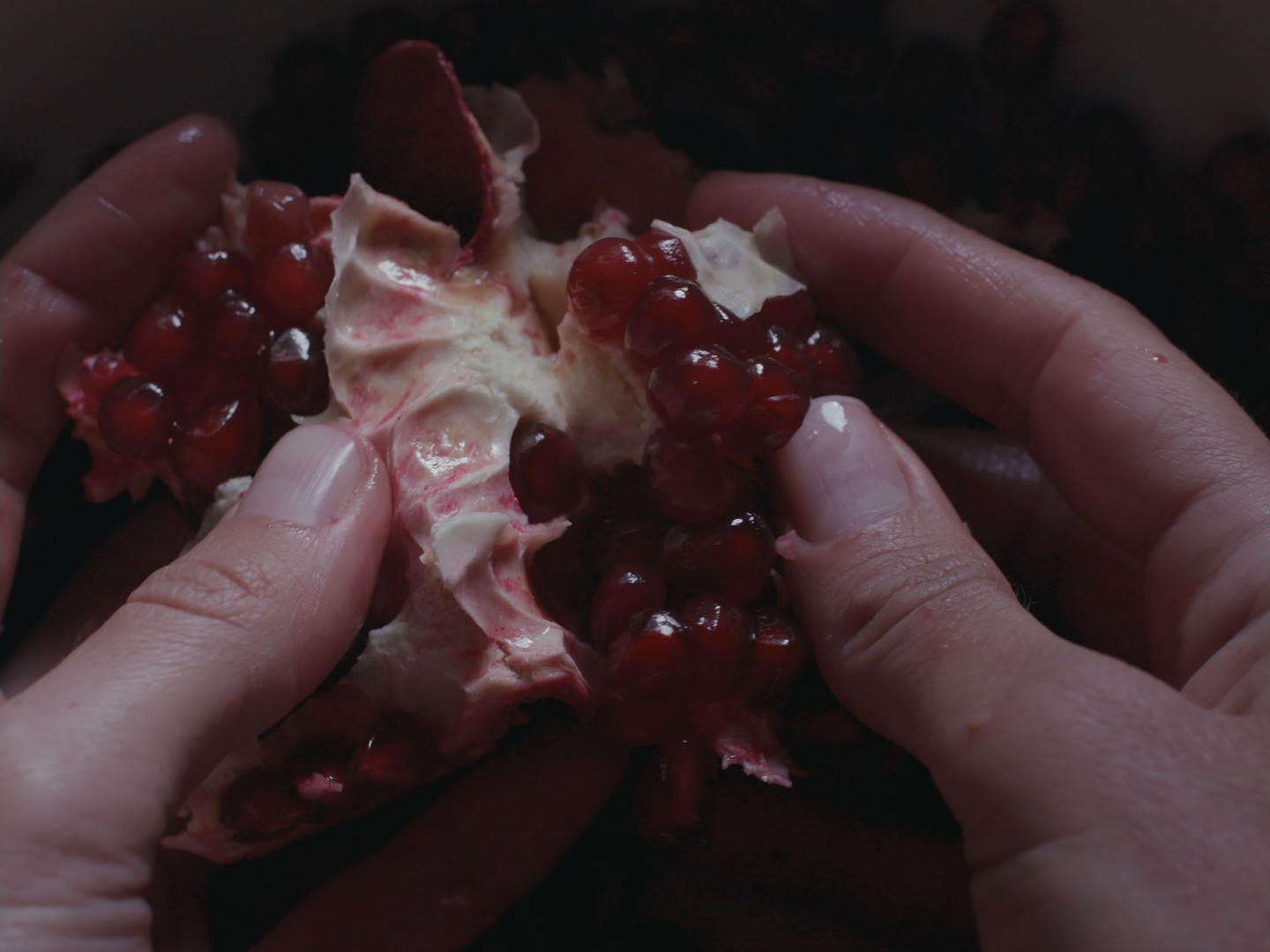
Beirut’s fragility is revealed in the very foundations of its buildings. Torn from the ground, they are likened, through a striking visual metaphor, to pomegranate seeds separated from the membrane. These structures are destined to crumble into rubble, just like others before them, caught in a cycle of death and rebirth within the urban landscape.
The most significant structures are the grain silos, which acted as a physical shield during the explosion that summer, absorbing part of the shockwave. The only clear voices in the film, heard in voicemail recordings and messages exchanged between Alice and her loved ones, repeatedly warn that the silos are at risk of collapsing and must be demolished. This sets up a central dilemma in the film’s final act: should a structure that has become a symbol of trauma be torn down, risking the erasure of the memory of the disaster, or should its ruins be left standing to preserve that memory forever?
There is no easy answer, yet the dream of another summer, one in which healing has finally taken place, seems to ask us this: not to erase the negative, but to turn it into a starting point for moving forward.