
Article by Alessandra Sottini
Translation by Rebecca Servi
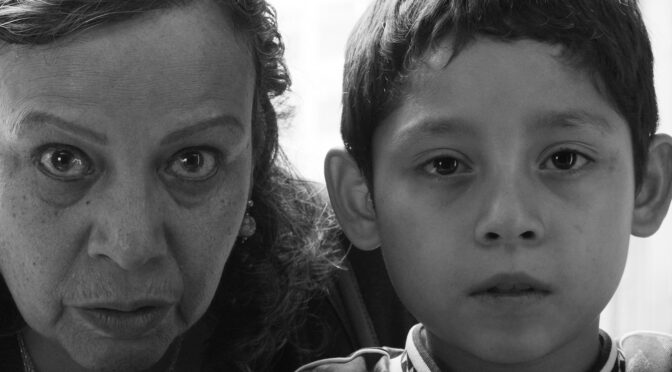
Moscas is the feature film by Fernando Eimbcke screened in the Out of Competition section at the 44th Torino Film Festival. It is striking for its clarity of vision. The film guides the viewer by adopting from time to time the perspective of the character on screen and captures the intimacy of its characters. By doing so, it reveals Olga’s (Teresita Sánchez) disillusioned loneliness and Christian’s (Bastian Escobar) genuinely carefree nature. Both are united by grief and by the fear of having lost and, possibly, losing someone dear to them.
The encounter staged by Eimbcke is anything but simple. Mutual understanding cannot be immediate for someone like Olga, who has devoted herself to methodical rigor and silence to suppress her emotions. It is far easier -perhaps more comforting – to withdraw into herself and refuse any disruption to her grey, monotonous, routine, which is emphasized through the use of black and white – both a stylistic choice and a narrative device. Little Christian is surrounded by the unconditional love of a father who makes sure he has everything, despite financial difficulties. He does what a child should do: he plays. And he is brilliant at Cosmic Defenders Pro, a game that rouses the woman from the numbness that was stifling her sensitivity and attention towards Christian’s needs. Meanwhile, his carefree attitude is overshadowed by not being able to receive any news of his mother, who is ill with cancer.
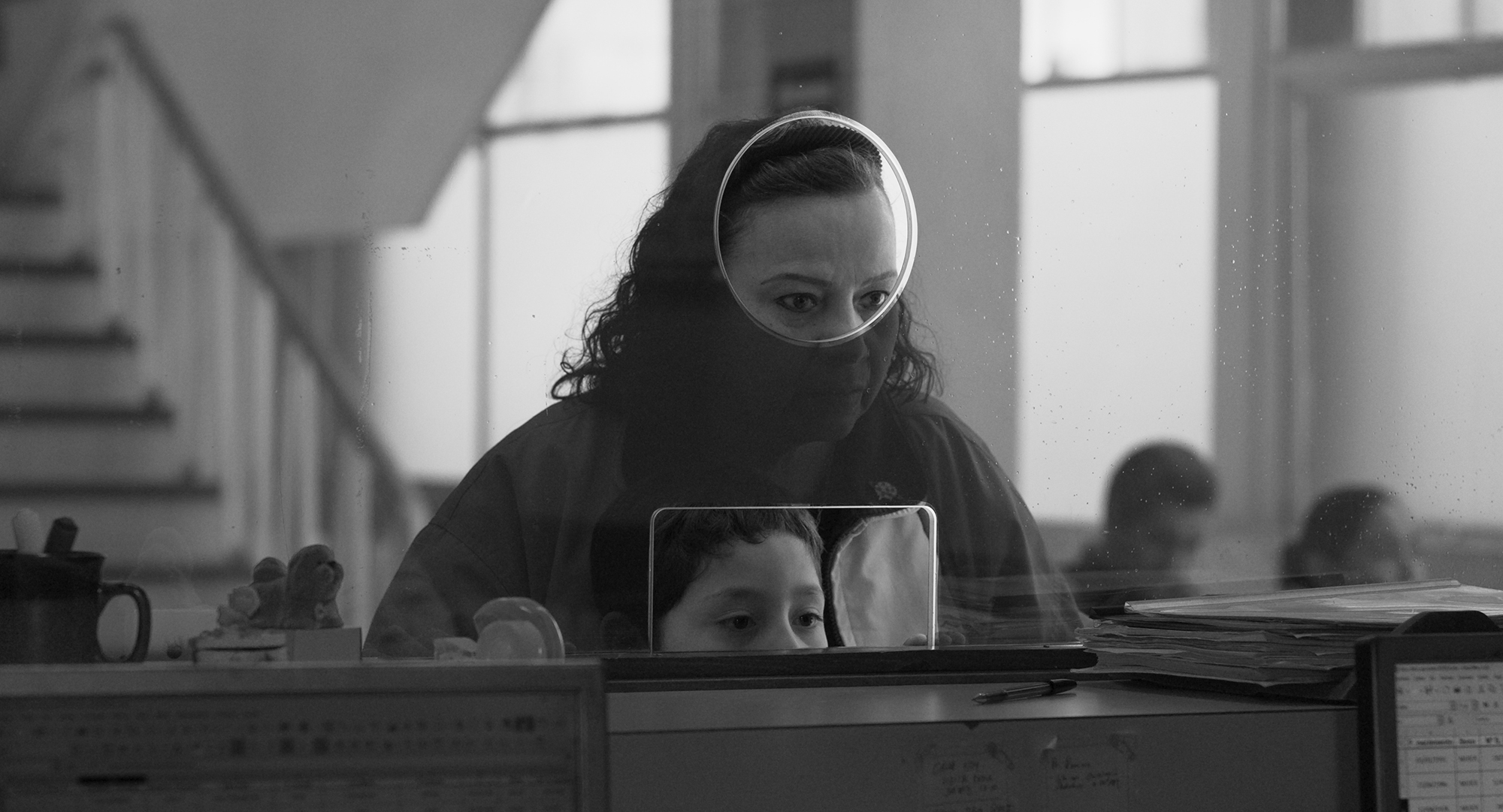
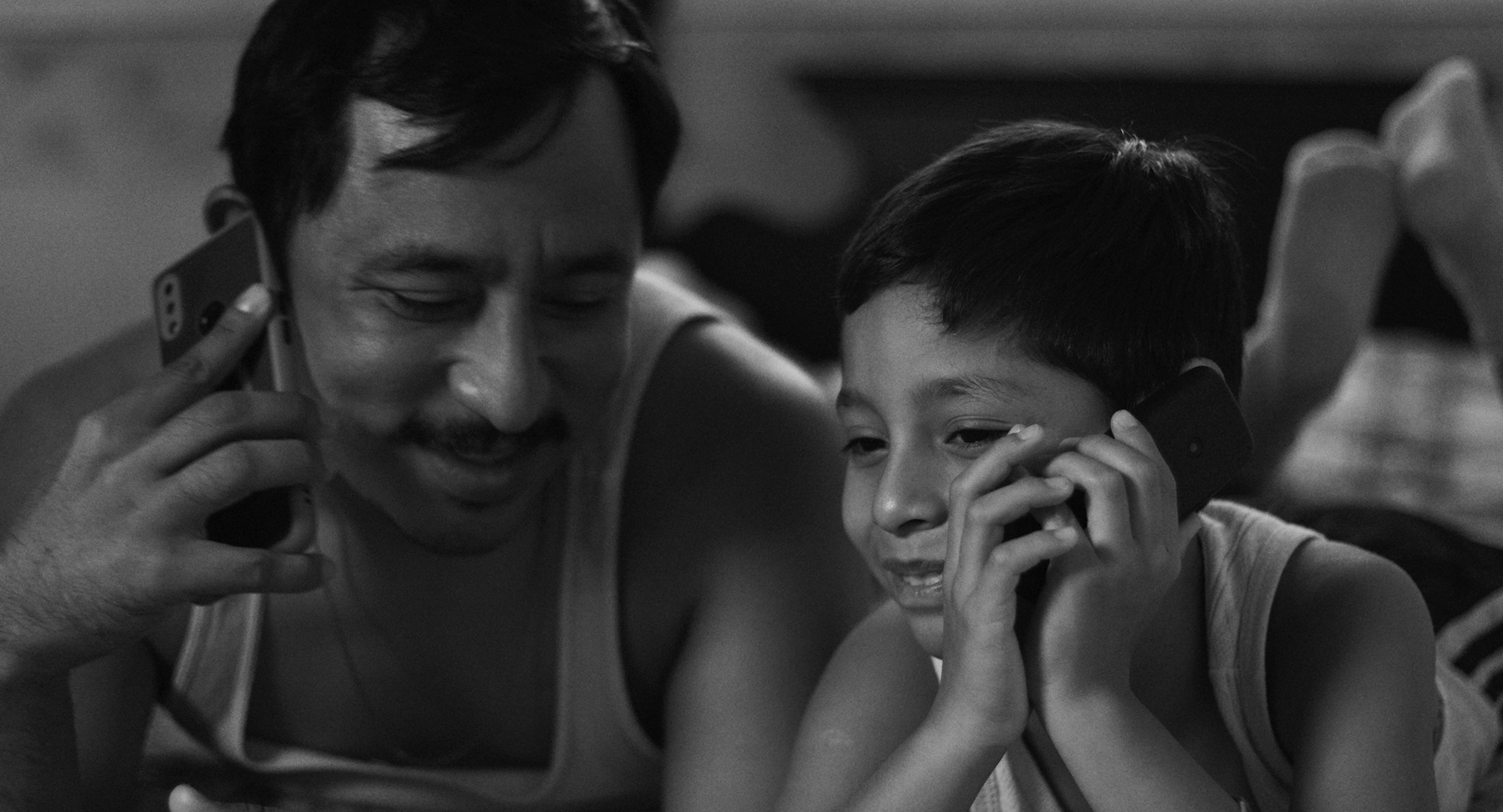
The figure is initially unwanted and driven away by evident spatial markers, but it is then welcomed into her intimate space and field of vision. Then, the viewer discovers how much alike Olga and Christian are. They both reflect two typical traits of flies – a recurring visual allegory in the film: disturbing others indiscriminately and having a short memory. Olga has forgotten what it means to be joyful and genuine, as only a child can be, whereas Christian forgets his father’s affectionate guidance and keeps on playing his favourite game – just like a fly that keeps on hitting a closed windowpane. And so, he pushes away the pain of his bereavement.
Both metaphorically and narratively, Moscas highlights a mutual recognition and discovery that seems impossible at first. Nevertheless, this process comes to fruition through closing the distance to overcome one’s own trauma: wounds that do not heal, but that find relief when one least expects it.