Archivi tag: TFF

“The Big Fix” di Jeremy Kagan

Strizzando l’occhio al ’68, il giallo si tinge di commedia

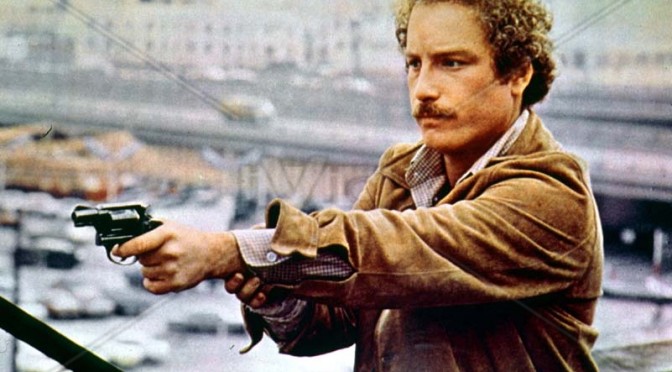
Moses Wine (Richard Dreyfuss) è un detective privato che vive alla giornata. Nel ’68 era un giovane attivista a Berkeley, ma i sogni hanno lasciato spazio al disincanto. Viene assunto da una sua vecchia fiamma (Susan Anspach) per risolvere un caso di spionaggio elettorale nei confronti di un politico californiano; ma la faccenda è ben più pericolosa di quanto si immagini… Continua la lettura di “The Big Fix” di Jeremy Kagan

THE SUGARLAND EXPRESS: fleeing to America in order to find ourselves

Article by: Matteo Merlano

Translation by: Ilaria Rana

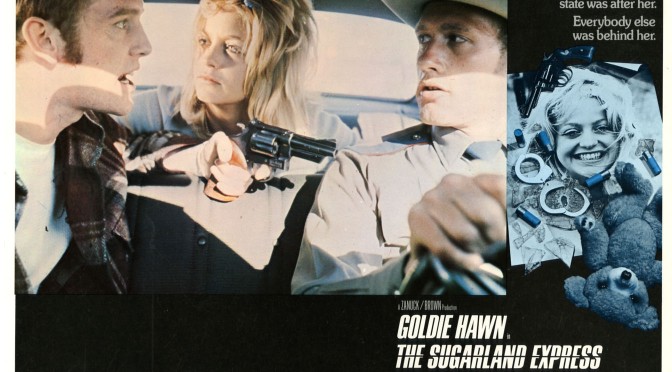
 In 1974, two years later the unexpected success of ‘Duel’, Spielberg creates the most intimate and undervalued film he has ever produced. ‘The Sugarland Express’ is not a simple “on the road” film like those of that period but, as stated by the director from Cincinnati, it is a journey through love, the States and Cinema itself.

The story talks about two drifters who escape the law to retrieve their daughter, who is in the care of an elderly couple in Sugarland, Texas. After having sequestrated a police car and a police officer, they start a ruthless chase throughout the dusted and savage States
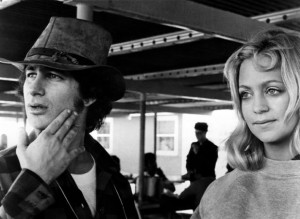
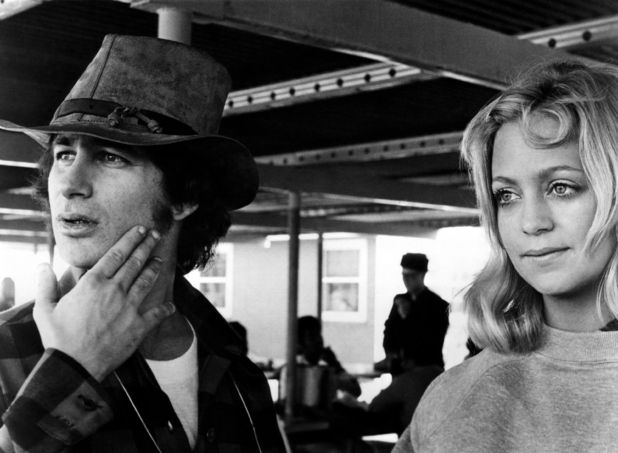
Steve Spielberg e Goldie Hawn sul set

The actors Goldie Hawn and William Atherton play the role of the two drifters. The latter is known for the role of the troublesome character of Walter Peck in “Ghostbusters” and some little roles in “Die Hard” and “Die Hard 2” in the 80’s.

Spielberg pays homage to most of the cinematography he loves: from Ford’s Westerns to Peckinpah’s New Hollywood. He also takes inspiration from his first short film “Amblin”.

This ‘on the road’ journey becomes the metaphor of an inner journey (like that of “Easy Rider”), which is shown here through the eyes of two parents who are willing to risk their lives just to find the thing they love the most: their daughter. Do we need to escape in order to find happiness? Do we need to have the whole world against us to find what we love? The answer is… yes. We need to accept the consequences of our choices and we have to fight and flee in order to find what we really are and want. The main characters know it, and they will accept their role in the world. Are they damned people or criminals? Of course not. They are simply human beings.

Vilmos Zsigmond’ photography is beautiful, while John Williams, composer of the country soundtrack, became Steven Spielberg’s friend and composer from this film on.

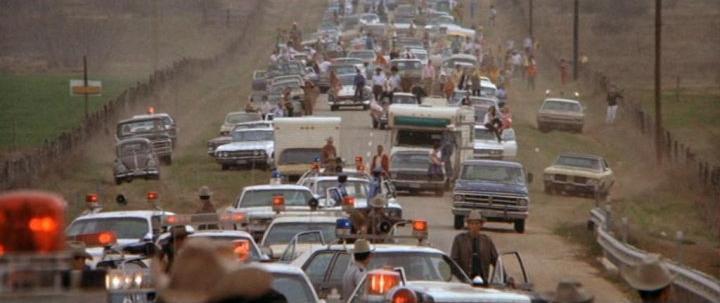
When it was first released, this film did not meet great public success. However, it was rediscovered later. Here is a final anecdote: in “The Blues Brothers”, the popular scene of the chase with dozens of police cars is an ironical reference to “The Sugarland Express”.
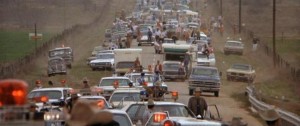

una suggetiva panoramica di The Sugarland Express


“Rada” di Alessandro Abba Legnazzi

Camogli, Casa di riposo per marittimi “G. Bettolo”. Ci porta qui Alessandro Abba Legnazzi, per mostrarci come trascorrono le loro giornate diciotto marinai ormai in pensione. Il termine “rada” designa una baia dove le navi possono ancorare e sostare al riparo dai venti e dalle correnti. La casa di riposo si trova proprio in una rada, come fosse una nave alla fonda che potrebbe partire da un momento all’altro: è il pensiero comune per gli ex-marinai che l’abitano. La rada è al contempo spazio fisico e contenitore di attese, ricordi, sogni e morte e accoglie il lento trascinarsi delle esistenze dei protagonisti la cui quotidianità è scandita unicamente dall’ora del pranzo o del sonno.

Continua la lettura di “Rada” di Alessandro Abba Legnazzi

“Duel” di Steven Spielberg

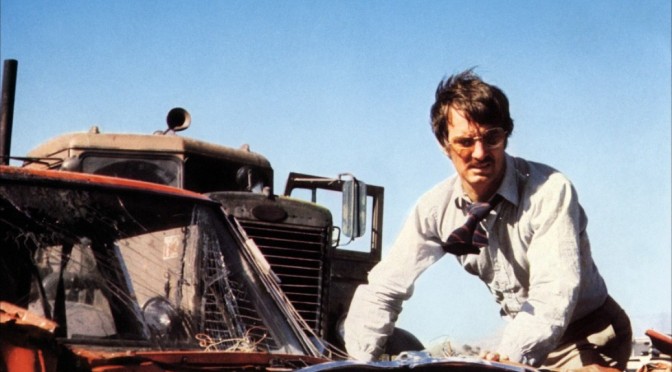
Nel percorrere le assolate e solitarie strade della California a bordo della sua Plymouth arancione, il commesso viaggiatore David Mann (Dennis Weaver) s’imbatte in un’autocisterna che procede decisamente adagio per il limite di velocità imposto dalle autorità stradali. Dopo aver pazientemente atteso che il conducente prema un po’ di più l’acceleratore, David gli chiede con il clacson di lasciarlo passare ed esegue la manovra. Ma l’autista, letteralmente “invisibile”, una volta che questi lo ha sorpassato, decide di seguirlo e di perseguitarlo al fine di rendergli la vita impossibile. Violenza psicologica, di quelle che ti logorano i nervi. E David non può fare nulla perché l’individuo, di cui non saprebbe fornire nemmeno un identikit in quanto non l’ha mai visto, non sta violando i suoi diritti né può essere penalmente perseguibile solo perché, “casualmente”, si ritrova tutte le volte a fare il suo medesimo tragitto. Ormai in continuo stato di panico, David decide di farla finita, ingaggiando un mortale duello a colpi di acceleratore… Continua la lettura di “Duel” di Steven Spielberg

YOUNG BODIES HEAL QUICKLY, AN ATYPICAL ON THE ROAD FILM

Article by: Matteo Merlano

Translation by: Giulia Magazzù

 American experiments ride along familiar roads. Filmmakers play with pre-existing genres, distorting, shrivelling and demolishing them. It is the case of this bizarre film by New Yorker director Andrew T. Betzer, which already been presented at the Tribeca Film Festival and has now landed in Turin in the Waves section. The film portraits the flight of two brothers (Gabriel Croft and Hale Lytle), guilty of the murder of a girl, through a disorienting and lost America, inhabited by freaks, nostalgic for the Reich and the war in Vietnam (as the bizarre character of an old “freak”).

Betzer depicts an unforgiving portrait of his country shot in a quite handcrafted way. ‘Young Bodies Heal Quickly’ shows us a lost and crazy version of the US, just like the two young protagonists who are running around the country without an existential reason. So far, the idea is interesting and the dirty and blurred photography conveys this alienating effect. Eventually, this style weighs and after the first hour, the story goes completely off the visual and editing rails. Experimenting does not mean raving and the impression we had leaving the cinema is that in several parts Young Bodies Heal Quickly got lost, dragging the viewer in this disorientation. The final climax is too long and dispersive and putting an explicit sex scene (cameo by Josephine Decker that, after the short film Violent Madonna Mia seems to take taste in expression of sexuality explicit) does not help the audience in finding his soothed attention.

Generally, the film is an interesting experiment and visual exploration of a possible new language of American independent cinema. It is always of Seventh Art, which requires implementing every available form. Maybe a little storytelling would not hurt, in a time when the real experiment is perhaps the tale. “But that’s another story”, quote.

“Young Bodies Heal Quickly” di Andrew T. Betzer

Un “on the Road” atipico

La sperimentazione americana percorre strade conosciute. I cineasti giocano con generi pre-esistenti e li stravolgono, accartocciano, demoliscono. È il caso di questo bizzarro film del regista newyorkese Andrew T. Betzer, presentato già al Tribeca Film Festival e ora sbarcato a Torino nella sezione Onde. Girato in maniera quasi artigianale, il film racconta la fuga di due fratelli (Gabriel Croft e Hale Lytle) colpevoli dell’omicidio di una ragazza attraverso un’America disorientante e perduta, abitata da freaks, nostalgici del Reich e della guerra in Vietnam (come il bizzarro personaggio di un vecchio “fricchettone”). Continua la lettura di “Young Bodies Heal Quickly” di Andrew T. Betzer

“Jaws” (“Lo squalo”) di Steven Spielberg

Una Paura che non svanisce mai

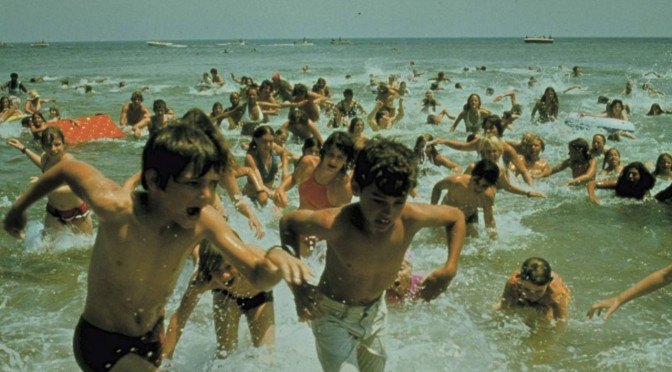
Sono passati ormai 39 anni da quando, in quel lontano 1975, Steven Spielberg realizzò uno di quei film che ha fatto epoca non solo per il successo di critica e di pubblico, ma si è imposto come evento culturale a livello di immaginario collettivo. Da quella lontana estate tutti coloro che hanno visto questo film non riescono a guardare il mare con occhi sereni. Tanto si è scritto, ma il fascino che suscita sul pubblica resta sempre immutato. Continua la lettura di “Jaws” (“Lo squalo”) di Steven Spielberg

LET’S GO

Article by: Matteo Bagnasacco

Translation by: Paola Pupella

 “Let’s go”, directed by Antonietta De Lillo, was included in the section “Diritti & Rovesci”, a new section of the 32nd Torino Film Festival edited by Paolo Virzì.  In her film, the director of “Il resto è niente (Everything else is nothing)” tells the story of Luca Musella.

Continua la lettura di LET’S GO

WISDOM AND HAUGHTINESS

Article by: Romilda Boffano

Translation by: Ilaria Rana

“La Sapienza” is the fifth feature film by Eugéne Green. Its preview was screened last summer at the Locarno Film Festival and it opens the section “Onde” of the 32nd Turin Film Festival. This film tells about the meeting between two couples. Alexandre and Alienor Schmidt are married and they are an architect and a psychoanalyst respectively.

Continua la lettura di WISDOM AND HAUGHTINESS