Archivi categoria: Film (English)

“FINAL PORTRAIT” by STANLEY TUCCI

Versione inglese a cura del Master in Traduzione per il Cinema, la Televisione e l’Editoria Multimediale

Article by: Ottavia Isaia

Translation by: Federica Franzosi

After recently getting in Albert Einstein’s shoes for the anthological tv series “Genius”, Geoffrey Rush is now in those of Swiss sculptor and painter Alberto Giacometti in Final Portrait by Stanley Tucci. The film narrates the long eighteen days needed to paint James Lord’s portrait, after promising at first a quick work, which would need a couple of hours or an afternoon at most to complete. Armie Hammer plays the American writer, whereas French actresses Sylvie Testud and Clémence Poésy give life, respectively, to the artist’s wife Annette and Caroline, the prostitute who for four years had been his muse and lover.

Continua la lettura di “FINAL PORTRAIT” by STANLEY TUCCI →

“ARPÓN” by TOMÁS ESPINOZA

Versione inglese a cura del Master in Traduzione per il Cinema, la Televisione e l’Editoria Multimediale

Article by: Gianmarco Perrone

Translation by: Cristina Di Bona

Arpón stages a conflict/cohesion. It is a drama, written and directed by Tomás Espinoza, a Venezuelan director. He takes part in the competition with his first feature film. The main characters are a man and a little girl. Even though they are antagonists, they have in common the desire for rebellion.

Continua la lettura di “ARPÓN” by TOMÁS ESPINOZA →

“LAURI MÄNTYVAARAN TUUHEET RIPSET – THICK LASHES OF LAURI MÄNTYVAARAN ” by HANNALEENA HAURU

Versione inglese a cura del Master in Traduzione per il Cinema, la Televisione e l’Editoria Multimediale

Article by: Elio Sacchi

Translation by: Melissa Borgnino

The explosion of a bouquet, the kidnapping of a groom and a motocross escape on water are the scenes that introduce Finnish director Hannaleena Hauru’s first feature film, a grotesque and surreal coming of age story, with many cartoonish situations.

Continua la lettura di “LAURI MÄNTYVAARAN TUUHEET RIPSET – THICK LASHES OF LAURI MÄNTYVAARAN ” by HANNALEENA HAURU →

“La madre, el hijo y la abuela” by Benjamín Brunet

Versione inglese a cura del Master in Traduzione per il Cinema, la Televisione e l’Editoria Multimediale

Article by: Annagiulia Zoccarato

Translation by: Federica Franzosi

The Onde section of the 35th Torino Film Festival includes among its titles a film that is as touching as it is delicate.  La madre, el hijo y la abuela is the first feature film by the Chilean director Benjamín Brunet, which was filmed in the city of Chaitén after the eruption of the volcano with the same name.  The movie is divided in three chapters, one for each character, and walks on the thin line between fiction and documentary.

Continua la lettura di “La madre, el hijo y la abuela” by Benjamín Brunet →

“What Happened to Monday” by Tommy Wirkola

Versione inglese a cura del Master in Traduzione per il Cinema, la Televisione e l’Editoria Multimediale

Article by: Chiara Gioffrè

Translation by: Emanuela Ismail

In a distopian future in which governments apply the strict policy of the only child, as a consequence of the overpopulation of the earth, seven twin sisters live their lives hidden. Each of them is allow to go out only once a week, the day that matches her name. They create a single identity in which everyone brings a part of her own being: Karen Settman. Everything flows quiet, until one of them, Monday, does not come back home.

The movie (edited by Raffaella de Laurentis) was initially displaying seven twin brothers as main characters. But Tommy Wirkola made amend the script in order to ask Noomi Rapace to perform the sisters.

Continua la lettura di “What Happened to Monday” by Tommy Wirkola →

“MESSI AND MAUD” by MARLEEN JONKMAN

Versione inglese a cura del Master in Traduzione per il Cinema, la Televisione e l’Editoria Multimediale

Article by: Fabio Ferrari

Translation by: Cristina Di Bona

Messi and Maud wasn’t the first title of this film. When it has been presented at the Toronto International Film Festival (TIFF), its title was La Holandesa. Subsequently, the agent decided to change it for the international distribution. For the director Marleen Jonkman, her movie will always be La Holandesa. Indeed, the plot revolves around a Dutch woman. Continua la lettura di “MESSI AND MAUD” by MARLEEN JONKMAN →

“TITO E GLI ALIENI” by PAOLA RANDI

Versione inglese a cura del Master in Traduzione per il Cinema, la Televisione e l’Editoria Multimediale

Article by: Giorgia Bertino

Translation by: Valeria Tutino

“In space, every particle has a voice”: Paola Randi, director of Tito e gli alieni, chooses science fiction as a testing ground to start telling the story of an unusual family. Anita, impatient 16 year old, and her brother Tito, 7 year old and already a perfect ragamuffin who knows his own, after the death of both their parents, are entrusted to their uncle (an intense Valerio Mastandrea), ex professor and now scientist in crisis holed up in Nevada desert.

Continua la lettura di “TITO E GLI ALIENI” by PAOLA RANDI →

“BARRAGE” by LAURA SCHROEDER

Versione inglese a cura del Master in Traduzione per il Cinema, la Televisione e l’Editoria Multimediale

Article by: Sofia Nadalini

Translation by: Laura Cocco

If you would like to watch the movie ”Barrage” without knowing that Lolita Chammah is Isabelle Huppert’s daughter, you would be surprised to see the resemblance between the two actresses. In the movie, as in the real life, they are mother and daughter.
Continua la lettura di “BARRAGE” by LAURA SCHROEDER →

“BEAST” by MICHAEL PEARCE

Versione inglese a cura del Master in Traduzione per il Cinema, la Televisione e l’Editoria Multimediale

Article by: Lucia Grosso

Translation by: Valeria Alfieri

In the Island of Jersey, Great Britain, young Moll is torn between two ways of living: the one where she is trapped by her family societal norms, and the carefree, ruleless one of her lover Pascal. This situation is framed by a series of murders that have been following one another throughout the years and that will invade the already troubled life of the protagonist. Continua la lettura di “BEAST” by MICHAEL PEARCE →

“LET THE SUMMER NEVER COME AGAIN” by ALEXANDRE KOBERDIZE

Versione inglese a cura del Master in Traduzione per il Cinema, la Televisione e l’Editoria Multimediale

Article by: Maria Cagnazzo

Translation by: Melissa Borgnino

A wind instrument played with uncertainty takes us into a blurred and just as uncertain world.

Let the Summer Never Come Again is entirely filmed with an old mobile phone, and the low quality of the images hits us with astounding force from the very beginning. The director is intentionally vague, forcing us to stay in the dark without clearly showing what is really going on. But we do not need to see well in order to understand the distress that pours out from every single sequence. This is the style of the author, which pervades the entire movie.

Continua la lettura di “LET THE SUMMER NEVER COME AGAIN” by ALEXANDRE KOBERDIZE →

“NELLA GOLENA DEI MORTI FELICI” by MARCO MORANDI

Versione inglese a cura del Master in Traduzione per il Cinema, la Televisione e l’Editoria Multimediale

Article by: Vanessa Mangiavacca

Translation by: Federica Franzosi

The theatre fills up with ears of wheat, but they are not those of the wheat fields in Cotignola (a town in Romagna, on the banks of the Senio river) that are seen on screen during the screening of the film, but they are being distributed to cinema-goers while they are waiting to get in. “It’s a documentary, but it’s not a documentary”. Ten minutes are enough for us to understand: the rural atmosphere will very soon change into a surreal and dreamlike vibe.

Continua la lettura di “NELLA GOLENA DEI MORTI FELICI” by MARCO MORANDI →

“TESNOTA – CLOSENESS” by KANTEMIR BALAGOV

Versione inglese a cura del Master in Traduzione per il Cinema, la Televisione e l’Editoria Multimediale

Article by: Ottavia Isaia

Translation by: Cristina Di Bona

In his first feature film, presented at the Turin Film Festival in the section Festa Mobile, Balagov tells, in some of its aspects, an autobiographical story, opened and closed by the signs that introduce the film. Nalchik, a little village in the Northern Caucasus, 1988: the life of a quiet Jewish family changes when the David (Veniamin Kats) and his girlfriend Lea are kidnapped. A high price is requested for ransom. This film wonders what a family would decide to sacrifice to save one of its members.

Continua la lettura di “TESNOTA – CLOSENESS” by KANTEMIR BALAGOV →

“PAGINE NASCOSTE” by SABRINA VARANI

Versione inglese a cura del Master in Traduzione per il Cinema, la Televisione e l’Editoria Multimediale

Article by: Elio Sacchi

Translation by: Valeria Tutino

To write her new book, the writer Francesca Melandri does a thorough research between Italy and Ethiopia on the past of her father Franco during the fascist dictatorship, and despite he was a racist, once the war ended, he preferred to delete from his memory his affiliation to the regime. In the investigation on the parent however, the writer comes across collective stories of the war of Ethiopia, one of the most violent pages of Italian history. Continua la lettura di “PAGINE NASCOSTE” by SABRINA VARANI →

“FIRSTBORN” by AIK KARAPETIAN

Versione inglese a cura del Master in Traduzione per il Cinema, la Televisione e l’Editoria Multimediale

Article by: Dario Grande

Translation by: Emanuela Ismail

After The Man with the Orange Jacket, the Latvian director Aik Karapetian comes back to the TFF with a disturbing, psychological thriller able to worm its way into the darkest depths of your mind. Continua la lettura di “FIRSTBORN” by AIK KARAPETIAN →

“MOST BEAUTIFUL ISLAND” by ANA ASENSIO

Versione inglese a cura del Master in Traduzione per il Cinema, la Televisione e l’Editoria Multimediale

Article by: Dora Bugatti

Translation by: Valeria Alfieri

A series of young beautiful women who are being filmed – spied on – during their everyday life in the crowded streets of New York. This is the opening scene, during which the camera, that represents our gaze, suggests than any one of them could be the main character of the story. Any one of them could be subjected to what the future holds, instead, for Luciana, a Spanish immigrant living in the city where dreams come true. Or at least they should, according to the “American Dream”.

Continua la lettura di “MOST BEAUTIFUL ISLAND” by ANA ASENSIO →

“FINDING YOUR FEET – RICOMINICIO DA ME” by RICHARD LONCRAINE

Versione inglese a cura del Master in Traduzione per il Cinema, la Televisione e l’Editoria Multimediale

Article by: Giuseppe Battaglia

Translation by: Melissa Borgnino, Federica Franzosi

The 35th edition of TFF has finally opened its doors to visitors with the showing of the film that was chosen as the unfortunate inaugural movie. It is unfortunate because, as it is always the case, this film had the responsibility of leading the way for the other ones the festival has in store, as usual drawing from a very disparate pool of genres.

Continua la lettura di “FINDING YOUR FEET – RICOMINICIO DA ME” by RICHARD LONCRAINE →

“REVENGE” by CORALIE FARGEAT

Versione inglese a cura del Master in Traduzione per il Cinema, la Televisione e l’Editoria Multimediale

Article by: Roberto Guida

Translation by: Emanuela Ismail, Valeria Tutino

Jennifer is the sweetest Lolita: beautiful, sexy, with a flirty attitude. She provokes the deepest desires in her lover, a rich businessman, and in his two business partners, that have met for a hunting trip in a luxurious mansion between the canyon and the desert. Waking up after a night of partying, the young woman suffers an assault and decides to run away, sparking the rage of the three, who run after her in the desert and throw her down a cliff, leaving her for dead. Shortly after, the hunters will find out, at their own expense, that they have become preys: Jen, who has survived and is even more fierce, will find them one by one and she will get her own raging and gruesome revenge.

Continua la lettura di “REVENGE” by CORALIE FARGEAT →

“TAEKSI WOONJUNSA – A TAXI DRIVER” by HOON JANG

Versione inglese a cura del Master in Traduzione per il Cinema, la Televisione e l’Editoria Multimediale

Article by: Gianluca Tana

Translation by: Valeria Alfieri, Laura Cocco

May 17th, 1980. The coup d’état of general Chun Doo-hwan leaves no hope for democracy in the South Korean people. The military regime imposes martial law from the very beginning, and it hides behind a wall of censorship and misinformation. The population of the small town of Gwuangju, encouraged by student demonstrations, takes to the streets, loudly demanding for freedom. However, the government responds with violence, opening fire on civilians, killing dozens of people and injuring hundreds. Journalist Jürgen Hintzpeter (Thomas Kretschmann) manages to record these riots on his camera and, helped by taxi driver Kim Man-seob (Song Kang-ho), succeeds in catching the world’s eye and let everyone know what is happening in South Korea. Continua la lettura di “TAEKSI WOONJUNSA – A TAXI DRIVER” by HOON JANG →

“Bleed for This” by Ben Younger

Versione inglese a cura del Master in Traduzione per il Cinema, la Televisione e l’Editoria Multimediale

Article by: Bianca Beonio Brocchieri

Translation by: Elisa Grattarola, Elena Salama

Bleed for This shows its protagonist in an unusual way: wrapped with layers of cellophane, while pedaling furiously on a stationary bicycle and sweating like a broken sink[1]. Soon after, he is weighed in front of a crowd of reporters: he falls into the lightweights’ category by a whisker, so that he can attend the big match for the world title. This is the beginning of the new film by Ben Younger – back to the screen after more than ten years since his last one, Prime – a biographical drama based on the life of Vinny “The Pazmanian Devil” Pazienza, a boxer who actually existed, skillfully performed by the rising star Miles Teller, (Whiplash, The Spectacular Now).

Continua la lettura di “Bleed for This” by Ben Younger →

“Free Fire” by Ben Wheatley

Versione inglese a cura del Master in Traduzione per il Cinema, la Televisione e l’Editoria Multimediale

Article by: Bianca Beonio Brocchieri

Translation by: Francesca Gazzaniga

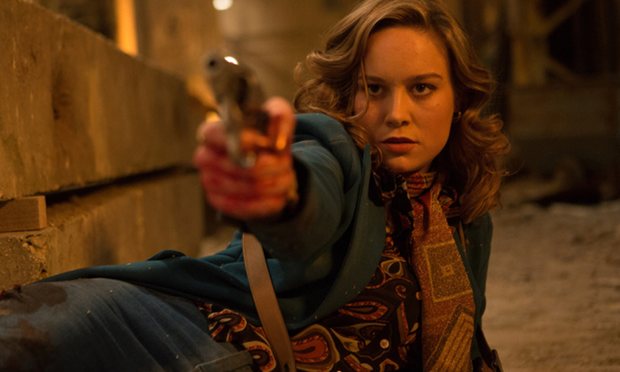
After High Rise, cryptic adaptation of James G. Ballard’s novel shown at the 33rd TFF, Ben Wheatley is back in town with Free Fire, a show-off, Tarantino-style movie that shamelessly tries to captivate the audience with alluring tricks. We are in 1970; the plot takes place in a single night, inside an abandoned factory in Massachusetts, where an odd bunch of awkward characters gathers to finalize a weapon deal. The ten traffickers are split into two opposing sides, even though it is not difficult to guess that each one hides their own private interest, thus making the already fragile alliances unpredictable. After a preamble right outside the factory, as soon as the cases full of rifles are delivered, the tension increases to the maximum. A tiny spark is enough to start an endless fire, the armed conflict being the scope of the movie. The outstanding cast (Cillian Murphy, Brie Larson, Michael Smiley, Armie Hammer and Sharlto Copley) must crawl, roll, scream, get punched and shot to the bitter end, burn, bleed, without ever abandoning the slight comic patina made of edgy jokes, which are thrown and returned exactly like gunshots. The many characters are literally die-hard: as in cartoons, their bodies can stand any kind of violence without giving up fighting and trash talking.

But Free Fire aims too high. After a promising, high-tension beginning, from the first gunshot onwards the movie implodes in a buildup of stereotypes and repetitive actions. The comic quality and wit of the jokes, some of which are in fact memorable, is flooded by a heavy rain shower of stray bullets and fickle characters who cannot decide where to stand. In action movies, especially in the shooter subgenre, drawing a well-defined geography of the battlefield is paramount, even more so if the plot is set entirely inside a warehouse. The characters themselves are confused about the overall placement of enemies and allies in the factory (several times the wrong targets are hit – insults and apologies follow) but this fact does not justify the degree of confusion the director induces in the viewer. Representing a chaotic guerrilla does not necessarily mean to put the spectator in the same condition of the protagonists. After a generous mayhem shooting, which lasts more than an hour, the result is that moviegoers give up guessing who’s shooting and who’s being shot, as there aren’t enough clues to even try doing it.
628

Despite the movie winking at Tarantino, Peckinpah and Scorsese (who is executive producer), unfortunately, Free Fire never takes off. It remains stuck in the same factory where the whole action takes place and never manages to gain the cult-movie effect that other action films were able to obtain without so much effort.
