Article by: Lorenzo Radin Translated by: Cecilia Malanima
Glasgow, 1994. That’s where the fourth film by the Scottish director Brian Welsh, Beats, takes place. Specifically, during the introduction of the act that banned gatherings of twenty or more people listening to music characterised by the emission of a succession of repetitive beats.
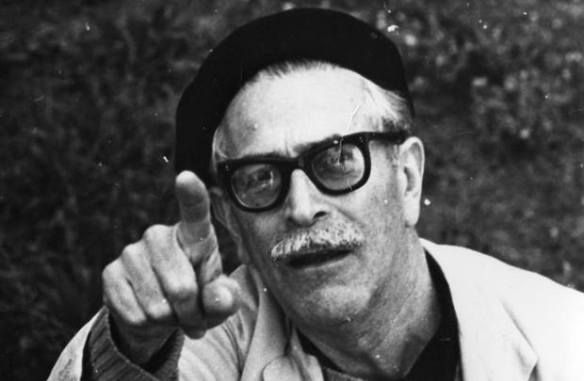
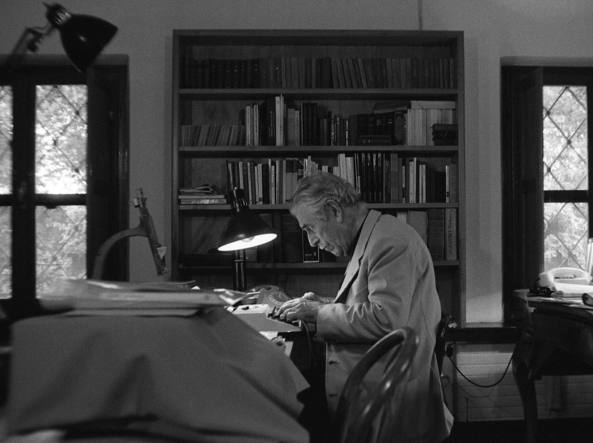
Mario Soldati was an all-round author, a cultured man who has dedicated himself to literature, cinema, television and journalism. He has been the writer and the director of his own life. Born in Turin in 1906, he died in 1999 and, on the twentieth anniversary of his death, we’re talking about him again. Who was Mario Soldati? Why do we keep talking about him? Do we keep on making the same mistake of underestimating him?
Article by: Gianluca Tana Translated by: Anna Benedetto
After winning best Italian documentary for Diorama at the 35th edition of the Torino Film Festival, Demetrio Giacomelli is back in competition at Turin with his new film L’uomo raccoglitore (The gatherer man).
Jenna (Tatiana
Maslany) and Leon (Jay Duplass) met in college; he wants to be a photographer,
she hasn’t made up her mind yet, although Leon believes that she has a
promising career as a producer ahead of her.
Jenna and Leon
are in a loving, committed relationship; they have been together for six years
when they finally notice the wall dividing them.
Article by: Maria Bruna Moliterni Translated by: Lucrezia Villa
Alejandro Amenábar returns to his homeland, the marvellous Salamanca, to film his new movie: Mientras dure la guerra (While at War). The city, home to a prestigious university, is the setting of the internal conflict the former chancellor Miguel De Unamuno went through after he supported the military revolt against the Spanish Republican government. When the military junta’s purges started taking place in 1936, Unamuno did not use his position to denounce the violence and the abuse of power, as a matter of fact he did not take a stand. However, he had to face reality,his family and friends, and his troubled conscience soon after.
Article by: Siro Alessio Giuliani Translated by: Francesca Massa
Does it make sense, especially in this time, to make a film about a phenomenon as complex and controversial as migration? According to the director Maurizio Zaccaro, it does, as long as you are aware that what you are telling is a universal story.
Article by: Maria Bruna Moliterni Translated by: Alice De Vicariis
The controversial and provocative American director Abel Ferrara is present in the section Festa Mobile of the Torino Film Festival with two films: Tommaso and The Projectionist. The former is a story of redemption, the latter of determination.
Wet Season is the second work by Anthony Chen, a Malaysian director who already won the Camera d’Or in Cannes in 2012 with Ilo Ilo. It is the monsoon season in Malaysia, and rains don’t want to stop. There are bodies of water that reflect and amplify the state of mind of the characters who populate this film.
Calogero (Vincenzo Nemolato) is a young Sicilian man who wanted to do the right thing for himself, for her companion and for his still unborn daughter Marcella. This is the reason why Calogero denounced the killer that had once shot two men right in front of his granita cart. And this is the reason why he ended up in Trentino, in a tiny forgotten village, living in a guesthouse called Paradise.
Article by: Cristina Danini Translated by: Ilaria Roma
The Alpenrose is the typical Styrian guesthouse where you can taste local food and beer in a traditional atmosphere. The waitress, who is also the owner of the place, is not satisfied with her life even though her husband, a Styrian cook, tries to give her some comfort while tenderizing some meat by using his bare hands. He is also watched by a stuffed groundhog which is obviuosly Styrian as well.
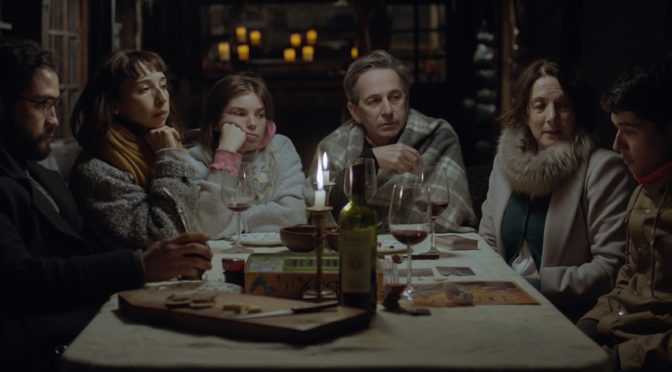
What do six abandoned people on a desert island turn into? Algunas Bestias tries to give an answer. The second featured film directed by the Chilean Jorge Riquelme Serrano opens the contest Turin 37.
Ana (Millaray Lobos), Alejandro (Gastón Salgado) and their teenage children decide to take Ana’s parents (Paulina García and Alfredo Castro) to a desert island to talk about their own project: building a holiday eco-resort. But all of sudden, the keeper disappears and the family remains without water, phone signal and at the mercy of cold.
Article by: Chiara Perillo Translated by: Anna Benedetto
The title Dreamland perfectly captures the essence of Bruce McDonald’s latest film, as it revolves around the fundamentals and the basic logic of the dream world. From the very first scenes, the audience gets lost in a daydream in which the two main characters end up being caught in criminal activities. A kind-hearted hitman and a drug-addicted jazz musician, both played by the talented Stephen McHattie, have also a strong connection that causes them visions of their possible future or a remote past that involves them both. The plot becomes more and more complex as the film goes on, introducing a variety of stone-cold and grotesque characters that results comical at times.
«I have been living in Czech Republic for some time. I have been discovering its culture little by little and, above all, its great cinematographic history. For this reason, I decided to make a movie which was a tribute to the sixties Czech cinema.» that is how the Chilean director introduced the first screening of his film at Torino Film Festival.
Article by: Noemi Castelvetro Translated by: Francesca Massa
Jill (Jocelyn DeBoer) and Lisa (Dawn Luebbe), hectic mothers, trophy wives and frenemies, live in a small, thoroughly organized residential district, with disgusting pastel colors, where people go around with golf carts. Jill is a people pleaser, and she decides to give her newborn to Lisa, whom accepts: the people around the two women smoothly approve this exchange, and surreal events full of symbolic elements increase.
Film critics in Cannes have branded it as a childish play, a bundle of tangles or a formal experiment which has failed the expectations. On the other hand, the crowd of the enthusiasts present at the display is quiet and has praised it as much as its detractors have booed it. The new movie made by the Romanian director is actually a bundle of tangles: a postmodern but not a pimped one.
Article by: Silvia Gentile Translated by: Lucrezia Villa
After his debut as a director with Finchè c’è prosecco c’è Speranza (2017), Antonio Padovan presents his second film, which is an atypical combination along the lines of Spielberg’s science-fiction films and Italian comedies, not to mention the great influence of director Carlo Mazzacurati, with whom Padovan shares roots.
Article by: Ottavia Isaia Translated by: Francesca Massa
Made in Bangladesh, just like the labels we find on our clothes: from the first frames, the film focuses on the harsh working conditions under which the women who produce them are subjected, in overcrowded rooms and without security measures. The leading character Shimu (Rikita Nandini Shimu), after the death of a colleague in a factory fire, fights against these conditions and begins to collaborate with a journalist to start a union that protects women workers (all women, because they are considered more easily manageable and they are paid less than men).
Article by: Maria Bruna Moliterni Translated by: Viola Locci
In 2015 Bill Condon obtained a good success with Mr Holmes, a film inspired by Mitch Cullin’s book. Today Condon grapples with a new film based on Nicholas Searle homonymus’s novel, The Good Liar. The two main actors are Helen Mirren and Ian McKellen who play together for the first time on the big screen.
Whatever foreruns the future, so innovations and changes, is often perceived as a choc from those who live in the present, since they’re still busy figuring out the past. From this point of view, Le choc du futur is emblematic, considering that the main issue concerns the creative process of a new kind of music: the music of the future.
Article by: Giulia Leo Translated by: Francesca Massa
A confident illustration about knowing how to laugh. Laugh about the pain and turn it into something else: this is what Leticia Jorge does in her second work Alelí. The Mazzotti family is warm, enchanting, insane; the father’s death is the backstory of the odd and absurd misfortunes that occur in a day. A family black comedy that follows a classic pattern: as a member of the family passes away, the relatives attempt to deal with the emotional and material heritage which the departed left behind.
Il magazine delle studentesse e degli studenti del Dams/Cam di Torino
Utilizziamo i cookie per essere sicuri che tu possa avere la migliore esperienza sul nostro sito. Se continui ad utilizzare questo sito noi assumiamo che tu ne sia felice.