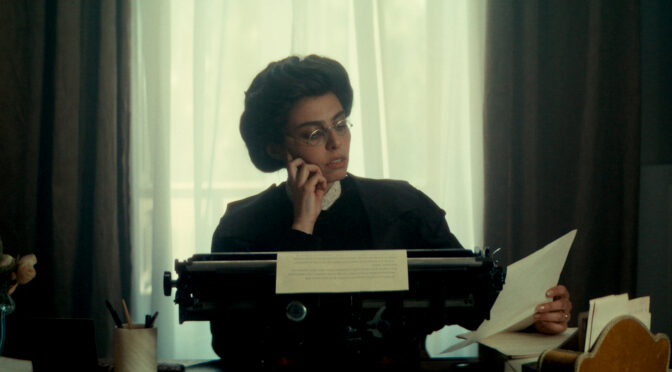
Presented at the 43rd TFF in the “Zibaldone” section, Peter Marcias’ Quasi Grazia is a film adaptation of the homonym theatrical novel written by Marcello Fois and played by Michela Murgia. It was made in order to investigate the person beyond the writer, starting from the title itself which took inspiration from Cosima, Quasi Grazia, the posthumous autobiography by Grazia Deledda. The figure of the author, narrated through three previously unknown moments of her life, is brought to the screen thanks to the performance of Irene Maiorino, Laura Morante and Ivana Monti.
Presentato al 43° TFF nella sezione “Zibaldone”, Quasi Grazia di Peter Marcias – adattamento dell’omonimo romanzo teatrale scritto da Marcello Fois e recitato da Michela Murgia – nasce dall’esigenza di indagare la persona oltre la scrittrice. A partire dal titolo, che prende ispirazione dall’autobiografia postuma di Grazia Deledda, Cosima, quasi Grazia. Raccontata attraverso tre momenti inediti della sua vita, la figura della scrittrice prende forma sullo schermo grazie all’interpretazione di Irene Maiorino, Laura Morante e Ivana Monti.
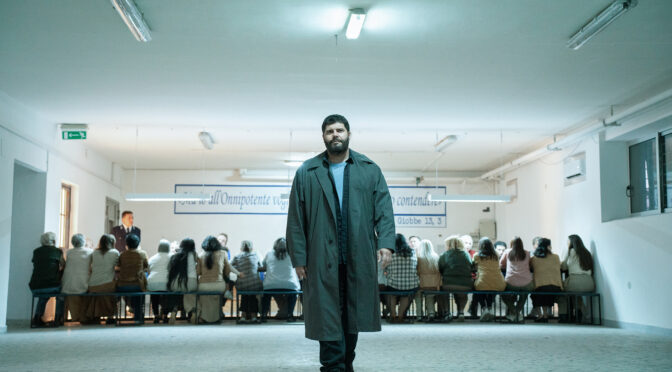
In Avemmaria, what stands out is not the story, but a perspective: that of a man who, on the threshold of fatherhood, realises he cannot move forward without coming to terms with the child he once was. This insight gave rise to Fortunato Cerlino’s directorial debut, presented at the 43rd Turin Film Festival. The work naturally weaves together two periods of life, building a continual debate between the adult Felice, the director’s alter ego – played by Salvatore Esposito – and the young Felice, played by Mario Di Leva.
In Avemmaria quel che emerge non è la storia, ma uno sguardo: quello di un uomo che, alla soglia della paternità, capisce di non poter andare avanti senza fare i conti con il bambino che è stato. Da questa intuizione nasce l’esordio alla regia di Fortunato Cerlino, presentato al 43° Torino Film Festival. L’opera intreccia con naturalezza due tempi della vita, costruendo un confronto continuo tra il Felice adulto, alter ego del regista – interpretato da Salvatore Esposito – e il Felice giovane, a cui dà il volto Mario Di Leva.
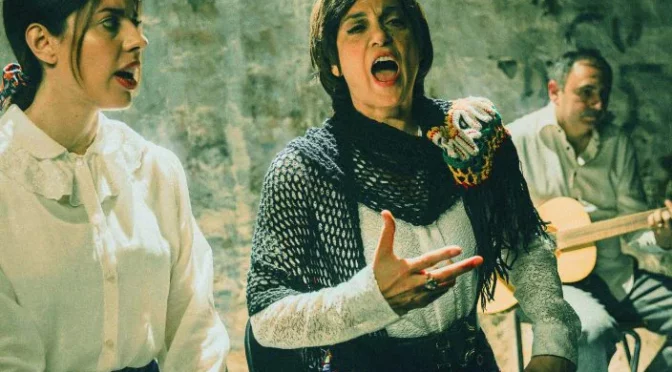
L’amore che ho (The love I’ve got) by Paolo Licata, presented at the 42nd Torino Film Festival, celebrates Rosa Balisteri, an emblematic voice of Sicily and a symbol of social struggle and resistance. The film, based on the novel of the same name by Luca Torregrossa – the singer’s nephew – goes beyond merely recounting her musical career, but it also fully explores her personal battles and the most private and painful moments of her life.
L’amore che ho di Paolo Licata, presentato al 42° Torino Film Festival, celebra la figura di Rosa Balistreri, voce emblematica della Sicilia e simbolo di lotta e resistenza sociale. Il film, tratto dall’omonimo romanzo di Luca Torregrossa, nipote della cantante, non si limita al racconto della carriera musicale, ma esplora con intensità le battaglie personali e i momenti più intimi e dolorosi della sua vita.
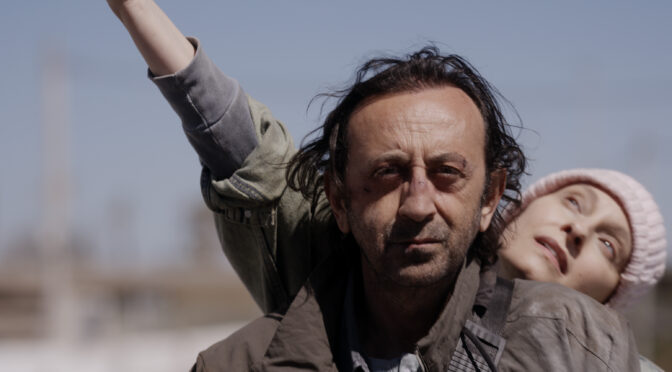
After committing a robbery, a bandit discovers he has extraordinary powers that will lead him to choose whether to save himself or others. In an era seemingly dominated by selfishness, Nero, the directorial debut of well-known actor Giovanni Esposito, focuses on sacrifice and caring for others.
Dopo aver compiuto una rapina, un bandito scopre di avere poteri straordinari che lo porteranno a dover scegliere se salvare sé stesso o gli altri. In un’epoca che sembra dominata dall’egoismo, Nero, l’esordio alla regia del noto attore Giovanni Esposito, pone l’accento sul sacrificio e la cura dell’altro.
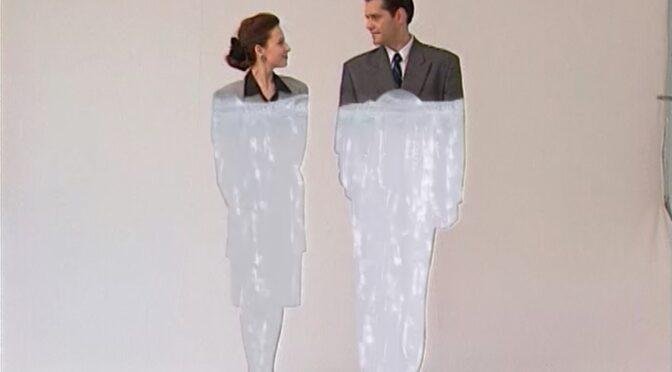
Radu Jude and Christian Ferencz-Flatz’s latest work is deeply rooted in the socio-political context of post-revolution Romania, narrating the last thirty years of the country’s history through the commercials that accompanied its people towards democracy. It is an experimental found-footage documentary, divided into eight chapters displaying dozens of commercials played back-to-back: an overwhelming and ever-changing flow of ideals, dreams and hopes. Thus, we find ourselves reliving a fragment of the utopia promised by the end of socialism, yet an utopia that, however, is jarring and full of contradictions.
L’ultimo lavoro di Radu Jude e Christian Ferencz-Flatz affonda le sue radici nel contesto socio-politico della Romania post-rivoluzione, raccontando gli ultimi trent’anni della vita del Paese attraverso le pubblicità che hanno accompagnato il popolo rumeno verso la democrazia. Un documentario sperimentale di montaggio, suddiviso in otto capitoli che presentano decine di spot riprodotti uno dietro l’altro: un flusso travolgente di ideali, sogni e speranze in continua evoluzione. Ci troviamo così a rivivere un pezzo dell’utopia che la fine del socialismo prometteva, un’utopia però stridente e piena di contraddizioni.
Il magazine delle studentesse e degli studenti del Dams/Cam di Torino
Utilizziamo i cookie per essere sicuri che tu possa avere la migliore esperienza sul nostro sito. Se continui ad utilizzare questo sito noi assumiamo che tu ne sia felice.