Archivi categoria: English version

YOUNG BODIES HEAL QUICKLY, AN ATYPICAL ON THE ROAD FILM

Article by: Matteo Merlano

Translation by: Giulia Magazzù

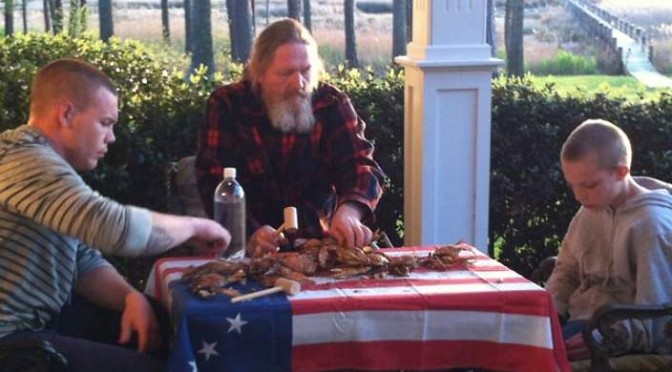
 American experiments ride along familiar roads. Filmmakers play with pre-existing genres, distorting, shrivelling and demolishing them. It is the case of this bizarre film by New Yorker director Andrew T. Betzer, which already been presented at the Tribeca Film Festival and has now landed in Turin in the Waves section. The film portraits the flight of two brothers (Gabriel Croft and Hale Lytle), guilty of the murder of a girl, through a disorienting and lost America, inhabited by freaks, nostalgic for the Reich and the war in Vietnam (as the bizarre character of an old “freak”).

Betzer depicts an unforgiving portrait of his country shot in a quite handcrafted way. ‘Young Bodies Heal Quickly’ shows us a lost and crazy version of the US, just like the two young protagonists who are running around the country without an existential reason. So far, the idea is interesting and the dirty and blurred photography conveys this alienating effect. Eventually, this style weighs and after the first hour, the story goes completely off the visual and editing rails. Experimenting does not mean raving and the impression we had leaving the cinema is that in several parts Young Bodies Heal Quickly got lost, dragging the viewer in this disorientation. The final climax is too long and dispersive and putting an explicit sex scene (cameo by Josephine Decker that, after the short film Violent Madonna Mia seems to take taste in expression of sexuality explicit) does not help the audience in finding his soothed attention.

Generally, the film is an interesting experiment and visual exploration of a possible new language of American independent cinema. It is always of Seventh Art, which requires implementing every available form. Maybe a little storytelling would not hurt, in a time when the real experiment is perhaps the tale. “But that’s another story”, quote.

PRIMA DI ANDAR VIA: A moving farewell among the living

Article by: Karima Vinti

Translation by: Renato Panzera

How would you react if one of your family members, or a friend, told you you that “tomorrow they are not going to be alive”? “Prima di andar via” could be the answer.

Directed by Michele Placido, this adaptation of the theatre show directed by Francesco Frangipane and written by Filippo Gili is about a family’s reaction to the son confessing his suicidal intentions. What causes this insane decision is that he cannot live without his wife, who died three months before. In a first moment they don’t understand whether Francesco (Filippo Gili) is telling the truth or he’s just talking nonsense. But Francesco is convinced of his decision and doesn’t want to go back. For him, nothing is worth it anymore, and he can’t picture his future with another woman because no one could ever be as great as Giovanna. The hug scene with his mother is touching, a hug that wants to last forever, full of love and pain.

The film was entirely shot in a small theatre. Lights and scenic design tend to give a sad, melancholic and furious air. The actors are not famous in the Italian cinematographic circle — with the exception of Giorgio Colangeli — but it’s worth writing their names: Filippo Gili, Michaela Martini, Aurora Peres, Vanessa Scalera, and Francesca Alunno. The actors succeeded in representing something that can really touch your soul. A fantastic interpretation from everyone, with no exceptions.

WP_20141124_025
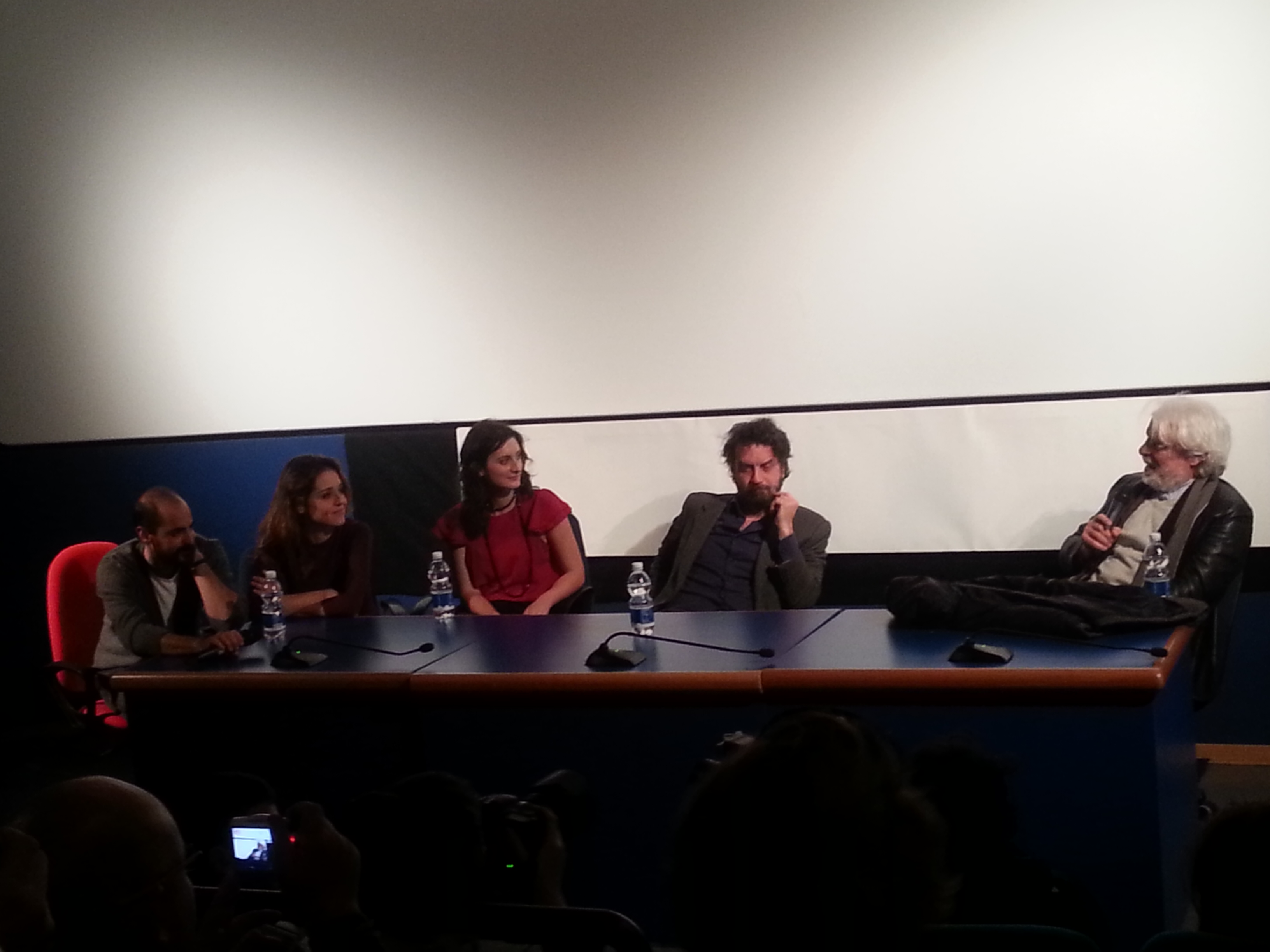
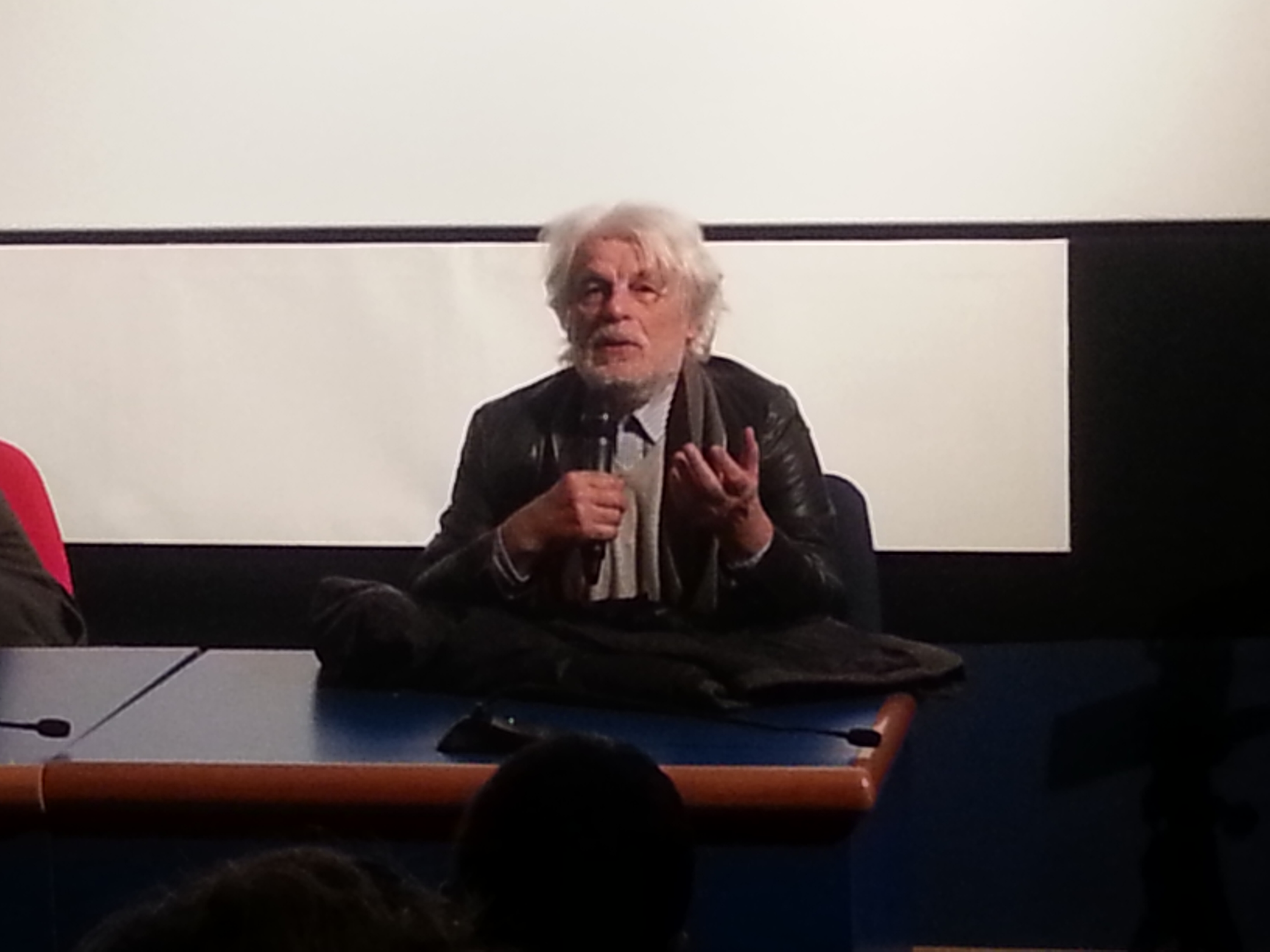
Michele Placido at the “Cinema Massimo” after the screening of “Prima di andar via”.

After the first view at the “Cinema “Massimo” on November 24th, Michele Placido, some of the actors and Francesco Frangipane talked about their work with an excited public which warmly greeted the film with a long final applause. Michele Placido stated that it had been a beautiful experience and that he had decided to make it a film right after he saw the theatre show.

Director Francesco Frangipane stated: “The theatre show has hardly been around. The only achievement was the possibility of playing the show at the “Elfo Puccini” theatre in Milan”. Next, the director reflected upon the quality of performances in Italy, maintaining that the actors in this movie have nothing to envy to the so called “famous actors”, even though more well prepared figures are needed in our cinema. “If Italian directors went a bit more often to the theatre, perhaps the Italian cinema would be more lively”. Finally all of the actors thanked Michele Placido. According to them, it is because of Michele’s generosity that this movie made it to the big screen.

WP_20141124_019
Michele Placido with some cast members of  “Prima di andar via”.

THE MEND: A SHARP COMEDY, READY TO TURN INTO TRAGEDY

Article by: Karima Vinti

Translation by: Ilaria Codeluppi

 Matt (Josh Lucas) is a saddened man, without any goals in his life; after a fight with his partner Andrea (Lucy Owen), he finds himself wandering around his city without a destination. In the meantime, Alan (Stephan Plunkett) and his girlfriend Farrah (Mickey Sumner) are discussing after an unlucky sexual intercourse, while preparing a party in their tiny apartment. At the party, Farrah spots Matt sitting in the living room.

Continua la lettura di THE MEND: A SHARP COMEDY, READY TO TURN INTO TRAGEDY →

WALKING WITH RED RHINO, A PRAISE OF EXERIMENTAL CINEMA

Article by: Alessandro Arpa

Translation by: Ilaria Rana

“Filmmakers must be merciless, or they are for the catering”

Alberto Signetto was definitely merciless. He loved to consider himself as a rhino because he was a “treacherous, stubborn, fat, bulky and hardly tameable animal” and he represented the fight against conformism. “Walking with red rhino”, the last film by Marilena Moretti, pays homage to one of the most underestimated Italian personalities of the 20th century.

Continua la lettura di WALKING WITH RED RHINO, A PRAISE OF EXERIMENTAL CINEMA →

THE GUEST – THE 80’s ARE BACK WITH A BANG

Article by: Paolo Nosenzo

Translation by: Ilaria Codeluppi

 The Petersons are a perfectly normal family, still grieving for the death of their elder son, Caleb, fallen in the Middle East. One day, a boy named David Collins knocks on their door, saying that he has served in the army with Caleb, and that he had promised him to take care of his beloved ones. At the beginning, they are a bit suspicious, but David soon gains the respect and affection of the whole family, including Caleb’s siblings, Anna and Luke. After a few violent episodes happen in the small community, Anna starts to suspect that David is hiding something, and that he’s not really who he says he is.

Continua la lettura di THE GUEST – THE 80’s ARE BACK WITH A BANG →

LET’S GO

Article by: Matteo Bagnasacco

Translation by: Paola Pupella

 “Let’s go”, directed by Antonietta De Lillo, was included in the section “Diritti & Rovesci”, a new section of the 32nd Torino Film Festival edited by Paolo Virzì.  In her film, the director of “Il resto è niente (Everything else is nothing)” tells the story of Luca Musella.

Continua la lettura di LET’S GO →

ROLLING THUNDER: THERE ARE NO AMERICAN FLAGS

Article by: Emanuel Trotto

Translation by: Paola Pupella

A Vietnam veteran, unsuited, insomniac, unable to integrate in society, finally arms himself and carries out a massacre. We are not talking about Taxi Driver, but a just subsequent film to Scorsese’s masterpiece (showing only one year later, in 1977): Rolling Thunder.

Both films arise from the anguished pen of Paul Schrader, who, after a noteworthy activity as a scriptwriter (The Yakuza for Sidney Pollack, Obsession for Brian De Palma), firmly intended to become a director. However, because of production problems, his project was rather handed to John Flynn as director and Heywood Gould as re-scriptwriter. Schrader’s debut will happen later, in 1978, with a working class drama entitled Blue Collar.

The story of alienation and revenge of Major Rane is perfect. When the protagonist comes back to his hometown in Texas, after 7 years of imprisonment in Vietnam (that scarred him deeply), his fellow citizens reward “his heroism” with a box of silver dollars. Some bandits proceed to steal his money and kill cruelly his wife and his child. Major Rane then decides to take the law into his own hands.

Continua la lettura di ROLLING THUNDER: THERE ARE NO AMERICAN FLAGS →

ECHOES OF GHOTIC FAIRY TALES FROM THE STATES

butter on the latch

Article by: Alessandro Arpa

Translation by: IlariaRana

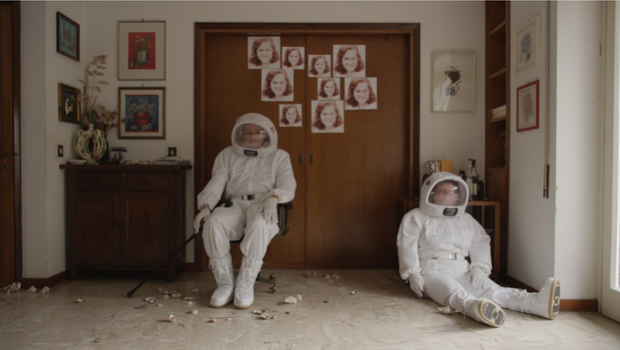
 A soft earthquake has been dedicated to Josephine Decker, a young American filmmaker. “Gone Wild”, “Madonna miaviolenta”, “Thou wast mild and lovely”, “Balkan Camp” and “Butter on the latch” are the films she presented at the Turin Film Festival. Her films include Mumblecore elements and magic realism. In fact, Josephine Decker draws inspiration from Joe Swanberg (director of the renowned film “Uncle Kent”), whomshe considers her mentor, and from John Steinbeck and his novels based on an obsessive panic symbiosis.

Continua la lettura di ECHOES OF GHOTIC FAIRY TALES FROM THE STATES →

N-CAPACE, ELEONORA DANCO’S DEBUT AS A FILM DIRECTOR

Article by: Giulia Conte

Translation by: Ilaria Codeluppi

 Eleonora Danco, theatre author and actress, makes her debut as a film director with her first feature-length movie. N-Capace is the second movie, together with Frastuono, by DavideMaldi, that represents Italy in this 32nd Turin Film festival.

Eleonora Danco plays a woman, a tormented soul, that wanders around from Terracina to Rome, places which have a connection both to her childhood and her present life. Along the way, she questions the teenagers and elderly people she meets, asking questions about death, school, love, sex, religion, homosexuality, violence and traditions. Her purpose is to understand their feelings through the answers, and to feel their emotions.

Continua la lettura di N-CAPACE, ELEONORA DANCO’S DEBUT AS A FILM DIRECTOR →

THE BABADOOK

Article by: Davide Bertolino

Translation by: Carla Cristina Loddo

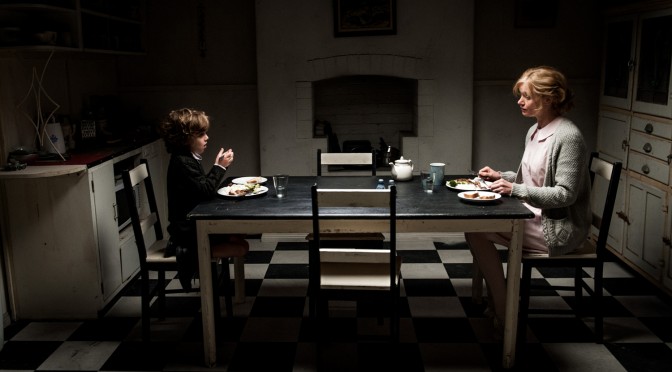
After the success both of the critic and the audience at the Sundance Film Festival, The Babadook, first feature film by the newcomer Jennifer Kent, participates in competition at the Torino Film Festival. Even by following with absolute rigour the classical phases of horror films with a possession subject (the monster, the kid who plays with the presence, the mother initially incredulous), the Australian film cleverly avoids banality giving a new point of view, certainly in a more psychological and deeper way than numerous other products of the same genre.

Continua la lettura di THE BABADOOK →

WISDOM AND HAUGHTINESS

Article by: Romilda Boffano

Translation by: Ilaria Rana

“La Sapienza” is the fifth feature film by Eugéne Green. Its preview was screened last summer at the Locarno Film Festival and it opens the section “Onde” of the 32nd Turin Film Festival. This film tells about the meeting between two couples. Alexandre and Alienor Schmidt are married and they are an architect and a psychoanalyst respectively.

Continua la lettura di WISDOM AND HAUGHTINESS →

EUGENE GREEN’S PRESS CONFERENCE

Article by: Matteo Merlano

Translation by: Ilaria Rana

 A press conference is often a useful instrument for getting rid of any doubts about a film. “La sapienza” is undoubtedly one of those films that must be discussed a lot, whether for its techniques, its narration or the recitative style of its actors. It is a film in which each shot represents a room (in fact the underlying theme is architecture) and each actor talks with themselves without interacting with the others. Each line is pronounced clearly and it represents a struggle rather than a sentence with a meaning. It is a kind of cinema that may not please people.

Continua la lettura di EUGENE GREEN’S PRESS CONFERENCE →

DIRITTI & ROVESCI- PER TUTTA LA VITA

Article by: Elisa Carbone

Translation by: Licia Ficulle

 ‘Per tutta la vita’ is the first film in this section curated by Paolo Virzì. The main theme of the film is divorce, examined from different points of view. The director Susanna Nicchiarelli (already established for two feature films, in particular Cosmonauta in 2009) decided to deal with this social phenomenon for the anniversary of the referendum in 1974, which led Italy to take sides on whether to legalize or not divorce.

The documentary treats this theme on various ways, though focusing the attention on personal stories represented on the screen. In fact, the protagonists are more or less common people reporting their opinion of divorce, according to their “skills” and experiences.

Monica, a zoologist, talks about monogamy in several species, starting with birds, passing for wolves and monkeys, up to human beings. Silvio, a divorce lawyer, describes the legislative and technical aspect of it. Although, as his wife Sveva, steps in his talk, he lets himself go in most personal confessions. Guido and Paola, parents of the fitter of the documentary, recall the history of their love at first, then their marriage and finally divorce.

The interviews alternate with family filmstrips of director Nicchiarelli (narrated in voiceover by his parents, still happily married) and original shoots from Rai archives. The last ones show old electoral slogans of politicians Berlinguer and Fanfani and some advertising pro-divorce starring Gianni Morandi and his family.

This mixture of evidences and sources highlights the desire of the director to find out the real meaning of marriage and divorce, also underlining how that meaning changed in time.

Is monogamy a natural or a social fact? Does the woman manage to break free from her role of mother and wife after the referendum? These questions do not need to an answer because the aim is pay attention to these and, through this document, research events and opinions, which help to developing a clear viewpoint.

The atmosphere is unique, both deep and personal, as it involves the participation of relatives and friends of the director. During the vision of her wedding shoot, Nicchiarelli’s mother states with clear awareness that divorce acquired real meaning only when women understood their freedom and their own social role, which was unimaginable before 1974.

In the end, she adds that the expression “per tutta la vita” (“for a whole life”), after 1974, changed its meaning from absolute to relative.

“HABITAT – L’AQUILA TODAY” BY EMILIANO DANTE

Article by: Ilaria Longo

Translation by: Ilaria Codeluppi

The Italian section of TFF DOC opens with ‘Habitat – personal notes’ (Habitat – Note personali), with which Emiliano Dante returns to the festival after his debut, five years ago, with Into the blue.

His goal is the same: to film the urban tragedy of L’Aquila. The main characters are the director himself and his former tent-mates: Alessio and Paolo.

Emiliano lives in one of the houses built by “project C.A.S.E.”. His girlfriend, Valentina, still lives in her old house; Alessio is a real estate agent and lives with Gemma in a house where they pay a low rent, since the earthquake damaged it. Paolo, who has become a painter after the tragedy, does not know what to expect from his life and from his daughter’s birth.

Everyone opens up sincerely to their friend Emiliano, behind the camera, without filters or victim complex: they are just hopeless. They are afraid of this ghost city, and some of them have tried to follow their friends, emigrating; but something has made them come back. “What do you dream of, Emiliano?” is a question that seems to look at the future, but it is actually the same old nightmare: the earthquake.

A peculiar documentary that does not open with a banal overview of the city ruins, but with the characters driving the 14 kilometers that separate them from the city. The new houses were built quite far from L’Aquila, in order to ease the reconstruction of the city center; but the clothes hanging from the balconies reveal that the clock has stopped on April 6, 2009.
A black and white movie to represent a city forgotten by the media, where there is nothing left to do. Emiliano Dante, producer, director, scriptwriter and actor reveals the loneliness and the dereliction still felt in L’Aquila. “I don’t want to conclude with an overview of the torchlight procession in memory of the tragedy” says the main character, “because here in L’Aquila we feel lonely”. A sincere and intimate look, far from a political critique.

GEMMA BOVERY BY ANNE FONTAINE

Anne Fontaine
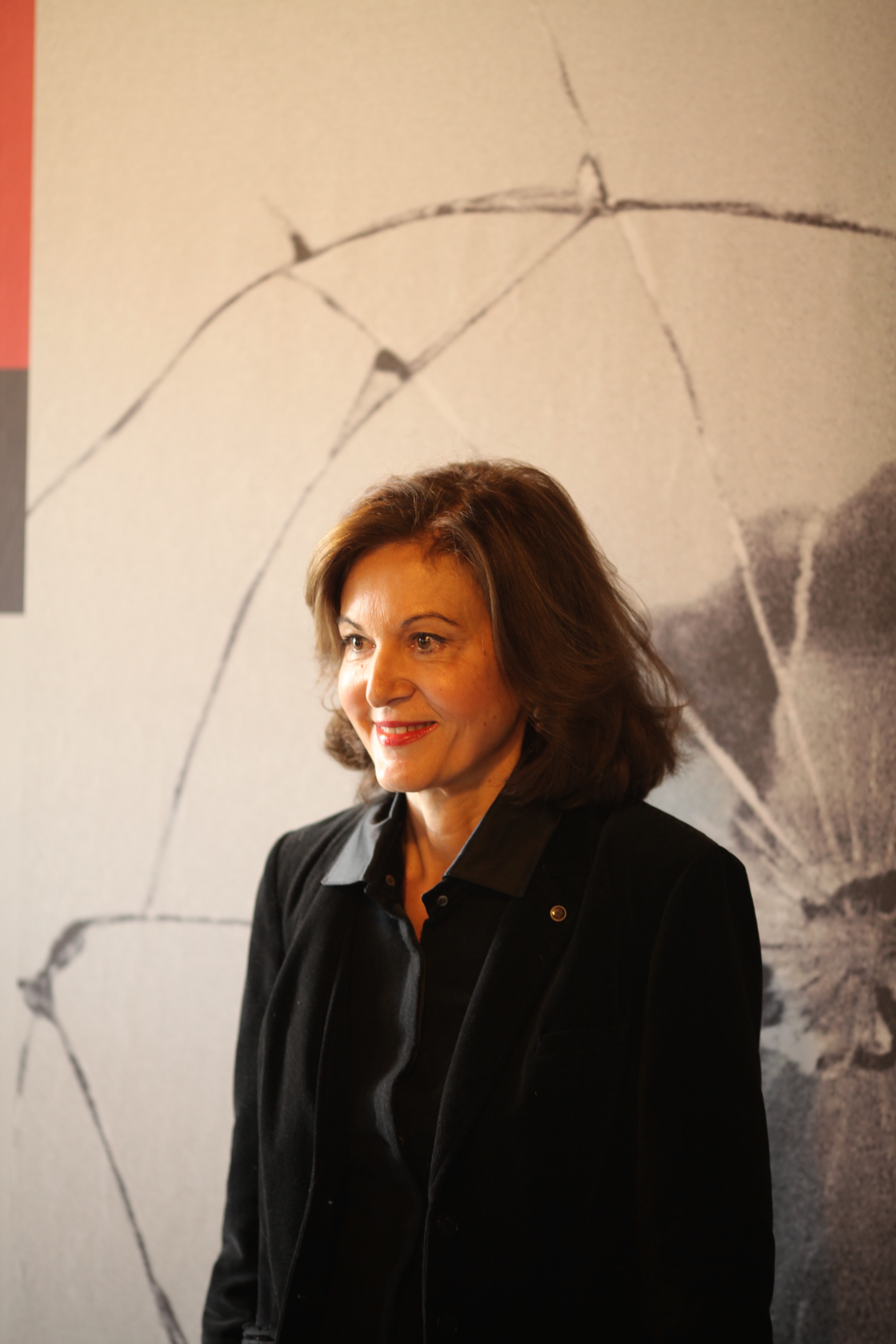
Anne Fontaine at the press conference of November 22nd in Turin

Article by: Bianca Beonio

Translation by: Giulia Magazzù

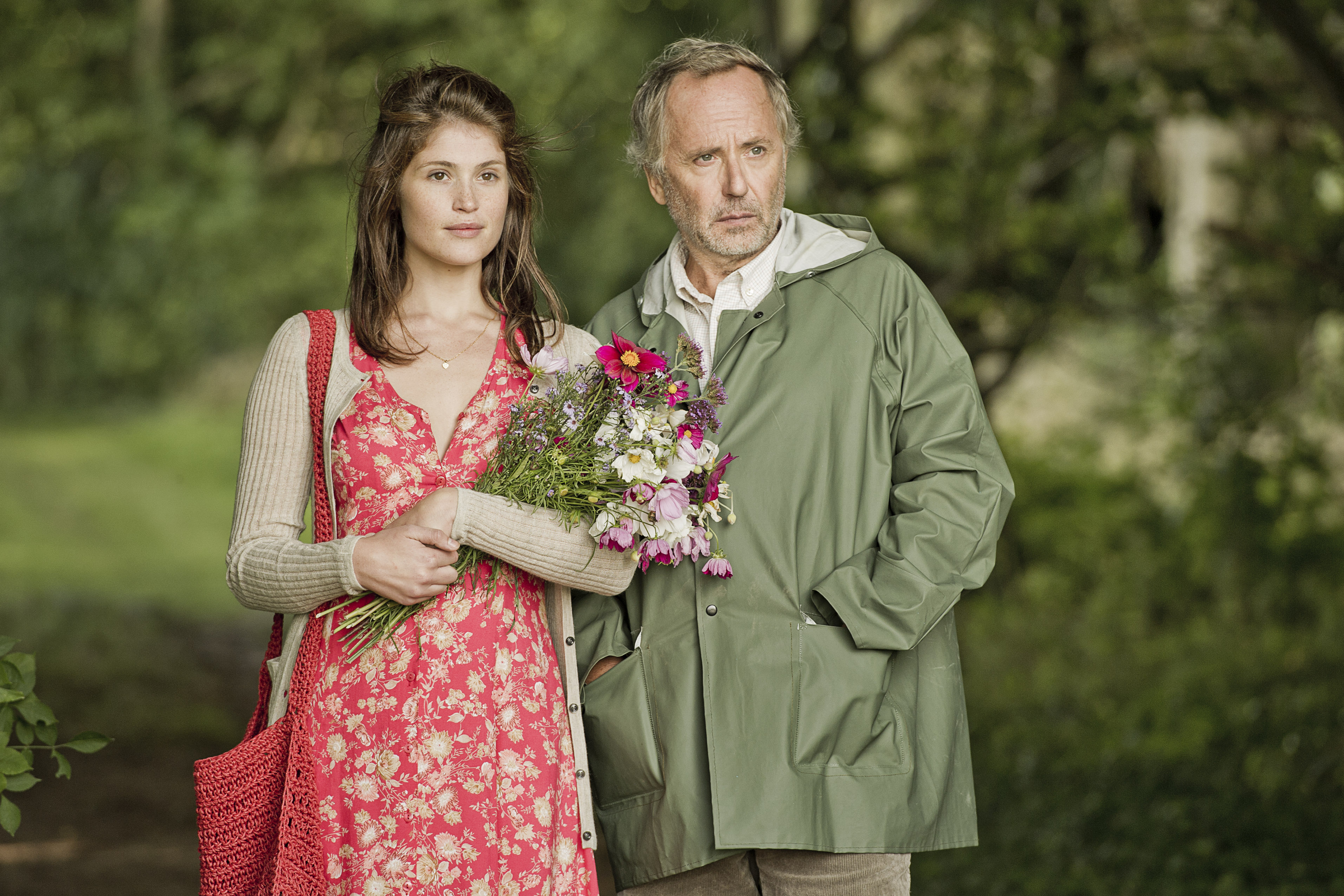
Normandy, France. A newlywed couple moves to a small town looking for peace, serenity and all the other things that country life can offer. Her name is Gemma, Gemma Bovery (Arterton), English pronunciation. The monotonous life of their neighbour, the baker Martin Joubert (Luchini), is suddenly turned upside down by the arrival of what could be the incarnation of his favourite literary character. The fantasy of the baker is unleashed: how could he not see the ghost of the heroine of Flaubert in the name, in the manners and even in the fate of that woman?

Gemma Bovery
Gemma Arterton e Fabrice Luchini in “Gemma Bovery”

After Coco avant Chanel and Two Mothers, the French director deals with a graphic novel by Posy Simmonds, author of Tamara Drewe (similarly taken from Far from the Madding Crowd), whose film version stars the same actress.

Adaptations of Madame Bovary are as countless as various. Jean Renoir, Vincente Minnelli, Claude Chabrol are just some of the directors that dealt with the book, up to the very recent and still not distributed version of Sophie Barthes with Mia Wasikowska.

But this is the first film being directed by a woman. It is a curious case, since almost every shot — at least those including magnetic Arterton — are viewed and filtered through the eyes of Martin. During the press conference of November 22nd in Turin, the director explained how our gaze is encouraged to merge with that of the baker. The simplest gestures, like eating a piece of bread, smelling its crust and mixing the dough become brief moments of delight. The actress is amazing: we never doubt the attractive force she exerts, almost unconsciously, on every man that crosses her path, gravitating around her. Luchini’s eyes widen as he only knows how to do, stunned in front of the sensual movements of the woman. And we are stunned as much as he is.

This is a light and brilliant comedy, but from the beginning we have an inkling of the tragedy. We anxiously follow the life of Gemma, convinced that the tragic fate of Madame Bovary would inescapable fall on her. We flinch at the word “arsenic”. We sigh during the date with the young lover. We delude ourselves that it can end up differently.

Like Martin, we are forced to watch powerless the gradual unfolding of a story that is already written and that we cannot change. The clumsy attempts of the baker to separate Gemma from her lover — not to mention those aimed to protect and warn her — are, in fact, useless.

Anne Fontaine modernizes the timeless story of a bored woman, successfully delves her character in what it has become an archetype.

The film is genuine, funny, gentle. The portrait of a woman of incredible beauty.

Anne Fontaine’s photo by Bianca Beonio Brocchieri

Gemma Bovery’s photo: © Jérôme Prébois / Albertine Productions – Ciné-@ – Gaumont – Cinéfrance 1888 – France 2 Cinéma

MAGIC IN THE MOONLIGHT

magic in the moonlight

Article by: Giulia Conte

Translation by: Giulia Magazzù

We are once again in France in the 1920s, but Allen takes us to the French Riviera instead of Paris.

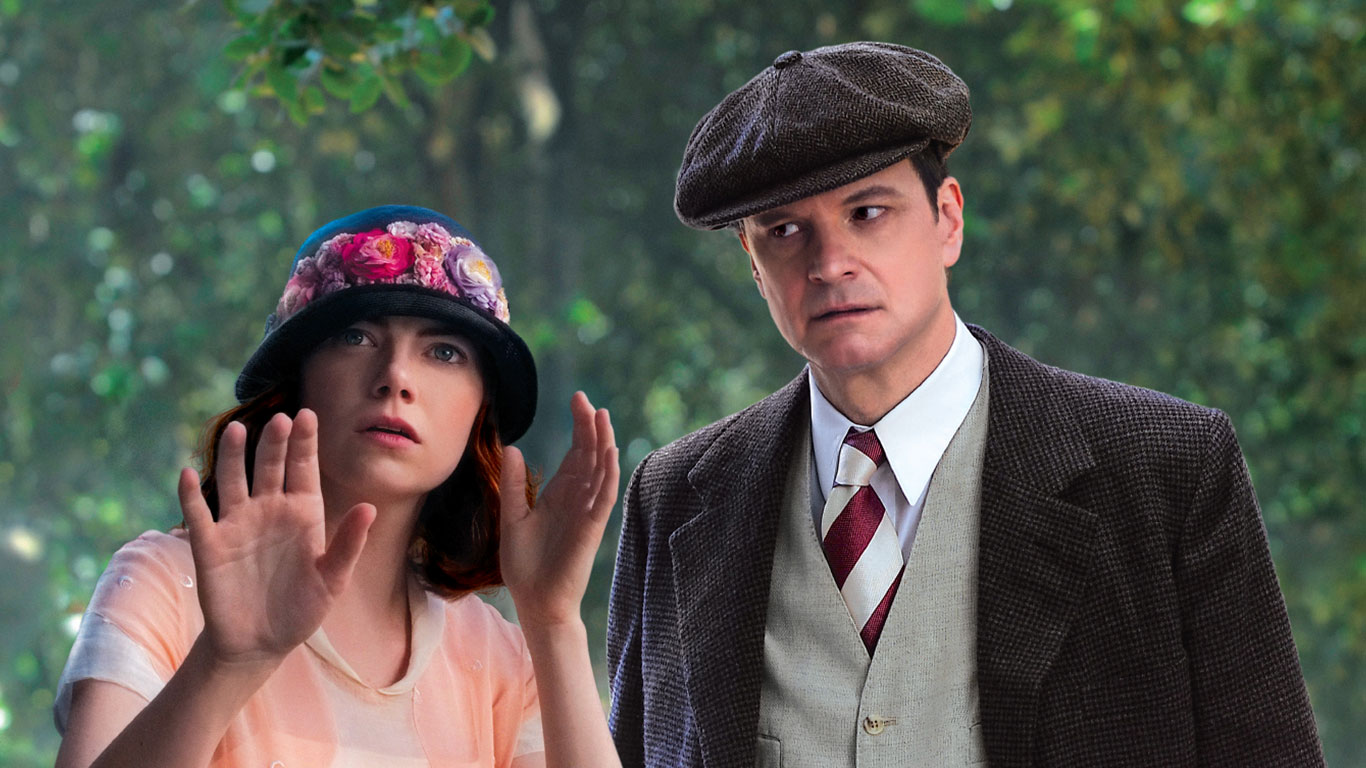
Wei Ling Soo is the most famous magician of the moment, but when he takes the clothes of illusionist off is in fact Stanley Crawford (Colin Firth), a young arrogant Englishman who hates those who boast of having special skills as mediums. Howard, a longtime friend of his, convinces him to go to France to learn and reveal the truth of the prophecies of the young and beautiful Sophie Baker (Emma Stone). Will Stanley manage to unmask the girl? What happens in Catledge is a real series of magical events that will involve all the characters.

Magic in the Moonlight is a romantic comedy, with all the personal and professional complications that hail from it.

Luxury settings, a good care in the choice of the location, the typical clothes of the “jazz age“, all these are perfect elements for the great success of this new film. Stanley has the typical features of a Woody Allen character: he is extravagant and in constant search for love and for a stable and satisfying relationship.

Allen is well known for his comedies full of irony and their brilliant lines and, even in this work, he does not spare us laughs and twists. He portraits a very romantic Europe, that is full of stereotypes and grotesque elements that we appreciate so much and that we have seen in previous works like Midnight in Paris and Vicky Cristina Barcelona.

The soundtrack is perfectly in tune with the landscapes of the French Riviera, giving the idea of a union that amuses and involves us from the beginning until the ninety-eighth minute of the film.

PRIKLYUCHENIE – (ADVENTURE) IN THE MONOTONY OF THE “WHITE NIGHTS”

Article by: Alisa Marghella

Translation by: Carla Cristina Loddo

The eggs for breakfast, the sound of the wind chimes when exiting the house, the tea preparation, the naps on the three chairs during the work shift… All these things mark the days for Marat, a young security watchman. In “Priklyuchenie – Adventure” there’s very little adventure: the events in the shy watchman’s life recur in a routine marked by few images, useful for understanding his loneliness

Continua la lettura di PRIKLYUCHENIE – (ADVENTURE) IN THE MONOTONY OF THE “WHITE NIGHTS” →

CALIGARI: TODAY, AS EVER


Article by: Fabio Olivetti and Davide Bertolino

Translation by: Giulia Miolo

Besides the screenings of previews and first works, the Turin Film Festival also celebrates the classics of cinematographic history. The film exhibition has always had a special consideration for the international review; this year it has decided to pay homage to the German cinematography by promoting three of its most relevant films.

Continua la lettura di CALIGARI: TODAY, AS EVER →

DIPLOMACY, PARIS SHAKES OFF ITS FETTERS

Article by: Alessandro Arpa
Translation by: Simona Restifo Pecorella
 

After years of absence, Volker Schlöndorff, leading exponent of the New German Cinema, makes his comeback in Italian cinemas with ‘Diplomacy- A night to save Paris’, which is an adaptation of the play by CyrilGely. The German director chooses again the Second World War’s theme after ‘La mer à l’aube’, bringing to the big screen an episode that really happened.

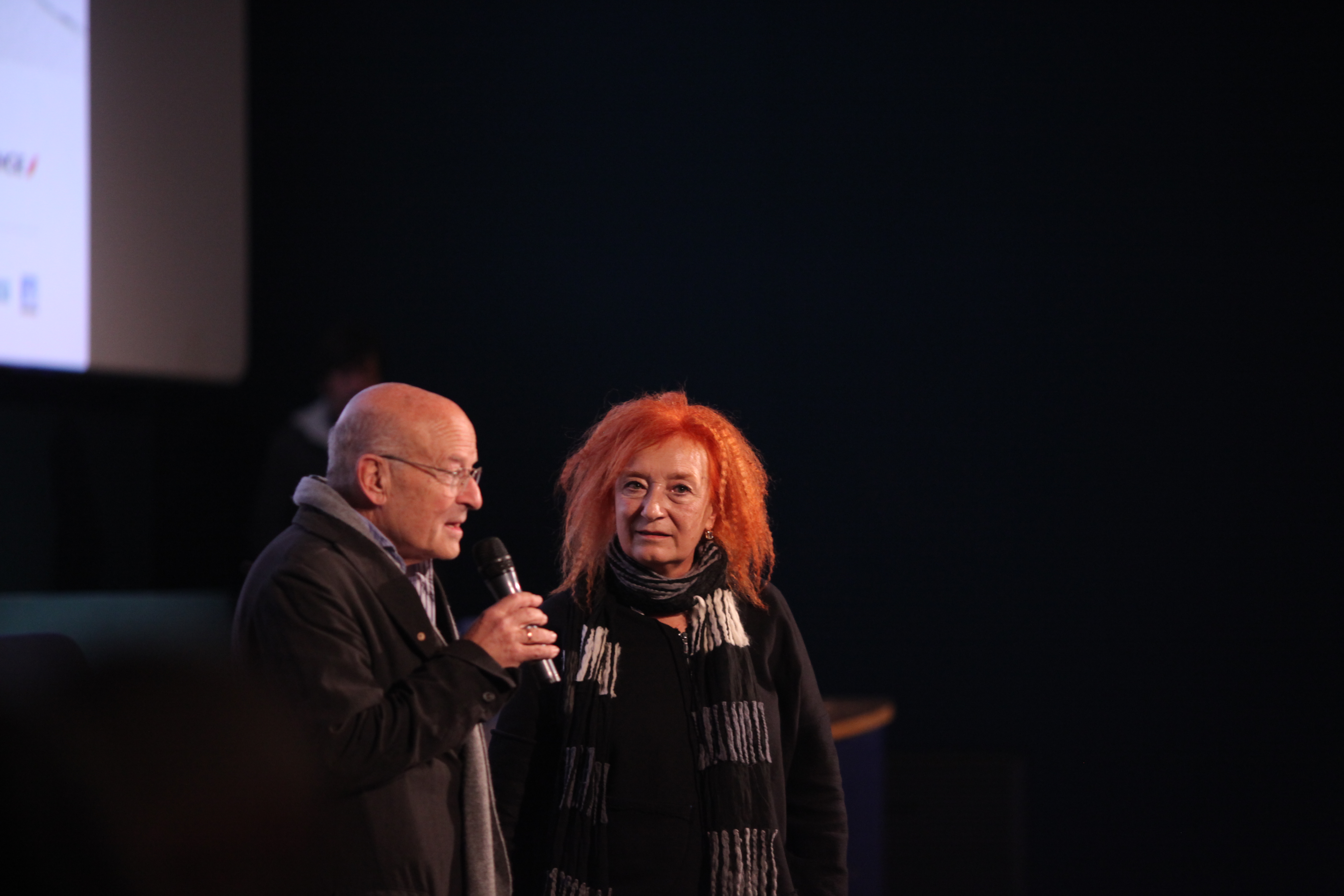
Voleker Schlondorff  con Emanuela Martini
Voleker Schlondorff with Emanuela Martini

Volker Schlöndorff and Emanuela Martini during the presentation of ‘Diplomacy- A night to save Paris’ (Photo by Bianca Brocchieri).

The action takes place over the night between 24 and 25 August 1944, when the Allies entered in Paris finally ending the war. Although the Nazis were aware of their imminent defeat, the Führer did not surrender and ordered at General Dietrich von Choltitz (played masterfully by Niels Arestrup) to burn Paris. However, with monuments and bridges mined and ready to explode, the order of Hitler, as we know, has never been executed. Even though the ending is obvious, Schlöndorff is able to create a captivating and pressing thriller thanks to the excellent interpretation of Niels Arestrup and André Dussollieras the Swedish console Raoul Nordling, and to the high skills of the director. The Maaurice Hôtel is the stage in which the duel between two star performers takes place: on one side there is Nordling, defender of humanity and symbol of a pacifist moral; on the other side, there is commander von Choltitz, faithful to the Nazi cause and obedient to each command given by his superiors. Proposing a reality as that of World War II, by now engraved on the collective memory, is the pretext that allows Schlöndorff to investigate the nature of the human soul, divided between political duty and a silent reminder of brotherhood. This particular episode has already been brought to the big screen in 1966 by René Clément in ‘Paris brûle-t-il?’, but the German director treats it in an innovative way by avoiding captions and illustrative style, and also combining cleverly evocative pictures of repertory with digital reconstructions of magical Parisian skyline.

OGNI MALEDETTO NATALE (EVERY CURSED CHRISTMAS)

Article by: Camilla Gazzola
Translation by: Paola Pupella
 

The traditional idea of Christmas as a day of meeting with your own partner’s family has already been used and abused. However, the originality added by the authors of Boris (a famous Italian tv series), Giacomo Ciarrapico, Mattia Torre, and Luca Vendruscolo, is the vision of Christmas as a celebration of darkness, doomed to end in tragedy, since the ancient times. It’s as if Murphy’s Law was stubbornly unleashed every year, the same (and cursed) day.

Continua la lettura di OGNI MALEDETTO NATALE (EVERY CURSED CHRISTMAS) →