
Archivi tag: in evidenza

“VENUS” DI JAUME BALAGUERÓ

Secondo la mitologia mesopotamica, il demone femminile Lamashtu era una creatura diabolica portatrice di incubi e malattie, che prediligeva perseguitare i nascituri strappandoli con prepotenza dal ventre materno per nutrirsi del loro sangue. Venus, l’ultimo lungometraggio di Jaume Balagueró, inizia con un’agghiacciante premonizione apocalittica: la reincarnazione della figura demoniaca è ormai imminente e il suo avvento porterà caos e dolore in tutto il pianeta.

Al centro della narrazione troviamo la giovane Lucía, ballerina di un malfamato night club gestito da un gruppo di criminali comicamente stereotipati. Una notte, dopo aver rubato ai malavitosi un importante carico di droga, riesce miracolosamente a trovare riparo a casa della sorella Rocío, situata in un edificio denominato Venus nella decadente periferia di Madrid. Venus – da cui il titolo del film – è un luogo lugubre e misterioso, dimora di oscure presenze che da decenni affliggono i malcapitati inquilini del luogo.
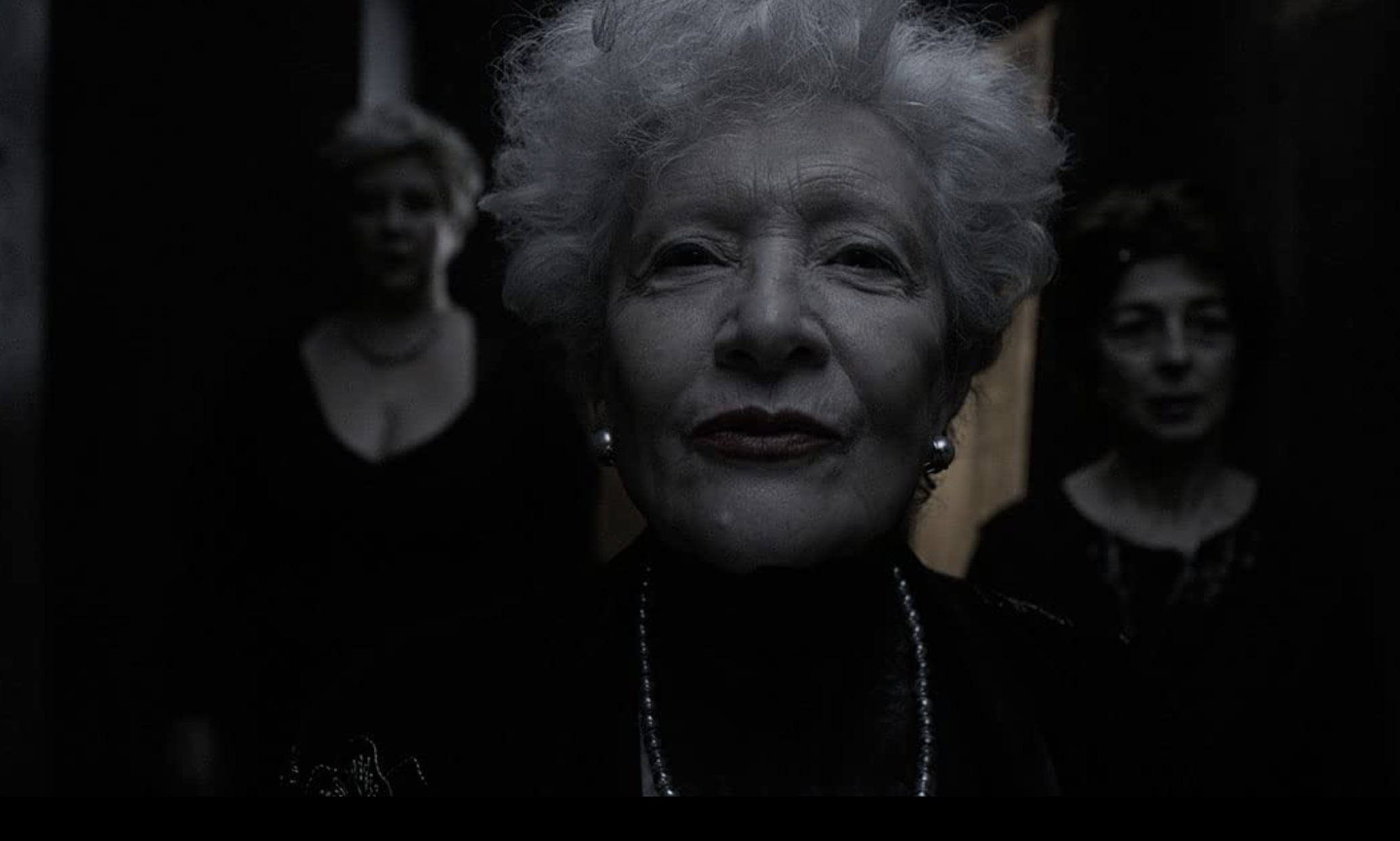
Liberamente tratto dal racconto di H. P. Lovecraft, I sogni nella casa stregata, che il regista spagnolo rielabora abilmente in una “horror story” dai forti connotati autoriali, Venus ricorda per struttura il film precedente, La Settima Musa, in cui il paranormale aleggiava impercettibile sullo sfondo di una comune indagine investigativa. Anche in questo caso il film serpeggia sinuosamente tra i meandri del cinema di genere, amalgamando con efficacia l’horror fantascientifico e il gangster movie, senza mai risultare banale o ripetitivo. La componente caricaturale, inoltre, è consapevolmente enfatizzata continuando quel particolare lavoro sul grottesco che contraddistingue tutta l’opera di Balagueró.

Non si tratta certamente del lavoro migliore del regista spagnolo, eppure la sua capacità di dirigere le figure femminili si conferma eccellente. Caratterizzata da un’evidente ispirazione argentiana, la Lucía di Venus si muove in un’atmosfera soffocante, a metà tra gli incubi provocati dal demone e l’opprimente realtà della vita quotidiana che la giovane deve costantemente affrontare. Per lei l’edificio assume una chiara, seppur paradossale, ambivalenza: è una prigione, che limita la sua voglia di ballare imponendole una staticità obbligatoria attraverso la paura; ma è anche una zona sicura, un solido riparo per sfuggire ai demoni che l’attendono all’esterno, pronti a sfruttarla e gettarla via come spazzatura. Nonostante la presenza incombente di creature sovrannaturali e catastrofi cosmiche, per gli oppressi è dunque la società stessa a rappresentare la minaccia più terrificante, il vero incubo della vita reale.

Emidio Sciamanna

“PARLATE A BASSA VOCE” BY ESMERALDA CALABRIA

Translated by: Benedetta Francesca De Rossi

Article by: Alessandro Pomati

Albania, 1985. After 40 years of indiscriminate exercise of power, the dictator Enver Hoxa died, creating a still unbridgeable void in Albanian politics. Under his leadership, the country experienced some of the darkest pages of its history, and the repression was followed by a diaspora of anything but modest dimensions, with Italy as one of its points of reference in many cases. Redi Hasa, a professional cellist who has been active in Italy for many years, was one of the protagonists of that diaspora and, through his speeches, the consequences of those forty years on the individual and the community are analysed.

Read more: “PARLATE A BASSA VOCE” BY ESMERALDA CALABRIA

And it is he whom Esmeralda Calabria – editor, among others, of Nanni Moretti and Giuseppe Piccioni -, in her first attempt behind the camera, uses as a “cicerone” for her story, rejecting the convention of so much cinema of the real of having only one narrator and choosing instead to make him converse, in front of the camera, with friends and relatives who have experienced what he experienced.  In front of the camera, therefore, anecdotes and considerations are made between the participants, thus making the narration fluent and colloquial, and avoiding any didacticism; art, politics, ideals and identity are discussed with respect to what one is and what one wants to become.

But before looking forward, Calabria seems to want to say, one must necessarily look back, and thus return to the ‘scene of the crime’, Albania, where among the still standing vestiges of that infamous past, the wounds are still open, and one continues to wonder, even when nothing wrong has been done, if more could not have been done; all the while, as some of those interviewed recall, none of the real perpetrators has ever apologised for the atrocities perpetrated. “That was not communism,” says one former theatre actress interviewed, “it was dictatorship pure and simple“. And it is precisely the films featuring the leaders of that dictatorship that become the privileged material for Calabria who, with a thirty-year career in post-production, succeeds in making unprecedented, almost expressionist use of them: projecting them now on the wall of a cave, now on a brick wall, the director effectively evokes that climate of closure and terror from which Hasa (who, born in 1977, knew the period of instability following the fall of the regime better than the regime itself) escaped, and like him thousands of others.

Yet, even after landing and making a career in Italy, the guilt remains: guilt for having fled, guilt for not having done enough for his country in perpetual political crisis, guilt for having left his parents; and a feeling of perpetual statelessness persists. Only a direct confrontation with his homeland, strengthened by what he has learnt on the other side of that wall, as happens in the powerful finale, can put things back on an even keel.

“PARLATE A BASSA VOCE” DI ESMERALDA CALABRIA

Albania, 1985. Dopo 40 anni di esercizio indiscriminato del potere, il dittatore Enver Hoxa muore, creando un vuoto tutt’ora incolmabile nella politica albanese. Sotto la sua guida, il Paese ha conosciuto alcune delle pagine più cupe della sua storia, e alla repressione ha fatto seguito una diaspora di dimensioni tutt’altro che modeste, che ha visto in molti casi come uno dei suoi punti di riferimento l’Italia. Redi Hasa, violoncellista professionista attivo da molti anni in Italia, è stato uno dei protagonisti di quella diaspora e, attraverso i suoi interventi, vengono analizzate le conseguenze di quei quarant’anni sul singolo individuo e sulla comunità.

Leggi tutto: “PARLATE A BASSA VOCE” DI ESMERALDA CALABRIA

Ed è proprio lui che Esmeralda Calabria – montatrice, tra gli altri, di Nanni Moretti e Giuseppe Piccioni –, alla sua prima prova dietro la macchina da presa, utilizza come “cicerone” per il suo racconto, rifiutando la convenzione di tanto cinema del reale di avere un solo narratore e scegliendo invece di farlo conversare, davanti alla macchina da presa, con amici e parenti che hanno vissuto quello che lui ha vissuto.  Davanti all’obiettivo si procede dunque per aneddoti e considerazioni tra i convenuti, rendendo in questo modo la narrazione scorrevole e colloquiale, ed evitando qualsiasi didatticismo; si discorre di arte, di politica, di ideali e di identità rispetto a ciò che si è e ciò che si vuole diventare.

Ma prima di guardare avanti, sembra voler dire Calabria, bisogna necessariamente guardarsi indietro, e dunque tornare sul “luogo del delitto”, l’Albania, dove tra le vestigia ancora in piedi di quell’infame passato, le ferite sono ancora aperte, e ci si continua a domandare, anche quando non si è fatto nulla di male, se non si sarebbe potuto fare di più; il tutto mentre, come ricordano alcuni degli intervistati, nessuno dei veri responsabili si è mai scusato delle atrocità perpetrate. “Quello non era comunismo”, afferma una ex attrice teatrale intervistata, “era dittatura pura e semplice”. E proprio i filmati che vedono protagonisti i capi di quella dittatura diventano il materiale privilegiato per Calabria che, forte di una carriera trentennale nella post-produzione, riesce a farne un uso inedito, quasi espressionista: proiettandoli ora sulla parete di una caverna, ora su un muro di mattoni, la regista rievoca con efficacia quel clima di chiusura e terrore da cui Hasa (che, nato nel 1977, ha conosciuto meglio il periodo di instabilità successivo alla caduta del regime che non il regime stesso) si è divincolato, e come lui migliaia di altri.

Eppure, anche dopo essere approdato e aver fatto carriera in Italia, il senso di colpa rimane: colpa per essere scappato, colpa per non aver fatto abbastanza per il suo Paese in perenne crisi politica, colpa per aver lasciato i genitori; e persiste un sentimento di perenne apolidia. Solo il confronto diretto con la terra natìa forte di ciò che ha imparato al di là di quel muro, come avviene nel potente finale, potrà rimettere le cose in equilibrio.

Alessandro Pomati

“LE LYCÉEN” DI CHRISTOPHE HONORÉ

“Niente potrà tornare / a quando il mare era calmo” recita Conchiglie, seconda canzone di Andrea Laszlo de Simone ad avere un ruolo centrale in un film di questo 40° Torino Film Festival, dopo Immensità ascoltata in Coma di Bertrand Bonello. E ad agitare le acque della vita del giovane liceale Lucas è l’improvvisa morte del padre (interpretato dallo stesso Honoré), che scatena un’onda d’urto capace di mettere a dura prova la tenuta della famiglia e far emergere zone d’ombra a lungo represse.

Continua la lettura di “LE LYCÉEN” DI CHRISTOPHE HONORÉ →

“PARKLAND OF DECAY AND FANTASY” BY CHENLIANG ZHU

Written by: Cristian Cerutti  

Translated by: Ana Paula Da Costa Silva

In an essay on the link between reenactment and fantasy, Bill Nichols reflects on how this technique underlines the gap between past and present, but also between the subjective and objective perception of events. In this way, it creates a surreal dimension that nullifies the idea of total objectivity highlighting its impossibility. In Parkland of Decay and Fantasy, presented in the TFF40 International Documentaries competition, it is the digital image that performs the function described by Nichols through the use of new technologies and especially their capacity of altering images, as in the case of the visionary finale, where the visual evocation of ghosts is at the centre of the narration of Parkland of Desire and Fantasy[1].

Continua la lettura di “PARKLAND OF DECAY AND FANTASY” BY CHENLIANG ZHU →

“OCTOPUS” BY KARIM KASSEM

Article by: Francesco Dubini

Translated by: Giuliano Gisotti

On August 4, 2020, a massive explosion destroyed the port of Beirut, killing 220 people and injuring 7,000. The day just before that, director Karim Kassem had arrived in the city’s port area to shoot a film he will never make, Octopus. In its place is this Octopus: the title remains, but it is a completely different film. It is the symphonic lament of a city left voiceless.

Continua la lettura di “OCTOPUS” BY KARIM KASSEM →

“PAMFIR” BY DMYTRO SUKHOLYTKYY-SOBCHUK

Translated by: Benedetta Francesca De Rossi

Article by: Francesco Ghio

“So Abraham got up early in the morning, saddled his donkey, and took two of his young men with him and his son Isaac; and he split the wood for the burnt offering, and then he got up and went to the place of which God had told him.” Genesis 22:3

The biblical account shows that Abraham, moved by great faith, had no hesitation. Leonid, however, is a pagan, Leonid does not believe. And in order to offer the best future to his progeny, he is willing to transgress ethical norms and human laws, consequently going so far as to defy God.

READ ALL

“PENSIVE” BY JONAS TRUKANAS

Article by: Giuseppe Catalano

Translated by: Alice Bettinelli

A class in its last year of high school, a wild party in a remote cottage in the woods of Lithuania, a masked serial killer. These few elements are enough for any horror connoisseur to guess where Jonas Trukanas will take us with the narrative of Pensive, his first work competing in the “Crazies” section of the 40th edition of the Torino Film Festival.

READ ALL

“THE FIRE WITHIN: REQUIEM FOR KATIA AND MAURICE KRAFFT” BY WERNER HERZOG

Article by Fabio Bertolotto

Translated by Maria Bellantoni

The Fire Within is a film that focuses less on Herzog’s interest in volcanoes – already demonstrated in La Soufrière (1977) and Into the Inferno (2016) – than on the work of Katia and Maurice Krafft. A requiem, as the subtitle suggests, that revolves around the death of the two famous volcanologists while they were closely studying those giants towards which they felt a real obsession.

read all

QUANDO IL CINEMA E’ GLOCAL

Dal 10 al 14 marzo del 2023 si svolgerà la ventiduesima edizione del Glocal Film Festival, organizzato dall’Associazione Piemonte Movie. L’obbiettivo di questo evento è la promozione e la diffusione del cinema realizzato in Piemonte, ma non solo: il festival vuole promuovere scambi e contaminazioni locali e globali, dando spazio ad artisti piemontesi con una visione globale.

Continua la lettura di QUANDO IL CINEMA E’ GLOCAL →

“HUESERA” BY MICHELLE GARZA CERVERA 

Article by: Marta Faggi

Translated by: Rachele Pollastrini

“Huesera”, in Spanish, refers to an expert in treatment of bones and joints diseases. The term, however, also designates The Woman of the Bones, a figure from Mexican mythology whose task is to gather the bones of the dead, symbol of the vital force that doesn’t wear out, and to pray until flesh returns to inhabit those remains, recreating life from disjointed parts. The bones of Valeria (Natalia Solián), in Huesera, constantly creaking, because getting her fingers and the joints of her back crinckled is the protagonist’s way of trying (and not always succeeding) to drain its discomfort out of the body, her frustrations, her ineptitudes. Tormenting Valeria is the awareness that she will soon be a mother: a motherhood apparently sought after, but intimately unwanted.

Continua la lettura di “HUESERA” BY MICHELLE GARZA CERVERA  →

“HUESERA” DI MICHELLE GARZA CERVERA

“Huesera”, in spagnolo, indica la persona esperta nel trattamento delle malattie delle ossa e delle articolazioni. Il termine, però, designa anche La Donna delle Ossa, figura della mitologia messicana il cui compito è di radunare le ossa dei defunti, simbolo della forza vitale che non si consuma, e di pregare finché la carne non torna ad abitare quei resti, ricreando la vita da parti disgiunte. Le ossa di Valeria (Natalia Solián), in Huesera, scricchiolano continuamente, perché farsi scrocchiare le dita delle mani e le giunture della schiena è il modo con cui la protagonista prova (e non sempre riesce) a drenare fuori dal corpo il suo malessere, le sue frustrazioni, le sue inettitudini. A tormentare Valeria è la consapevolezza che sarà presto madre: una maternità apparentemente ricercata, ma intimamente non voluta.

Continua la lettura di “HUESERA” DI MICHELLE GARZA CERVERA →

“GODLAND” BY HLYNUR PÁLMASON

Godland, ultimo film di Hlynur Pálmason, già vincitore della sezione lungometraggi del Torino Film Festival con A white, white day (2019), è una storia di frontiera, il racconto di un prete e fotografo danese (Helliott Crosset Hove) costretto a percorrere l’impervio territorio islandese per raggiungere un villaggio della costa sud-occidentale e costruirci una chiesa. Della spiritualità religiosa, tuttavia, rimane solo il corpo – la carne del mondo nella sua ineluttabile decomposizione. Una spiritualità, quindi, costantemente rigettata nella visceralità delle carni animali, nella trivialità del fango fuori dalle chiese e nell’imprevisto volo di una mosca sul volto senza macchia di un prete. 

Article by: Federico Lionetti

Translated by: Noemi Zoppellaro

Godland, the latest film by Hlynur Pálmason, already winner of the feature film section of the Torino Film Festival with A white, white day (2019), is a frontier story, an account of a Danish priest and photographer (Helliott Crosset Hove) forced to travel across the impervious Icelandic territory in order to reach a village on the southwest coast and to build a church there. However, it is only the body that remains from the religious spirituality – the flesh of the world in its inevitable decomposition. A spirituality, therefore, that constantly falls into the viscerality of the animal flesh, into the triviality of the mud outside the churches and into the unexpected flight of a fly on the spotless face of a priest.

READ MORE

“GODLAND” DI HLYNUR PÁLMASON

Godland, ultimo film di Hlynur Pálmason, già vincitore della sezione lungometraggi del Torino Film Festival con A white, white day (2019), è una storia di frontiera, il racconto di un prete e fotografo danese (Helliott Crosset Hove) costretto a percorrere l’impervio territorio islandese per raggiungere un villaggio della costa sud-occidentale e costruirci una chiesa. Della spiritualità religiosa, tuttavia, rimane solo il corpo – la carne del mondo nella sua ineluttabile decomposizione. Una spiritualità, quindi, costantemente rigettata nella visceralità delle carni animali, nella trivialità del fango fuori dalle chiese e nell’imprevisto volo di una mosca sul volto senza macchia di un prete. 

Continua la lettura di “GODLAND” DI HLYNUR PÁLMASON →

“PINBALL – THE MAN WHO SAVED THE GAME” DI AUSTIN E MEREDITH BRAGG

«La storia è importante». Lo sa bene il vecchio Roger Sharpe (Dennis Boutsikaris), narratore, non del tutto affidabile, della vicenda che lo ha reso famoso in tutti gli Stati Uniti d’America e, collateralmente,  della sua storia d’amore con Ellen (Crystal Reed): queste le due anime che si incontrano nell’ultimo film di Austin e Meredith Bragg, presentato fuori concorso alla 40esima edizione del Torino Film Festival.

Continua la lettura di “PINBALL – THE MAN WHO SAVED THE GAME” DI AUSTIN E MEREDITH BRAGG →

“RIOTSVILLE, USA” BY SIERRA PETTENGILL

Article by: Alice Ferro

Translated by: Arianna Deiro

A neat line of shops appears on screen, billboards sparkle on the walls and the vibrant technicolour of the Sixties almost gives us a sense of peace. It looks like a typical post-war American city, quiet and geometric, maybe too much. The narrating voice asks, “What are we looking at?” and a doubt awakens in us: the buildings are as fake as panels of a set design, the roads look as if they’ve never been walked on, the paint on the signs is new and shiny. This is Riotsville, one of the fake cities built by the American government in the Sixties as military training bases. In these cities, crowds of plain-clothes soldiers staged riots, complete with an audience and cheers, so that their colleagues could learn how to contain them, all in preparation for the civil rights protests that would unleash in the Summer. 

Continua la lettura di “RIOTSVILLE, USA” BY SIERRA PETTENGILL →

“RIOTSVILLE, USA” DI SIERRA PETTENGILL

Una fila ordinata di piccoli negozi appare sullo schermo, i manifesti pubblicitari scintillano sui muri e il vibrante technicolor anni Sessanta ci dà quasi un senso di pace. Sembra una tipica città americana del dopoguerra, tranquilla e geometrica, forse troppo. La voce narrante chiede “Che cosa stiamo guardando?” e desta in noi un dubbio: gli edifici sono finti come i pannelli di una scenografia, le strade sembrano non essere mai state calpestate, la vernice delle insegne è fresca e brillante. Si tratta di Riotsville, una delle finte città costruite dal governo americano negli anni Sessanta come basi di addestramento militare. In queste città, folle di militari in borghese mettevano in scena, con tanto di pubblico e applausi, vere e proprie rivolte affinché i loro colleghi potessero imparare a contenerle in vista delle proteste per i diritti civili che si sarebbero scatenate in estate.

Continua la lettura di “RIOTSVILLE, USA” DI SIERRA PETTENGILL →

“PLAN 75” BY CHIE HAYAKAWA

Article by: Marta Faggi

Translated by: Lia Colombo

Michi (Chieko Baishô) evokes memories of her past over the phone: she goes through her life with great melancholy, and she appears grateful to have someone to listen to her. Nothing but her own voice can be heard in her kitchen. On the end of the phone, we find Yoko (Yumi Kawai). She is much younger than her and she remains silent. Even though she would be interested in the old woman’s story, her head is elsewhere. A sudden alarm interrupts Michi’s flow of words: her time is up. Yoko is holding back tears. Eventually Yoko explains to her what will happen the next day and she keeps begging her not to do “it”. Michi hushes “Sayonara.”

read all

“UN VARÓN” BY FABIAN HERNÁNDEZ

Article by: Alice Ferro

Translated by: Cora Bruno

Carlos hangs up the phone and leans against the wall. His eyes are glazed over and he would like to vent but he doesn’t because, as he says, “men don’t cry.” This is the conflict that Un Varón, Fabian Hernández’s new film, sets out to investigate: that of a young man who tries to conform to the ideal of masculinity that prevails on the streets of Bogotá while in private he just wants to be himself. Christmas is approaching and his only wish is to spend it with his increasingly elusive sister and his mother, who is in jail. Leaving the youth center that took him in, he finds himself coming to terms with street life and the law of the alpha male.

read all

“BEING AN ACTOR. PATHS AND DIALOGUES ON TRAINING AND ACTING”

Article by: Federico Lionetti

Translated by: Niccolò Sereno

At the University of Turin, on 29 and 30 November, the study conference “Being an actor. Paths and dialogues on training and acting” organized by the “F-ACTOR” project in collaboration with UniVerso and curated by Professor Mariapaola Pierini was held. The conference is part of the research plan of the “F-ACTOR” project, dedicated to the mapping of the actor’s profession in the contemporary Italian media scenario, according to methodologies and study perspectives that refer to performance studies, studies on stardom and media production studies.

Continua la lettura di “BEING AN ACTOR. PATHS AND DIALOGUES ON TRAINING AND ACTING” →